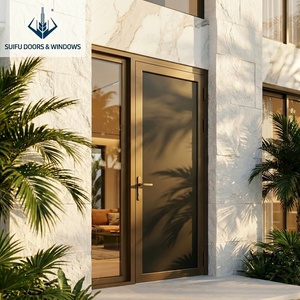
Residential / Coastal Villa
Explore our high-load thermal break aluminum swing doors, modern glass entrance systems, and heavy-duty industrial PVC stacking doors designed for Portugal's rigorous architectural demands.
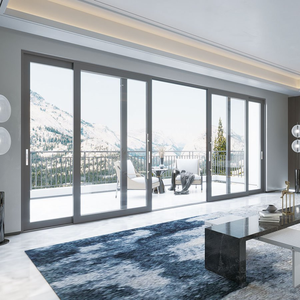
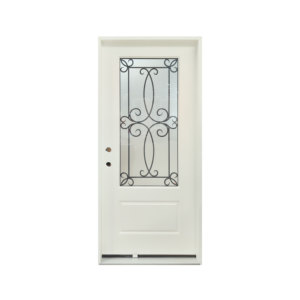
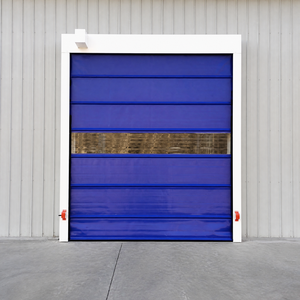
A comprehensive evaluation of dynamic wind pressure resistance, coastal air permeability, and thermal-break integration under Eurocode EN 1991-1-4 and Portuguese National Annex requirements.
Portugal’s geographical position along the western rim of the Iberian Peninsula exposes its built environment to severe Atlantic gale weather, micro-burst gusts, and unrelenting salt spray. From the windswept cliffs of Cascais, Estoril, and Sintra to the exposed oceanfront villas of the Algarve and the rugged topographies of Porto, architectural fenestration must satisfy demanding structural performance criteria. Choosing a wind-resistant entry door manufacturer requires moving beyond aesthetics to rigorously assess dynamic pressure loads ($q_p$), frame moment of inertia ($I_x$), glass deflection thresholds ($L/300$), and perimeter seal integrity under continuous wind-driven rain.
"In coastal Portuguese regions classified under Wind Zone 1 (Coastal Zone & Islands under NP EN 1991-1-4), entry doors must withstand basic velocity pressures exceeding 30 m/s, yielding peak dynamic wind loads up to 2.0 kPa. Fenestration systems without structural thermal breaks and reinforced multi-point locking mechanisms suffer from structural frame deflection, seal fatigue, water infiltration, and elevated energy loss."
When specifying structural exterior doors for residential master plans or commercial installations in Portugal, architects and developers rely on three main European Harmonized Standards to define fenestration capabilities:
| Performance Standard | Test Parameter | Primor Standard Rating | Portuguese Coastal Project Requirement |
|---|---|---|---|
| EN 12210 Wind Load | Positive & Negative Pressure Test | Class C5 / B5 (2000 Pa) | Class C3 to C5 (Zone 1 Coastal) |
| EN 12208 Watertightness | Wind-Driven Rain Spray Test | Class E1050 (1050 Pa) | Class 9A / E750 (Coastal Exposure) |
| EN 12207 Air Permeability | Air Infiltration at 600 Pa | Class 4 (≤ 3m³/h·m²) | Class 3 or Class 4 (NZEB / ADENE Class A+) |
| EN ISO 10077-2 U-Value | Thermal Transmittance ($U_d$) | 0.85 - 1.2 W/m²·K | ≤ 1.4 W/m²·K (REH / RECS Regulations) |
| ISO 9227 Corrosion | Salt Spray Fog Endurance Test | Qualicoat Seaside (3000 hr) | Class C5-M (Marine Environmental Exposure) |
Our architectural door systems incorporate heavy-wall aluminum extrusions, advanced thermal barriers, and specialized hardware designed to resist structural deformation under wind pressure.
Extruded using high-tensile T6063-T6 architectural aluminum profiles with wall thicknesses up to 3.0mm, preventing frame bowing or hinge sagging during storm-force gusts.
Equipped with German-engineered multi-point locking gear that secures the door sash at up to 7 locking points along the jamb, maintaining uniform pressure against perimeter EPDM gaskets.
Polyamide 66 glass-fiber reinforced thermal break strips interrupt conductive energy loss, eliminate interior frame condensation, and improve overall structural rigidity.
Continuous vulcanized EPDM weather seals create air-tight compression barriers, preventing driven coastal moisture from penetrating the interior door threshold.
Double or triple insulated tempered glass with PVB or SGP structural interlayers withstand high-velocity wind loads and airborne debris without shattering.
Seaside-grade fluorocarbon (PVDF) and architectural powder coatings resist saline corrosion, UV fading, and surface chalking along Atlantic coastlines.
From luxury coastal residential properties to heavy industrial logistics centers, Primor tailors fenestration engineering to match local wind exposure and architectural styles.
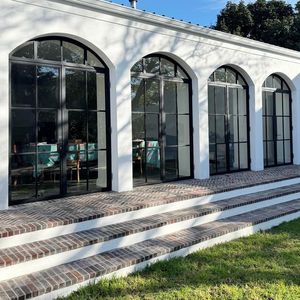
Residential entrances along the southern and central coastlines require frameless thermal break swing doors with large-format glass lites. Designed to preserve sweeping ocean views while resisting severe Atlantic storm surges, salt fog, and continuous UV exposure. Integrated with smart biometric hardware and hidden heavy-load hinges.
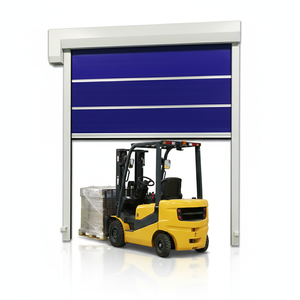
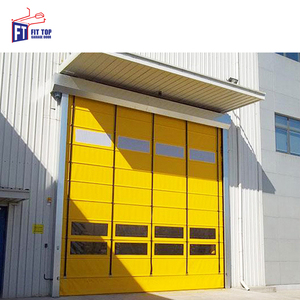
High-speed PVC stacking doors engineered with galvanized steel horizontal wind rib reinforcements. Designed for high-frequency access in warehouse bays and distribution centers operating in high wind zones. Features automatic folding security gates, windbreak curtains, and high-tensile resistance against negative suction pressure.
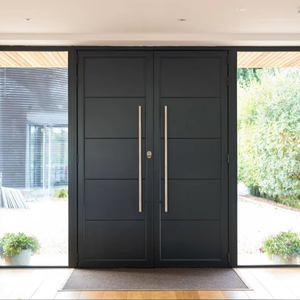
Heavy-duty commercial entrance swing doors tailored for urban retail facades, shopping malls, and office headquarters. Merging high traffic load-bearing capacity with anti-theft security systems, acoustic insulation (Rw ≥ 42 dB), and sleek architectural anodized finishes compliant with municipal urban planning codes.
Architectural requirements in Portugal are evolving rapidly under strict European decarbonization policies, modern minimalist design aesthetic trends, and industrial automation demands.
Under Portuguese energy performance certifications overseen by ADENE (Agência para a Energia), building envelopes must dramatically reduce thermal losses. Modern entry door specifications increasingly mandate thermal break aluminum frames with Low-E argon-filled double or triple glazing to achieve whole-door U-values ($U_d$) below 1.0 W/m²·K.
Contemporary Portuguese residential architecture favors slim, narrow profile sightlines with floor-to-ceiling glass expanses. To achieve this aesthetic without sacrificing wind resistance, manufacturers utilize concealed structural steel reinforcements, reinforced corner cleats, and high-strength T6 aluminum alloys capable of carrying leaf weights up to 450 kg.
With major logistics investments near the Port of Sines and Port of Leixões, industrial demand has surged for automated high-speed PVC stacking and roll-up doors. Facilities require high cycle speeds (up to 2.0 m/s) combined with interlocked wind bars capable of withstanding Class 3 to Class 4 wind forces without leaving the vertical guide tracks.
Clear technical answers regarding wind load testing, marine corrosion coatings, custom size manufacturing, and shipping procedures to Portugal.
Whether you are designing a high-end coastal villa in the Algarve, managing a commercial development in Lisbon, or equipping a logistics warehouse in Porto, our engineering team is ready to assist with technical drawings, wind load calculations, and competitive factory-direct pricing.