Curated High-Performance Glass Entry Door Systems
Explore our project-proven architectural entry door portfolio featuring advanced thermal break profile engineering, toughened safety glass glazing, and customized multi-point locking mechanisms tailored for global B2B procurement and Korean structural specifications.
Korean Architectural Standards & Localized Procurement Trends
The South Korean fenestration market represents one of East Asia's most demanding environments for structural door systems. Driven by stringent national energy conservation codes, extreme microclimatic swings, and high-density urban aesthetics, importing tempered glass entry doors into Korea requires complete technical alignment with local standards.
Rigid Energy Performance & KS F 3117 Codes
South Korea’s Ministry of Land, Infrastructure and Transport (MOLIT) mandates strict Building Energy Saving Design Standards. Exterior entry doors must comply with KS F 3117 (Door sets) standards, requiring overall thermal insulation values (U-factor) below 1.2 W/m²K for Central Region Zone 1 (Seoul, Gyeonggi-do, Incheon) to curb winter heat loss from sub-zero Siberian air masses.
Minimalist Architectural Aesthetics in Modern Housing
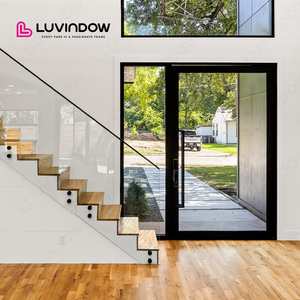
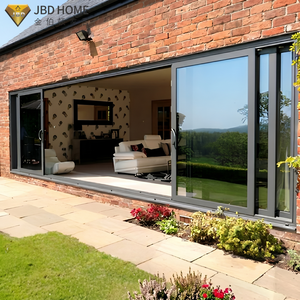
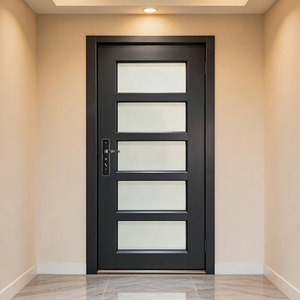
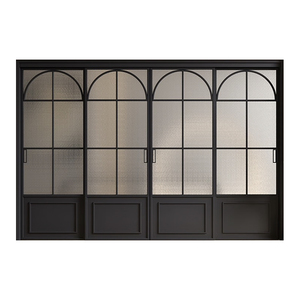
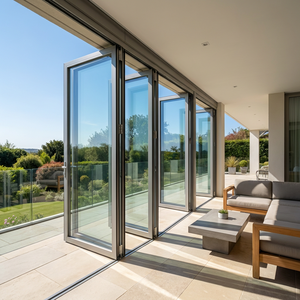
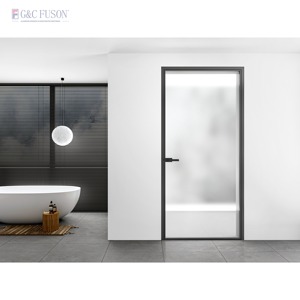
From luxury detached villa complexes in Seongbuk-dong and Hannam-dong to commercial masterplans in Pangyo Tech Valley, Korean architects favor ultra-slim sightline aluminum frames with expansive full-height tempered glass panels. Large-scale glass pivot entry doors and minimal-frame bi-fold systems have become the standard for modern luxury entrances.
Korean Smart Lock & IoT Hardware Integration
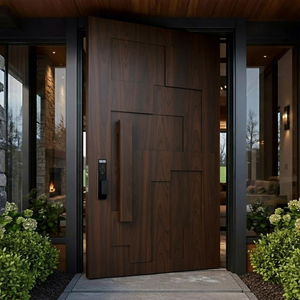
Unlike traditional key-lock entry doors common in Europe, the Korean market universally expects integration with advanced digital push-pull mortise locks (such as Samsung, Solity, and Gateman). Profile extrusions must be pre-milled at the factory with reinforced lock pockets to accommodate electronic faceplate cutouts without compromising thermal break integrity.
Engineering Glass Physics & Thermal Break Profile Technology
High-occupancy entrances demand an unyielding balance of impact safety, structural wind-load resistance, and thermal isolation. Our technical manufacturing process combines advanced heat-treatment chemistry with precision extrusion engineering to solve the unique climatic challenges of the Korean peninsula.
Toughened Safety Glass & Heat Soak Testing (HST)
Tempered glass utilized in modern entrance systems undergoes a controlled thermal quenching process, subjecting the glass surface to compressive stresses exceeding 90 MPa (in full compliance with EN 12150 and KS L 2002 standards). This results in flexural strength four to five times greater than standard annealed glass.
To eliminate the rare risk of spontaneous glass breakage caused by Nickel Sulfide (NiS) inclusions in raw float glass, export orders undergo mandatory Heat Soak Testing (HST) in accordance with DIN EN 14179. The glass is held at 290°C for hours to induce premature failure of volatile panes inside the factory, ensuring that 100% of delivered entry doors installed in high-traffic Korean commercial buildings and luxury residences remain structurally flawless for decades.
Polyamide PA66 GF25 Thermal Insulation
Aluminum is naturally highly conductive. To prevent exterior sub-zero Korean winter temperatures from transferring to interior foyer spaces, our entry doors feature structural thermal break strips composed of Polyamide 66 reinforced with 25% glass fiber (PA66 GF25).
Argon-Filled Low-E Double & Triple Glazing
Glass units feature dual or triple panes separated by SWISSPACER composite warm-edge spacers. Coated with microscopic silver Soft-Coat Low-E layers and injected with 90% high-purity Argon gas, our glazing reflects far-infrared heat back into the building during winter while blocking solar heat radiation during humid Korean summers.
Localized Application Scenarios in Korean Project Engineering
From coastal resort zones in Jeju to dense urban towers in Seoul and industrial headquarters in Busan, entry doors must be engineered for specific microclimates and structural typologies across South Korea.
Scenario A: Seoul Urban Villas & High-Rise Penthouse Entrances
Primary Requirements: High Acoustic Attenuation (STC ≥ 40 dB), Multi-Point Security Locking, Minimal Sightline Pivot Hardware.
Technical Configuration: Large-format double-glazed tempered glass pivot doors utilizing concealed hydraulic floor springs and heavy-duty 6063-T6 aluminum profiles. Engineered with triple EPDM weather-stripping to block urban traffic noise from major Seoul thoroughfares while maintaining an elegant full-glass aesthetic.
Scenario B: Gyeonggi-do Suburban Detached Residences & Estates
Primary Requirements: Ultra-Low U-Factor (U < 1.0 W/m²K), Deep Thermal Break Insulation, Frost/Condensation Resistance.
Technical Configuration: Triple-glazed 6mm+6mm+6mm tempered Low-E glass casement or folding doors integrated with 34mm wide PA66 GF25 polyamide thermal barriers. Eliminates interior frame sweating and draft leakage during harsh sub-zero Gyeonggi winters.
Scenario C: Jeju Island & Southern Coastal Resort Enclosures
Primary Requirements: Typhonic Wind Load Resistance (≥ 3500 Pa), Salt Spray Corrosion Protection (AAMA 2605 PVDF Coating).
Technical Configuration: Heavy-duty hurricane impact tempered laminated glass doors fitted with marine-grade 316 stainless steel hardware. Coated with 70% Kynar 500 PVDF fluorocarbon paint to withstand coastal saline atmospheric exposure without chalking or peeling.
Scenario D: Modernized Hanok Extensions & Cultural Commercial Flagships
Primary Requirements: Authentic Wood-Grain Finish Aesthetics, Modern Thermal Tightness, Structural Glass Infill.
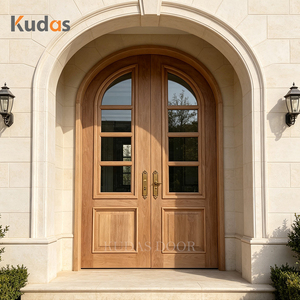
Technical Configuration: Italian 3D vacuum heat-transfer wood-grain aluminum entry double doors framed around high-clarity low-iron tempered glass panes. Blends traditional Korean timber optics with fire-resistant, non-warping aluminum safety engineering.
B2B Material & Performance Engineering Matrix
A comparative evaluation of entry door material systems under South Korean environmental conditions, highlighting key architectural performance indicators.
| Performance Index / Feature | Primor Thermal Break Tempered Glass Door | Standard Non-Thermal Aluminum Door | Hollow Metal Steel Security Door | Solid Hardwood Exterior Door |
|---|---|---|---|---|
| Thermal Transmittance (U-Value) | 0.9 – 1.2 W/m²K | 2.8 – 3.5 W/m²K | 2.0 – 2.4 W/m²K | 1.6 – 2.0 W/m²K |
| Glass Impact Strength (EN 12150) | Surface Compressive Stress ≥ 90 MPa | Standard Annealed (24 MPa) | Small Vision Lite Only | Small Decorative Glass Only |
| Wind Pressure Resistance | Up to 3800 Pa (Class 5) | 1500 Pa | 2500 Pa | 1800 Pa |
| Corrosion & Salt Spray Lifespan | 30+ Years (AAMA 2605 PVDF) | 10 Years (Standard Anodized) | Rusts in 5-8 Years under humidity | Requires re-staining every 2 years |
| Korean Smart Lock Integration | Pre-Milled OEM Pocket (Samsung/Solity) | Manual On-Site Cutout Required | Standard Mechanical Keyway | Subject to Moisture Swelling Alignment |
| Air Infiltration (KS F 3117) | Class 1 (< 1 m³/h·m²) | Class 3 | Class 2 | Class 3 |
Why Project Developers & Importers Choose Primor
As a direct-to-B2B architectural door and window manufacturer, Primor Metal Door Co., Ltd. bridges the gap between complex architectural blueprints and precision factory production, eliminating intermediary markups and delivery delays.
100% Drawing-Driven Manufacturing
We do not force your projects into off-the-shelf catalog sizes. Every single door assembly is engineered directly from your DWG/BIM drawings or opening schedules. Our senior engineering team issues detailed shop drawings for sign-off prior to profile extrusion cutting.
Comprehensive Quality Assurance
Operating under ISO9001 certified manufacturing protocols, our products undergo rigorous corner joint tension testing, air permeability checks, and glass polariscope strain inspections to ensure zero structural defects before ocean packing.
Export-Ready Heavy Wooden Packaging
To survive ocean transit to Korean ports (Busan, Incheon, Gwangyang), finished doors are individually wrapped in vacuum vapor-barrier film, fitted with corner guards, and enclosed in fully closed fumigated plywood crates labeled by building zone.
Frequently Asked Questions by Korean B2B Buyers
Clear technical answers regarding customization, structural testing, smart lock compatibility, shipping timelines, and export documentation for Korean contractors, architects, and importers.
Do your tempered glass entry doors comply with South Korea’s KS F 3117 building standards?
Yes. Our thermal break aluminum tempered glass entry doors are specifically engineered to satisfy or exceed the thermal transmittance (U-value ≤ 1.2 W/m²K) and air tightness (Class 1) requirements established under KS F 3117 for Korean building energy saving codes. We provide certified factory test reports for U-factor, wind pressure, and water tightness to support your local building permit approval process.
Can you factory pre-mill lock pockets for Korean digital smart locks (e.g., Samsung / Solity / Gateman)?
Absolutely. We frequently work with Korean project teams who require digital push-pull mortise locks or biometric access control hardware. Simply provide the exact model specification or lock template drawing during the shop drawing phase, and our CNC machining centers will pre-cut the aluminum profiles and internal thermal break cavity with millimeter accuracy prior to assembly and surface finishing.
What safety measures prevent spontaneous breakage of tempered glass in high-traffic entry doors?
To eliminate spontaneous glass destruction caused by microscopic Nickel Sulfide (NiS) inclusions, all tempered glass panes supplied for exterior entrance doors undergo secondary Heat Soak Testing (HST) in accordance with DIN EN 14179 / KS L 2002. Furthermore, we offer tempered-laminated glass options (e.g., 6mm Tempered + 1.52mm PVB + 6mm Tempered) which ensure that even if glass fracture occurs due to violent external impact, the shattered fragments remain securely bound to the interlayer film.
What is the typical manufacturing lead time and ocean shipping transit time to Busan or Incheon Port?
Production lead time typically ranges between 20 to 30 business days following the formal sign-off of shop drawings and finish sample approval. Shipping time from our port of departure to major South Korean logistics hubs—such as Busan Port or Incheon Port—is exceptionally fast, generally requiring only 4 to 7 days in transit, ensuring rapid delivery for scheduled project site installations.
Can I order custom wood-grain finishes or dual-color powder coatings for historical hanok or modern villa projects?
Yes. Our thermal break profiles feature split interior and exterior aluminum extrusions joined by polyamide strips. This allows for dual-color customization—for instance, an anodized matte black or dark bronze finish on the exterior facade to suit modern minimalist aesthetics, combined with a warm 3D heat-transfer wood-grain finish on the interior frame to harmonize with traditional Korean interior decor.
What documentation and support do you provide to B2B importers and general contractors?
Every commercial order is accompanied by a full export documentation package, including Commercial Invoice, Detailed Packing List (itemized by window/door tag numbers), Bill of Lading, Certificate of Origin (for FTA preferential duty application), Factory Quality Inspection Certificates, and step-by-step CAD structural installation guidelines.
Ready to Engineer Your Next Entry Door Project in Korea?
Whether you are an architect submitting drawings for a luxury villa in Seoul, a general contractor sourcing high-performance doors for a commercial complex in Busan, or an importer expanding your premium door catalog, Primor Metal Door Co., Ltd. delivers factory-direct engineering precision.