High-Performance Thermal Break Aluminum Entrance & Exterior Doors
Precision-engineered for European climate conditions, offering certified U-values down to 0.78 W/m²K, multi-point RC3 security locking, and customizable architectural finishes.
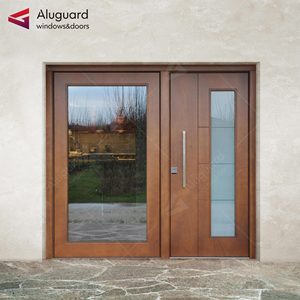
Modern Villa Aluminum Alloy Entry Front Doors with Metallic Design Exterior Use
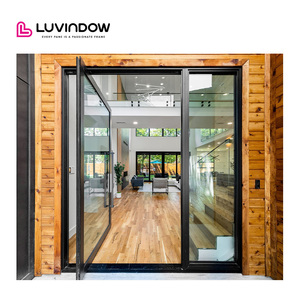
Modern Pivot Aluminum Door Glass Front Villa Entry US Made Thermal Break Energy Efficient
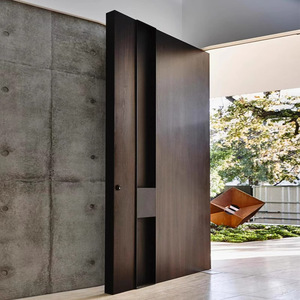
High Security Exterior Main Entrance Doors Customized Made Model Wooden & Aluminum Pivot Front Entry Door
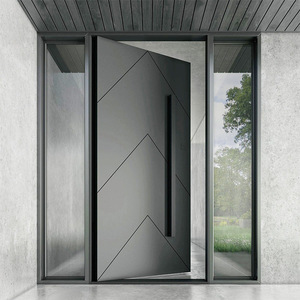
Pivot Doors Aluminium,Customized High-End Frame Pivot Sliding Entrance Door Interior Door
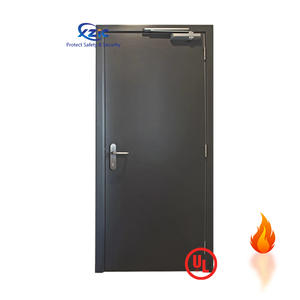
UL Standard Commercial Single Emergency Exit Metal Fire Rated Steel Fire Door For Home Hotel Apartment
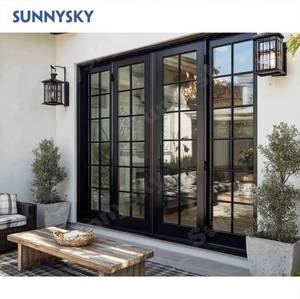
Factory Wholesale Commercial Exterior Aluminum Double Glazed French Swing Door
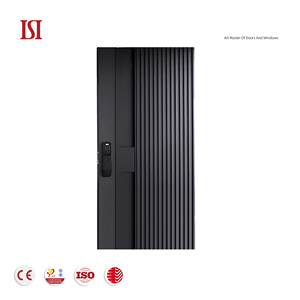
European Luxury Entrance Doors with Anti-Theft Security Modern Residential Exterior
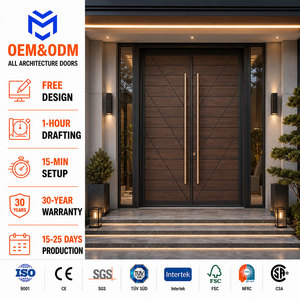
Customized High Quality Luxury Modern House External Security Front Entry Exterior Aluminium Main Double Pivot Door
Navigating Poland’s Architectural Landscape: WT 2021 & Thermal Door Mandates
An in-depth analysis of energy efficiency standards, building regulations, and procurement parameters for general contractors, developers, and door distributors across Poland.
The Polish fenestration and entrance door market has undergone a dramatic structural transformation driven by the stringent implementation of the Warunki Techniczne 2021 (WT 2021) building regulations. Designed to align Poland with the European Union’s decarbonization targets and Nearly Zero-Energy Building (nZEB) standards, WT 2021 imposes strict limits on the maximum thermal transmittance coefficient ($U_d$) for external doors installed in residential and commercial developments.
Under current Polish construction law, all exterior entrance doors installed in newly built or renovated residential buildings must achieve a thermal transmittance parameter of $U_d \le 1.3 \text{ W/(m}^2\cdot\text{K)}$. However, leading Polish real estate developers, architectural studios in Warsaw, Kraków, and Wrocław, as well as institutional investors seeking BREEAM or LEED certifications, routinely specify far stricter thresholds—frequently requesting door assemblies with thermal transmittance values ranging between 0.80 W/(m²·K) and 0.95 W/(m²·K).
SEO & Technical Gain: Sourcing insulated aluminum doors that satisfy WT 2021 norms without ballooning project budgets requires direct partnership with specialized export manufacturers capable of supplying PA66 GF25 polyamide thermal barrier profiles, multi-chamber sash constructions, and certified triple-glazed insulation units.
Key Market Drivers Shaping Thermal Door Demand in Poland
WT 2021 & Passive House Standards
Poland's winter climate zones (from Zone I in Szczecin to Zone V in Suwałki) demand thermal break profiles that eliminate frost bridging, surface condensation, and indoor drafts under outdoor design temperatures reaching -20°C.
RC2 / RC3 Burglar Resistance
Modern Polish villa owners and multi-family developers prioritize high security. External entry doors must incorporate multi-point automatic locking systems, anti-drill cylinder plates, and structural hinge security pins (EN 1627).
Large-Scale Architectural Profiles
Minimalist aesthetic preferences across Tri-City (Gdańsk, Sopot, Gdynia) and Katowice favor floor-to-ceiling entrance doors, grand pivot systems up to 3.5 meters in height, and sleek flush sash designs integrated into aluminum facade curtain walls.
Engineering Solutions Tailored for Polish Regional Environments
From high-density urban residential blocks to coastal Baltic estates and mountain lodges in Małopolska, custom aluminum door systems adapt to localized climate stress.
| Region / Polish Market Segment | Primary Climate & Structural Challenge | Recommended Door System Configuration | Target Performance Benchmark |
|---|---|---|---|
| Warsaw & Kraków Urban Residential | Acoustic insulation against traffic noise, space-saving access, thermal efficiency under district heating standards. | Flush Aluminum Entry Doors with Triple Glazed Vision Panels, Acoustic Glass Interlayers & Drop Down Bottom Seals. | $R_w \ge 42 \text{ dB}$ $U_d \le 0.90 \text{ W/m}^2\text{K}$ |
| Baltic Coastal Belt (Gdańsk, Gdynia, Świnoujście) | Severe wind-driven rain penetration, salt-air corrosion, dynamic wind pressures up to 1600 Pa. | Marine-Grade Qualicoat Class 2 Powder-Coated Profiles, EPDM Triple Weather Gaskets, Stainless Steel Hardware. | Water Tightness: Class E1200 Wind Load: Class C5 (EN 12210) |
| Southern Mountain Areas (Zakopane, Podhale) | Extreme sub-zero winter spells (-25°C), heavy thermal shock between indoor heat and exterior cold, freeze-thaw cycles. | Ultra-Deep 90mm Thermal Break Aluminum Profiles with PA66 GF25 Polyamide Strips & PU Aerogel Insulation Core. | $U_d \le 0.78 \text{ W/m}^2\text{K}$ Air Permeability: Class 4 |
| Commercial & Logistics Centers (Poznań, Wrocław) | High frequency daily traffic, emergency panic hardware integration, fire safety barrier enforcement. | Heavy-Duty Commercial Swing & Emergency Exit Steel/Aluminum Doors with Panic Bars & Hydraulic Overhead Closers. | EN 179 / EN 1125 Compliant 1,000,000 Open/Close Cycles |
Inside Primor Thermal Insulation Technology: Profile Engineering Breakdown
How our factory-direct manufacturing precision achieves superior U-values, structural rigidity, and life-cycle durability for international B2B importers.
1. Polyamide 66 with 25% Glass Fiber (PA66 GF25) Thermal Barriers
Standard aluminum is a highly conductive material ($k \approx 160 \text{ W/m}\cdot\text{K}$). To achieve the thermal insulation demanded by Polish construction codes, Primor engineers utilize multi-chambered thermal breaks constructed from PA66 GF25 (25% glass fiber reinforced polyamide). This material matches the coefficient of thermal expansion of aluminum extrusions, preventing shear stress during severe seasonal temperature swings in Poland (ranging from +35°C in summer to -25°C in winter).
2. Advanced Insulated Glass Units (IGU) & Thermal Spacers
Door assemblies featuring glass inserts incorporate argon gas-filled, low-emissivity (Low-E) double or triple glazing packages. By replacing traditional aluminum edge spacers with warm-edge composite spacers (such as Swisspacer Ultimate), perimeter heat loss is reduced by up to 70%, completely resolving internal perimeter condensation issues common in humid indoor spaces during cold Polish winters.
3. Multi-Point Automatic Locking & Hardware Integration
Security is non-negotiable for modern entrance structures. Primor aluminum doors come factory-prepared for premium European hardware fittings (including Winkhaus, GU, Roto, or Siegenia). Automatic 3-point or 5-point locking mechanisms pull the door sash tightly against the continuous EPDM frame gaskets upon closing, ensuring an airtight seal that satisfies Air Permeability Class 4 testing standards (EN 12207).
Why Polish Contractors & European Buyers Partner with Primor
Primor Metal Door Co., Ltd. is a specialized OEM/ODM manufacturer of custom architectural aluminum windows, entry doors, sliding and folding door systems. We transform complex architectural specifications into factory-tested, ready-to-install entrance systems.
- 100% Custom Made to Architectural Drawings
- Rigorous Shop Drawing Approval Workflow
- Export Packaging & CE / EU Compliance Support
- Direct Factory Pricing with Global Logistics
B2B Procurement & Technical FAQ for Polish Buyers
Answers to key commercial, legal, and engineering inquiries submitted by developers, architects, and importers across Poland.
Do Primor thermal aluminum doors comply with Poland's WT 2021 building energy regulations?
Yes. Primor manufactures thermal break aluminum doors designed specifically to meet or exceed Poland's Warunki Techniczne 2021 (WT 2021) requirement of $U_d \le 1.3 \text{ W/(m}^2\cdot\text{K)}$. By utilizing our 77mm, 88mm, or 90mm profile series equipped with PA66 GF25 thermal breaks and argon-filled Low-E triple glazing, we achieve certified thermal transmittance values as low as 0.78 W/(m²·K), making our systems suitable even for passive house construction in cold Polish climate zones.
What certifications and documentation are provided for customs clearance and building inspection in Poland?
Every shipment exported to Poland includes full CE compliance documentation according to EN 14351-1 (the European standard for windows and external pedestrian doorsets). We provide factory test reports covering thermal transmittance ($U_d$), air permeability (EN 12207), water tightness (EN 12208), resistance to wind load (EN 12210), and acoustic insulation. Complete mill test certificates and shop drawings are issued prior to manufacturing.
Can Primor supply custom door dimensions, including large-scale pivot and double doors?
Absolutely. We operate on a 100% made-to-measure production model. Whether your project requires standard single entry doors or custom grand pivot doors up to 3,500 mm in height and 2,000 mm in width, our engineering team prepares precise shop drawings for your approval before production. Custom transom lights, sidelights, and architectural panel designs are fully supported.
What hardware brands and security locks are integrated into your aluminum door systems?
Our aluminum door profiles are milled using CNC precision machinery designed to accept industry-leading European hardware standards. We offer integration with Winkhaus, Roto, GU, and Siegenia multi-point locking mechanisms. Options include automatic mechanical locking, electric strike integration for access control systems, fingerprint scanners, keypad entry, and RC2/RC3 burglar resistance rating upgrades (EN 1627).
How are orders packed to prevent damage during sea transport to Polish ports (Gdańsk / Gdynia)?
All door assemblies undergo multi-layer protective packaging: full surface protective film coating, heavy-duty foam corner guards, shrink wrapping, and placement inside fully enclosed, fumigated wooden crates or steel A-frame racks. Every crate is clearly labeled with opening tags corresponding to your project's window and door schedule for easy sorting on-site in Poland.
What is the standard lead time and manufacturing workflow for an order shipped to Poland?
Our standard manufacturing lead time is approximately 25 to 35 days following the final sign-off of CAD shop drawings and finish approvals. Maritime shipping from our production facility to Polish sea ports (Gdańsk or Gdynia) typically takes 30 to 40 days. We recommend Polish general contractors and importers plan for a total project timeline of 65 to 75 days from drawing confirmation to site delivery.
Request a Custom Engineering Quotation & Technical Proposal
Submit your project drawings, door schedules, or performance specifications. Our engineering team will review your requirements and provide CAD shop drawings along with competitive factory-direct pricing.