Engineered OEM Tempered Glass Entry Door Series
Precision-fabricated entrance assemblies tailored for commercial B2B procurement, luxury multi-family developments, and architectural residential projects across the Hamburg Metropolitan Area.
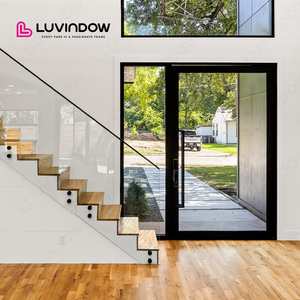
Modern Style Main Entrance Door Heat Insulated Aluminum Double Glazed Glass Pivot Door
Contact Us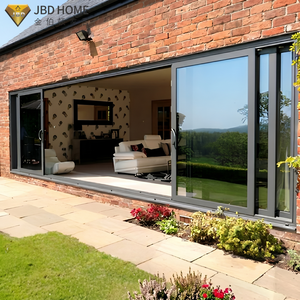
Modern Exterior 4 Panel Aluminum Sliding Glass Door Double Glazed Tempered Patio Entrance For Residential Villa Projects
Contact Us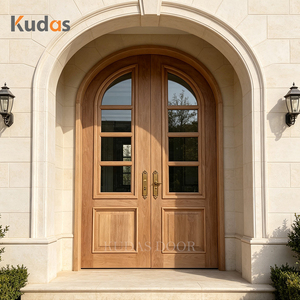
Modern Classic European Arched Solid Wood Entry Double Door Villa Main Exterior Entrance Arch Double Door With Tempered Glass
Contact Us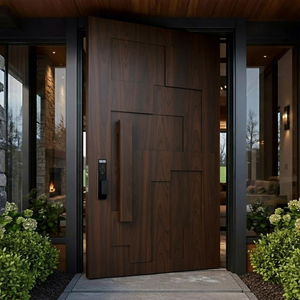
Modern Aluminum Pivot Entry Door Luxury Exterior Front Door Thermal Break Custom Size Double Glass OEM ODM Manufacturer
Contact Us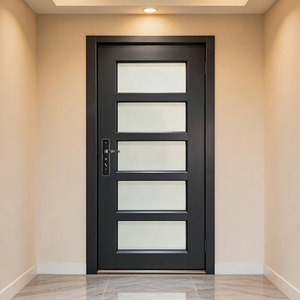
Customizable Tempered Glass Main Doors Security Entrance Steel Door Metal Front for Residence
Contact Us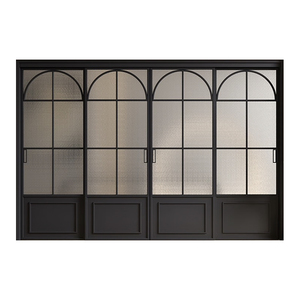
Entry Hurricane Impact Hotel Use French Exterior Thermal Break Aluminum Alloy Patio Doors Double Glazed Tempered LowE Glass TUV
Contact Us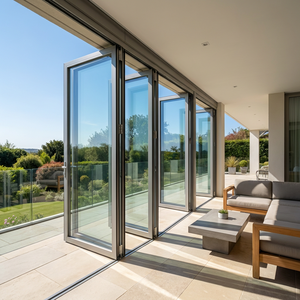
Modern Double Glazed Tempered Glass Aluminum Folding Door Heat Insulation Outdoor Balcony/Patio Entrance Foldable Opening 5-Year
Contact Us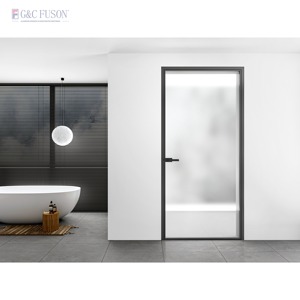
Fuson Soundproof Customized Casement Aluminium Alloy Glass Door Exterior Security Entrance Steel Main Doors
Contact UsEngineering OEM Tempered Glass Entry Doors for Hamburg’s Urban & Coastal Climate
As the second-largest city in Germany and a prominent maritime trade hub along the River Elbe, Hamburg presents a unique set of architectural and environmental challenges for exterior building envelopes. Fenestration systems installed across the Hamburg metropolitan area—spanning from high-exposure waterfront districts like HafenCity and Altona to residential enclaves such as Blankenese, Winterhude, and Harvestehude—must balance rigorous structural integrity with cutting-edge thermal performance.
For B2B buyers, architectural specifiers, and general contractors (Generalunternehmer), selecting a verified custom OEM tempered glass entry door factory requires going far beyond aesthetics. Entrance doors serve as the primary defensive barrier against Hamburg's maritime temperate oceanic climate (Köppen: Cfb), characterized by persistent rainfall (averaging over 740 mm annually), high relative atmospheric humidity, strong gusts from North Sea weather fronts (Wind Zones 3 and 4 according to DIN EN 1991-1-4), and significant seasonal temperature fluctuations.
Information Gain Benchmark: Our custom OEM entry door systems integrate multi-chamber polyamide (PA66 GF25) thermal break profiles combined with triple-pane toughened safety glass (ESG - Einscheibensicherheitsglas) or laminated safety glass (VSG - Verbundsicherheitsglas). This construction satisfies Germany's strict Gebäudeenergiegesetz (GEG 2024) efficiency benchmarks while delivering certified RC2/RC3 burglary resistance under DIN EN 1627.
Structural Anatomy of High-Performance Tempered Glass Entry Doors
The core structural framework of our direct OEM door systems relies on high-tensile 6063-T6 extruded aluminum profiles and precision-tempered safety glass assemblies. Tempered glass undergoes a controlled thermal treatment process that increases its mechanical strength by up to five times compared to standard annealed float glass. In the event of catastrophic impact, tempered glass disintegrates into small, blunt-edged fragments, preventing severe injury and fulfilling mandatory safety criteria for entrance doors in public and residential spaces.
| Specification Parameter | OEM Standard Configuration | German / EU Compliance Standard | Hamburg Market Relevance |
|---|---|---|---|
| Frame Profile Material | 6063-T6 Architectural Grade Aluminum Alloy | DIN EN 755-9 / DIN EN 12020-2 | Corrosion-resistant coating for maritime salt-spray air exposure |
| Thermal Break Insulation | 24mm – 34mm Polyamide PA66 GF25 Strips | GEG 2024 / Passivhaus Standard | Prevents condensation build-up during cold Hamburg winter months |
| Glazing Type & Spec | Double/Triple Tempered Low-E (ESG/VSG) with Argon Fill | DIN EN 12150 (ESG) / DIN EN 14449 (VSG) | Controls solar heat gain while maximizing natural daylight retention |
| Burglar Protection | 5-Point Automatic Locking with Anti-Drill Cylinders | DIN EN 1627 Class RC2 / RC3 | Fulfills German insurance mandatory residential security guidelines |
| Acoustic Insulation Rating | Heavy-duty EPDM weather seals ($R_w \ge 40 - 45 \text{ dB}$) | DIN 4109 (Schallschutz im Hochbau) | Dampens ambient urban noise from Hamburg harbor, rail & street traffic |
| Air & Water Tightness | Class 4 Air Permeability / Class E900 Water Tightness | DIN EN 12207 / DIN EN 12208 | Withstands wind-driven driving rain typical of North Sea storm surges |
Micro-Localized Application Scenarios in Hamburg
Adapting architectural entrance door specifications to match Hamburg's diverse suburban, urban, and historical architectural zones.
HafenCity & Elbbrücken Modern Commercial Entrances
High-traffic commercial complexes and luxury high-rise developments along the Elbe waterfront require heavy-duty aluminum pivot entry doors. Built with thick tempered low-iron glass and automated swipe access, these systems handle continuous foot traffic while resisting coastal wind pressures.
Blankenese & Elbchaussee Luxury Estate Entrances
Exclusive single-family villas overlooking the Elbe River demand expansive double-glazed arched doors or minimal-frame sliding patio entrances. Custom wood-grain powder coatings or dark anodized finishes complement traditional and modern North-German villa architecture.
Altona, St. Pauli & Sternschanze Urban Infill Projects
Density-focused apartment buildings and storefront conversions require high soundproof ratings (SSK 4) and RC3-certified security glass. These doors isolate indoor living spaces from heavy urban nightlife and transit noise while maintaining sleek, contemporary visual appeal.
Key Local Market Trends Driving Hamburg’s Entry Door Industry
Architects and importers in Northern Germany are navigating several evolving regulatory, environmental, and stylistic shifts. Aligning your procurement strategy with these local trends ensures long-term asset value and compliance with local municipal codes:
1. GEG 2024 Strict Energy Conservation Compliance
Germany’s updated Gebäudeenergiegesetz mandates strict ceiling limits on thermal transmittance ($U_d$). High-end modern projects in Hamburg increasingly mandate $U_d$ values of $\le 0.9 \text{ W/m}^2\text{K}$. Utilizing Warm-Edge glass spacers and argon gas filling inside tempered glass units has become standard baseline criteria.
2. Integrated Smart Access & Keyless Security (DIN EN 14846)
German property buyers expect seamless integration of biometric fingerprint scanners (e.g., ekey systems), RFID card readers, and motor-driven multi-point locks concealed within the aluminum sash profile, eliminating traditional keyholes while enhancing RC3 security.
3. Sustainable Material Sourcing & Circularity
Driven by Hamburg's green building initiatives and DGNB certification goals, developers prefer recycled aluminum alloys (6063-T6) coated with eco-friendly VOC-free powder coatings, accompanied by full Environmental Product Declarations (EPDs).
Why Partner with Primor Metal Door Co., Ltd. for OEM Manufacturing
Primor Metal Door Co., Ltd. is a premier global manufacturer specializing in custom engineered aluminum windows, entry doors, sliding systems, pergolas, and sunrooms. We bridge the gap between complex architectural design and direct factory manufacturing excellence.
- CAD & BIM Engineering Precision: Every door order undergoes thorough structural and shop drawing review before production.
- Polyamide Thermal Break Technology: Superior insulation design engineered to meet strict Northern European energy codes.
- Comprehensive Glass Processing: In-house tempering, laminating, Low-E coating, and argon gas insulating lines.
- Export-Ready Ocean Freight Packing: Custom wooden crates labeled by building opening number for seamless site organization.
Global OEM Support
Serving international architects, general contractors, developers, and door importers. Visit our international showrooms or consult directly with our technical engineering team.
Contact Technical SalesFrequently Asked Questions by Hamburg B2B Buyers
Addressing the technical, regulatory, and logistics queries commonly raised by German architects, trade importers, and building contractors.
Do your tempered glass entry doors comply with Germany's GEG 2024 thermal insulation requirements?
Yes. Our custom OEM entry door systems are engineered with multi-chamber polyamide (PA66 GF25) thermal break profiles combined with triple-glazed Low-E tempered safety glass units. This configuration achieves overall thermal transmittance ($U_d$) values down to 0.85 W/(m²·K), comfortably exceeding the GEG 2024 standard requirements ($U_d \le 1.3 \text{ W/m}^2\text{K}$) for new buildings and modernizations in Hamburg.
What burglary resistance certification ratings (RC / Resistance Class) can be specified for Hamburg developments?
We supply entrance door assemblies built to match Resistance Class 2 (RC2) and Resistance Class 3 (RC3) according to DIN EN 1627. These assemblies feature laminated safety glass (VSG) with tough PVB/SGP interlayers, anti-pry hinge protections, heavy-duty aluminum reinforced profiles, and certified multi-point mechanical or motorized locking systems.
How do your factory-direct doors perform against Hamburg’s coastal rain and high wind pressures?
Our doors are tested according to European standards DIN EN 12207 (Air Permeability) and DIN EN 12208 (Watertightness). Utilizing dual or triple continuous EPDM weather gaskets, drained profile chambers, and heavy-duty thresholds, our entry systems achieve Class 4 air tightness and Class E900 resistance against wind-driven driving rain typical of North Sea wind zones.
What is the delivery lead time and ocean shipping protocol for the Port of Hamburg (Hafen Hamburg)?
Following final approval of shop drawings, manufacturing typically takes 25 to 35 days depending on project volume and custom finish specs. Direct container shipping from our facility to the Port of Hamburg (Hafen Hamburg) takes approximately 28 to 35 days. Every shipment is enclosed in fumigated, steel-reinforced sea-freight wooden crates with moisture-absorbent packaging.
Can custom architectural opening sizes and arched designs be fabricated to fit historical Hamburg facades?
Absolutely. As an experienced OEM/ODM factory, every unit is built to measure from your CAD drawings or architectural schedules. We specialize in custom oversized pivot doors, arched double doors, integrated side-lights, transoms, and bespoke powder-coated or wood-grain surface finishes suitable for both modern urban infill and historic facade restoration projects.
What technical documentation is provided to support German building site inspections and CE marking?
We provide comprehensive technical packages with every order, including Declaration of Performance (DoP), CE marking documentation under EN 14351-1, glass test reports according to DIN EN 12150 / 14449, detailed shop drawings, and structural load calculations for wind resistance approval.
Plan Your Hamburg Door & Window Package with OEM Engineers
Submit your architectural drawings, door schedule, or project performance requirements to receive CAD shop drawings, technical compliance proposals, and direct factory pricing.
Contact Us