Architectural Aluminum Entry Door Catalog
Explore factory-direct entry door configurations engineered for extreme structural loads, superior thermal insulation, and seamless modern aesthetic integration.
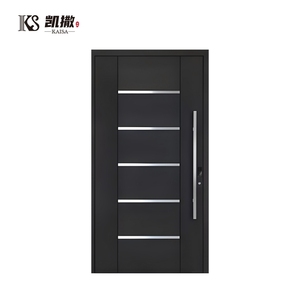
Modern Swing Opening Customized Size Front Entry Door
Get a Quote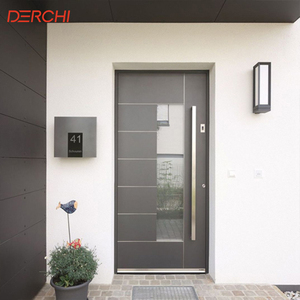
Exterior Aluminum Entry Door for Homes & Villas
Get a Quote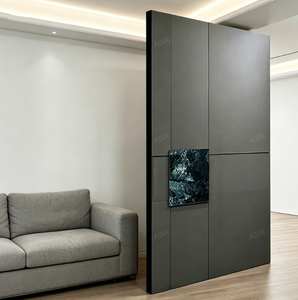
Minimalist Aluminum Pivot Door with Marble Inlay
Get a Quote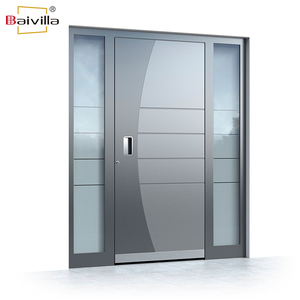
Custom Villa Exterior Entrance Smart Lock Door
Get a Quote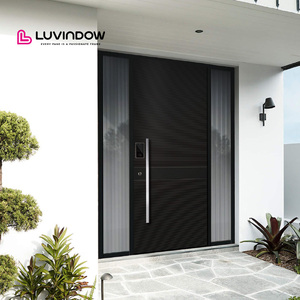
Sophisticated Anti-Theft Aluminum Exterior Door
Get a Quote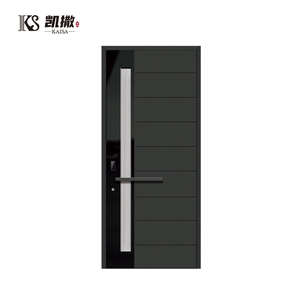
Soundproof Safety Home Exterior Casement Door
Get a Quote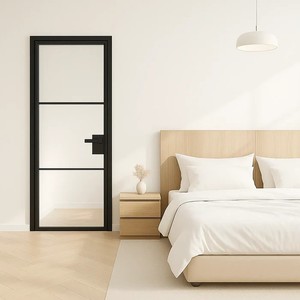
Double Glazed Glass Swing Door for Commercial
Get a Quote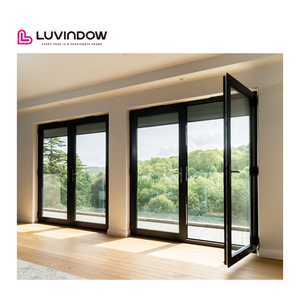
Coastal Hurricane-Resistant Premium Glass Entry Door
Get a QuoteEngineering Anatomy of Modern Aluminum Entry Doors
Information gain deep-dive: Understanding the alloy composition, thermal barrier mechanics, and hardware integration required for commercial-grade durability.
6063-T6 Extruded Aluminum Profiles
Our doors utilize high-density 6063-T6 architectural grade aluminum alloys featuring wall thicknesses from 2.0mm to 3.0mm. This profile density delivers tensile strength exceeding 241 MPa, preventing warping or frame deflection under high static wind pressure.
PA66 GF25 Thermal Insulation Strips
To eliminate thermal bridging, exterior and interior profiles are structurally linked using Polyamide 66 reinforced with 25% glass fiber (PA66 GF25). This barrier drastically cuts heat transmission, preventing interior condensation in sub-zero or tropical climates.
Multi-Point Security & Smart IoT Locks
Engineered with German multi-point gear locking mechanisms, anti-pry hinge pins, and integrated biometric recognition. System options include fully motorized concealed locks compatible with modern home automation and access control networks.
AAMA 2605 PVDF & Anodized Finishes
Finishing technologies include 3-coat Fluorocarbon (PVDF) coatings compliant with AAMA 2605, offering 20+ years of color retention against intense UV exposure and coastal salt fog spray, as well as high-definition thermal-transfer woodgrain finishes.
Impact-Resistant Glazing Units
Options feature double or triple insulated glass units (IGU) with Low-E coatings, argon gas fill, and SGP/PVB laminated interlayers certified to withstand High-Velocity Hurricane Zones (HVHZ) and severe impact wind loads.
Triple EPDM Weather Seals
Continuous dual and triple EPDM rubber gaskets surround the sash perimeter, achieving air infiltration rates below 0.1 CFM/ft² and water resistance exceeding 730 Pa pressure differentials, guaranteeing airtight envelope performance.
Future Technological & Procurement Trends
Analyzing key market shifts in architectural metal entrance systems for commercial buyers, importers, and property developers.
Ultra-Large Scale Heavy-Duty Pivot Systems
Architectural demand is moving rapidly toward grand entrance statements. Modern villas and boutique hotel developments now specify pivot doors exceeding 3.5 meters in height and 2.0 meters in width. Heavy-duty hydraulic floor pivots carrying panel loads up to 500 kg with soft self-closing features are becoming standard spec requirements.
Passive House & Net-Zero Carbon Alignment
Global building codes (such as IECC 2024 and California Title 24) continue to enforce stricter envelope compliance. Future procurement favors deep-cavity thermal break profiles (up to 34mm polyamide strips) paired with warm-edge spacers, driving overall door U-Factors down to ≤ 0.8 W/m²K (0.14 BTU/h·ft²·°F).
Concealed Biometric & Motorized Automation
Traditional mechanical keyways are being replaced by integrated smart access hardware. Future-proof aluminum entry doors incorporate flush-mounted biometric fingerprint scanners, face recognition cameras, and motorized latch retraction fully compatible with KNX and smart home ecosystems.
Low-Carbon Recycled Aluminum Procurement
Environmental Product Declarations (EPD) and LEED points dictate sourcing decisions. Developers prefer factories sourcing primary aluminum smelted with renewable hydroelectric energy or utilizing certified post-consumer recycled billets, reducing embodied carbon footprints by up to 70%.
Comparative Engineering & Configuration Matrix
Technical comparison of main architectural aluminum entrance system configurations for project specification.
| Door Configuration | Frame Depth (mm) | Max Panel Width / Height | Thermal U-Factor | Acoustic Rating (STC) | Target Application |
|---|---|---|---|---|---|
| Thermal Break Swing Door | 70mm - 90mm | 1200mm x 2800mm | 1.2 - 1.6 W/m²K | 42 - 45 dB | Residential Villas, Main Front Entries |
| Architectural Heavy Pivot Door | 100mm - 120mm | 2200mm x 4000mm | 1.4 - 1.8 W/m²K | 38 - 42 dB | Luxury Villas, Hotel Lobbies, Commercial |
| Double Glazed Glass Swing Door | 65mm - 80mm | 1400mm x 3000mm | 1.5 - 1.9 W/m²K | 40 - 44 dB | Commercial Entrances, Office Balconies |
| Impact-Resistant Coastal Door | 85mm - 105mm | 1300mm x 2900mm | 1.3 - 1.7 W/m²K | 43 - 46 dB | Coastal Residences, HVHZ Hurricane Zones |
Frequently Asked Questions (FAQ)
Addressing essential technical, logistical, and customization questions for commercial buyers and specifiers.
Why choose aluminum entry doors over wood or steel?
Aluminum alloy (specifically 6063-T6) provides exceptional dimensional stability, resisting warping, swelling, and cracking under severe climate exposure where timber fails. Compared to steel, thermal break aluminum does not rust or corrode in coastal salt environments while allowing significantly slimmest sightlines and larger glass areas.
What is a thermal break and how does it reduce energy costs?
A thermal break is a low-conductivity polyamide bar (PA66 GF25) inserted between the interior and exterior aluminum profiles. This interrupts thermal bridging—stopping exterior heat or cold from transferring into the building—drastically lowering HVAC power consumption and preventing interior frame condensation.
Can Primor manufacture fully customized entry doors to drawing?
Yes. Every door produced by Primor Metal Door Co., Ltd. is made to measure based on your architectural elevation drawings or opening schedules. We manufacture custom frame depths, specialized panel textures, custom sidelights, transoms, and integrated smart lock cutouts.
What wind pressure and impact certifications are available?
Our coastal entry door systems can be configured with SGP/PVB laminated glass units rated for Design Pressures up to DP70. They are tested to resist wind speeds over 160 mph and meet heavy impact criteria for High-Velocity Hurricane Zones (HVHZ).
Where can buyers view Primor products in North America?
Primor maintains five dedicated showrooms across key regional hubs in the U.S.: Los Angeles (City of Industry, CA), Bay Area (Union City, CA), Houston (Sugar Land, TX), Dallas (Plano, TX), and Phoenix (Mesa, AZ). Clients can physically inspect profile sections and test operating systems.
What are the standard lead times for custom B2B production?
Once final CAD shop drawings are approved by the client, standard factory production typically ranges from 25 to 35 business days depending on custom extrusion finishes (e.g. custom RAL colors or anodizing) and special glass unit requirements.
Request an Architectural Proposal & Factory Quote
Collaborate directly with our engineering department. Send us your door schedule or architectural drawings for a detailed technical analysis, U-factor verification, and factory-direct pricing.