Structural Integrity at the Building Envelope: Sourcing High-Performance Wind-Resistant Doors
As global climate turbulence intensifies coastal wind loads and urban micro-draft forces, architects, structural engineers, and commercial builders demand entry systems that transcend conventional aesthetics. Modern wind-resistant entry doors serve as critical structural barriers, engineered to neutralize positive wind forces, withstand negative suction forces, and prevent catastrophic atmospheric pressure equalization within high-occupancy structures.
China's premier aluminum window and door manufacturing ecosystem has evolved into a global epicenter for high-precision engineering. Leading factories leverage advanced 6063-T6 aluminum extrusion alloys, automated CNC multi-axis milling, structural silicone structural glazing, and multi-point locking geometries to manufacture fenestration products meeting strict international standards including ASTM E330 (Structural Performance), AS2047 (Australian Standard for Windows & Doors), and EN 12210 (Wind Resistance Classification).
This technical procurement whitepaper examines the core structural dynamics, material physics, hardware torque parameters, and future sourcing trends defining the world's most resilient wind-resistant entry door assemblies. Designed for architectural project teams, commercial general contractors, real estate developers, and international wholesale distributors, this guide provides actionable intelligence for sourcing factory-direct systems from China's top tier manufacturers.
Engineered Wind-Resistant & Hurricane-Proof Door Systems
Explore factory-direct architectural entry assemblies, industrial high-speed gates, and thermal break swing systems tested for severe weather exposure.
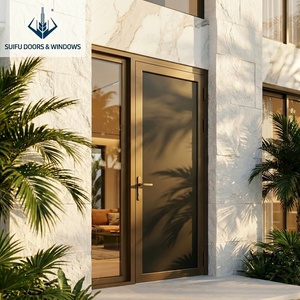
French Style Aluminum Alloy Swing Front Entry Door AS2047 Double Glazed Hurricane Proof Entrance Door
- Standard Test: AS2047 / NFRC Certified
- Profile Material: 6063-T6 Thermal Break Aluminum
- Glass Spec: 6mm + 12Ar + 6mm Toughened Low-E
- Wind Load Rating: Up to DP80 (4000 Pa)
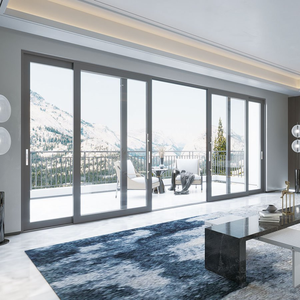
Hurricane Resistant Modern Aluminum Sliding Double Glazed Tempered Glass Windproof CE Certified Entry Door
- Certification: CE / EN 12210 Class C5
- System Width: 150mm Heavy Duty Track
- Interlock Sightline: 28mm Slim Reinforced Stile
- Seal Material: Continuous EPDM Triple Gasket
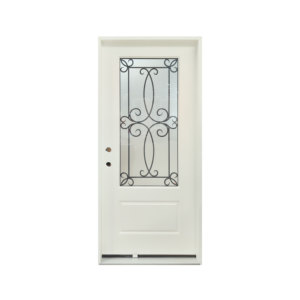
Weather-Resistant Red Entry Door with Geometric Leaded Glass & Raised Panel Traditional Exterior Door
- Core Insulation: Polyurethane High-Density Foam
- Panel Thickness: 70mm Reinforced Composite
- Glazing Safety: Triple-Pane Leaded SGP Laminated
- Lock Type: 5-Point German Security Gear
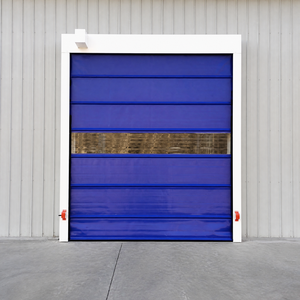
Rapid Stacking Door High Speed PVC Industrial Door Automatic Folding Security Gate Wind Resistant
- Wind Bar Ribs: High-Tensile Aluminum Rib Tubes
- Operating Speed: 0.8 m/s - 1.5 m/s Adjustable
- Curtain Fabric: 1.2mm High-Density PVC Fiber
- Wind Resistance: Class 10 (Beaufort Scale)

High-End Customized Modern Entrance Swing Door High Load-Bearing Wind-Resistant Anti-Theft Security System
- Hinge Rating: Heavy-Duty 300kg Stainless Pivot
- Frame Profile: 2.5mm Wall Thickness Aluminum
- Thermal Break: 24mm Polyamide Insulated Strip
- Acoustic Rating: Rw 42 dB Sound Isolation
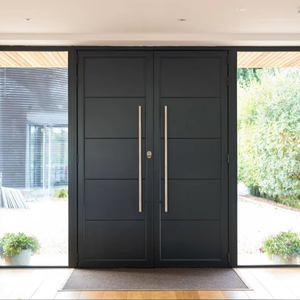
Popular Main Entrance Double Door Design Aluminum Sound Insulated Windproof Security Front Entry Doors
- Operation: Dual Swing with Flush Head Bolts
- Surface Coating: Fluorocarbon PVDF 3-Coat Paint
- Air Infiltration: Class 4 (EN 12207 Standard)
- Water Tightness: Class 9A (EN 12208 Standard)
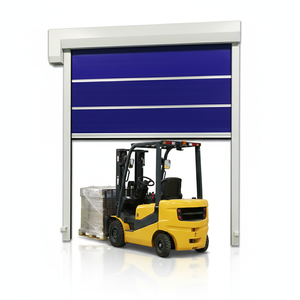
Wind Resistant High Speed Door with Reinforced Bars for External Warehouse Entrance
- Structure: Heavy Galvanized Steel Guide Track
- Wind Pressure: Resists Up to 120 km/h Gusts
- Motor Control: Servo Drive with Radar & Loop
- Safety System: Infrared Safety Light Curtain
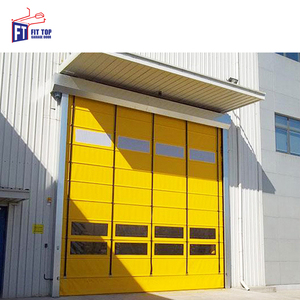
Electric Motorized Heavy Duty PVC Door with Strong Wind Resistance for Industrial Factory Stacking
- Folding Mechanism: Top-Strap High Speed Stacking
- Bottom Edge: Soft EPDM Wireless Safety Edge
- Frame Finish: Electrostatic Powder Coating
- Duty Cycle: Continuous High-Frequency Operation
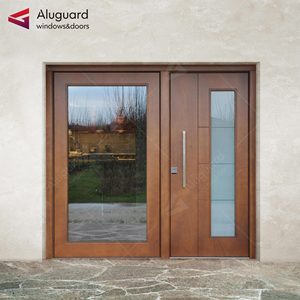
Modern Villa Aluminum Alloy Entry Front Doors with Metallic Design Exterior Use
- Design Profile: Architectural Metallic Cast Panel
- Frame Depth: 90mm Thermal Break Frame
- Locking System: Automated Biometric Multi-Point
- Corrosion Rating: C5 Coastal Grade Anodized
How Engineering Excellence Dictates Wind Load Performance
Understanding the physical mechanics behind wind resistance ensures project specifiers select door systems capable of resisting structural deflection and moisture intrusion under stress.
Moment of Inertia ($I_x$) & Deflection
Wind force creates bending moments along the door stile. Premium Chinese factories engineer extruded profiles with optimized cross-sectional moments of inertia ($I_x > 45 \text{ cm}^4$), limiting frame deflection to under $L/175$ or $L/240$ under maximum gust conditions (ASTM E330).
Multi-Point Pin Engagement
Single latch deadbolts fail under high cyclic wind pressure. Wind-resistant assemblies utilize German-engineered multi-point locking rods that drive hardened steel pins simultaneously into top, bottom, and side jamb keepers, distributing wind load evenly across the frame.
Polyamide Structural Shear
Thermal break profiles must balance insulation with mechanical strength. Utilizing PA66 GF25 (25% glass fiber reinforced polyamide) structural strips guarantees that the inner and outer aluminum extrusions resist shear forces under extreme thermal pressure gradients during storms.
Global Testing Standards & Wind Pressure Benchmarks
| Standard Certification | Geographic Region | Test Parameters | Maximum Pressure Threshold | Primary Sourcing Target Application |
|---|---|---|---|---|
| ASTM E330 / E1886 | North America / US HVHZ | Static & Cyclic Wind Pressure, Large Missile Impact | DP60 - DP100 (2880 Pa - 4800 Pa) | Coastal Villas, High-Rise Commercial Envelopes |
| AS2047 / AS1170.2 | Australia & Oceania | Ultimate Limit State (ULS) & Serviceability Limit State | 3000 Pa - 4500 Pa Structural Wind Rating | Residential Homes, Luxury Waterfront Properties |
| EN 12210 / EN 12207 | European Union / UK | Frame Deflection Class C1 to C5, Air Permeability Class 4 | Class C5 (Relative Deflection < 1/300 at 2000 Pa) | Passive House Architecture, High-Altitude Chalets |
| GB/T 7106-2019 | China National Standard | Wind Pressure Resistance, Air Tightness, Water Tightness | Class 9 (≥ 5.0 kPa Extreme Design Loading) | Industrial Warehouses, Super Tall Structure Entries |
Future Procurement Trends for Wind-Resistant Door Systems
Analyzing technological shifts, smart building compliance, and material engineering advancements shaping international door exports through 2026 and beyond.
1. Shift from PVB to Structural SGP Interlayers
Traditional Polyvinyl Butyral (PVB) glass interlayers soften under elevated summer temperatures, compromising structural rigidity during hurricanes. B2B importers are overwhelmingly specifying SentryGlas® (SGP) ionoplast interlayers. SGP is 100 times stiffer and 5 times tougher than standard PVB, maintaining structural barrier integrity even if both glass panes shatter under impact.
2. Automated Smart Active-Sealing Mechanisms
Future-ready entry doors are integrating motorized, sensor-driven active compression weather seals. Connected to building management systems (BMS) or local weather stations, these doors automatically engage secondary pneumatic or magnetic perimeter gaskets when wind speeds exceed 60 km/h, achieving zero air infiltration during severe storm events.
3. Low-Carbon Recycled Aluminum Extrusions
Environmental Product Declarations (EPD) and carbon footprint tracking are now mandatory criteria for tier-1 European and North American developers. Leading Chinese manufacturers are transitioning to primary billet aluminum smelted via hydropower, reducing embodied carbon to below 4.0 kg CO2e per kg of extruded profile while maintaining high tensile strength (6063-T6 temper).
4. Pre-Fabricated BIM & Digital Twin Integration
Modern B2B door sourcing has expanded beyond basic CAD shop drawings. Top China exporters provide native Autodesk Revit BIM models complete with finite element wind load analysis (FEA) datasets, enabling structural engineers to simulate dynamic wind-structure interactions prior to factory container loading.
Product Development Trends in High-Pressure Entry Assemblies
Discover how advanced factory automation and component engineering are solving traditional failure points in exterior door construction.
In conventional entry door manufacturing, wind failure typically occurs at three critical junction points: corner frame joint shear, threshold water blow-through under dynamic pressure, and latch deflection under negative suction load. Chinese OEM/ODM exporters have introduced structural innovations specifically designed to overcome these engineering vulnerabilities:
Corner Crimp Injected Glue Joints
Eliminating mechanical screws, frames utilize heavy-duty cast aluminum corner cleats inserted with dual-component structural epoxy injected under pressure, creating a seamless frame corner capable of resisting high torsional twist under wind vibration.
Drainage Cascade Threshold Systems
Incorporating hidden pressure-equalized weep valves and stepped aluminum sill drain channels. High external wind pressure cannot force trapped rainwater inward; instead, gravity cascades water outward through one-way flap valves.
Industrial PVC Wind Bar Reinforcement
For high-speed industrial warehouse openings, internal horizontal aluminum alloy wind bars are housed inside heavy PVC fabric sleeves. When severe wind strikes, forces transfer directly to steel vertical tracks, preventing door curtain blowout.
Primor Metal Door Co., Ltd. Manufacturing & Global Footprint
A direct factory partnership tailored around project drawing approval, custom engineering, and international distribution support.
As a premier manufacturer of custom aluminum windows, entry doors, pergolas, and sunrooms, Primor Metal Door Co., Ltd. operates an advanced production facility dedicated to made-to-measure B2B architectural orders. Rather than forcing clients into rigid catalog sizes, every unit is built according to your precise architectural drawings and window schedules.
Primor's engineering workflow begins with comprehensive pre-production shop drawing verification. Technical teams assess opening parameters, local wind load design pressures, thermal performance requirements, and hardware load-bearing limits before issuing detailed submittals for architect sign-off. This rigorous quality control ensures seamless job-site installation and zero field modifications.
Direct Factory Custom Sizing
Full engineering flexibility for extra-tall pivot entries, heavy double doors, and wide-span sliding assemblies crafted from premium thermal break aluminum profiles.
5 Physical US Showrooms
North American buyers can view full-scale displays and inspect extrusion profiles firsthand across showrooms in Los Angeles, Bay Area, Houston, Dallas, and Phoenix.
Export-Ready Logistics Packaging
Units are individual opening-labeled, corner-protected, wrapped in moisture barriers, and crated in fully enclosed fumigated plywood boxes for safe sea freight shipping.
Frequently Asked Questions for B2B Importers & Contractors
Expert answers to common engineering, logistics, testing, and custom manufacturing inquiries.
How do Chinese door manufacturers calculate Design Pressure (DP) ratings for specific wind zones?
Design Pressure (DP) ratings reflect a door assembly's structural resistance against positive and negative wind loads, measured in pounds per square foot (PSF) or Pascals (Pa). Qualified Chinese exporters utilize Finite Element Analysis (FEA) software to model frame profile cross-sections, glass thickness, corner joint strength, and hardware anchor spacing based on project wind speeds (e.g., ASCE 7 calculations). Physical mockups are then subjected to static air pressure testing in accredited laboratories (such as Intertek or SGS) to certify DP ratings ranging from DP40 up to DP100+.
What is the technical difference between PVB and SGP interlayers in wind-resistant glass doors?
Polyvinyl Butyral (PVB) is the standard interlayer used for basic safety glass, offering good acoustic insulation and impact resistance. However, under high structural wind loads or severe impact, broken PVB glass tends to sag and pull away from the frame channels. SentryGlas® (SGP) ionoplast interlayers are five times stiffer and up to 100 times more rigid than PVB. When SGP laminated glass breaks, the interlayer maintains structural rigidity, remaining upright within the aluminum frame and continuing to seal the building envelope against wind and rain entry.
How do industrial high-speed stacking doors maintain wind resistance during 100+ km/h gusts?
Industrial high-speed stacking doors engineered for external warehouse entry utilize continuous horizontal wind bars made of high-tensile extruded aluminum or steel tube inserts. These bars are spaced at regular vertical intervals inside double-layer PVC curtain pockets. During heavy wind gusts, wind load forces are transferred directly from the curtain through the wind bars into heavy-duty vertical steel side guide tracks anchored to the building structure, preventing curtain blowout or track dislodgement.
What core project details are required to receive an accurate structural shop drawing and quotation?
To prepare an accurate technical proposal and itemized quotation, factory engineers require: (1) Architectural drawings or a detailed door schedule showing rough opening dimensions; (2) Project location to calculate local wind loads and climate conditions; (3) Preferred opening operation (swing, slide, bi-fold, industrial stack); (4) Glass specifications (double/triple pane, Low-E, laminated impact rating); and (5) Desired frame finish (powder coating color, fluorocarbon PVDF, or wood grain finish).
Why are polyamide thermal breaks critical for wind-resistant aluminum entry doors in coastal regions?
Aluminum is a highly conductive metal. In coastal zones subject to temperature extremes between indoor air-conditioned spaces and hot, humid exterior storm conditions, non-thermal aluminum frames conduct heat rapidly, causing structural expansion, frame warping, and heavy interior condensation. Polyamide thermal breaks (PA66 GF25) structurally join interior and exterior aluminum extrusions while blocking thermal conduction, preventing thermal distortion that could compromise perimeter weatherstripping gaskets during windstorms.
Can Primor Metal Door Co., Ltd. accommodate custom architectural designs and supply samples?
Yes. Primor specializes in 100% custom made-to-measure production. Profile corner samples, glass finish swatches, and hardware sets can be shipped via express air freight to international project teams. Additionally, buyers in North America can inspect full-size working product displays directly at U.S. showrooms in Los Angeles, the Bay Area, Houston, Dallas, and Phoenix.
Start Your Custom Wind-Resistant Door Project Today
Consult with our structural engineering team for project drawing reviews, wind load design submittals, factory direct wholesale pricing, and worldwide logistics coordination.