Featured Reinforced Aluminum Door & Frame Assemblies
Factory-direct thermal break structural frame doors manufactured to exacting global engineering standards and custom architectural schedules.
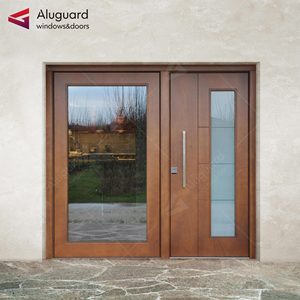
Modern Villa Aluminum Alloy Entry Front Doors with Metallic Design Exterior Use
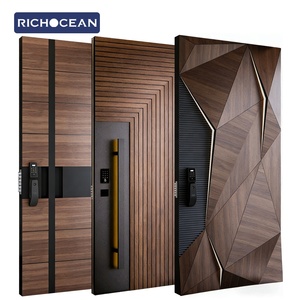
Richocean Luxury Bulletproof Front Entry Door Aluminum Storm Security Voordeur Residential Doors
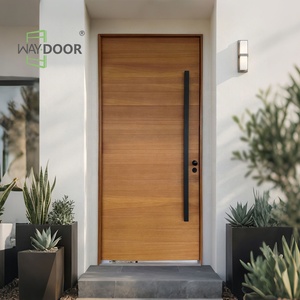
Custom Flush Oversized Front Entry Doors Heavy Duty Security Solid Wood Pivot Exterior Door
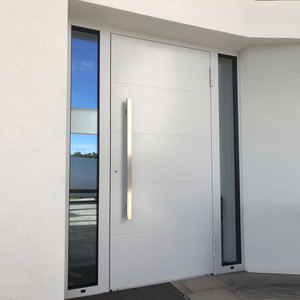
Villa Apartment Exterior Modern White Flat Panel Front Entry Pivot Custom Doors for House
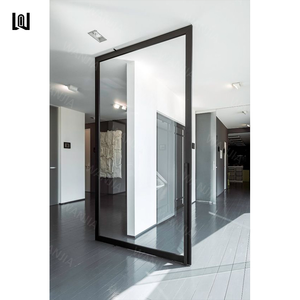
WANJIA Residential Interior Modern Pivot Door Electric Revolving Aluminum Pivot Door Systems
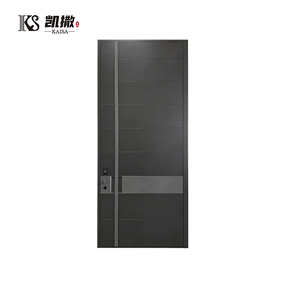
Modern Aluminium Pivot Entrance Door for Luxury Villa Front Entry Doors with Smart Lock
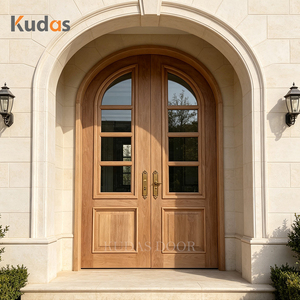
Modern European Arched Solid Wood Entry Double Door Exterior Arch Door With Tempered Glass
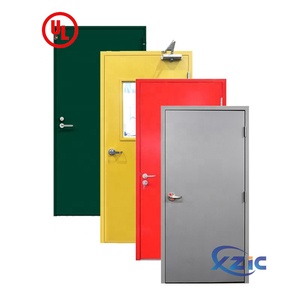
UL Listed Customized Apartment Fireproof Doors Security Steel Fire Door US Standard
State of the Art in Chinese Reinforced Aluminum Frame Manufacturing
In modern commercial and residential construction, the door frame is no longer treated merely as a passive perimeter surround. It is now recognized as a critical load-bearing, thermal-regulating, and security-enforcing envelope component. As architectural preferences shift toward oversized pivot doors, floor-to-ceiling glass panel walls, and high-security entry assemblies, traditional unreinforced or non-thermal aluminum frames fail to meet stringent building code mandates.
As a leading OEM/ODM manufacturer headquartered in China—operating globally as Primor Metal Door Co., Ltd. (Primor Entry Door)—we engineer reinforced aluminum door frames that resolve the fundamental trade-off between structural deflection resistance and thermal isolation. By combining high-tensile 6063-T6 and 6061-T6 aluminum extrusions with glass-fiber-reinforced polyamide (PA66GF25) thermal breaks, Chinese manufacturers have secured a commanding position in the international fenestration supply chain.
To streamline overseas procurement for general contractors, architects, real estate developers, and commercial importers, Primor maintains robust direct operations, including U.S. technical showrooms across key metro areas: Los Angeles (City of Industry, CA), Bay Area (Union City, CA), Houston (Sugar Land, TX), Dallas (Plano, TX), and Phoenix (Mesa, AZ). This dual-presence business model ensures that custom shop drawings are backed by localized technical consultation, rapid sample prototyping, and full export compliance.
Technical Development Trends in Reinforced Aluminum Framing
Key engineering innovations driving structural strength, energy conservation, and system integration in global fenestration.
1. Multi-Cavity Thermal Break Engineering
Historically, aluminum's high thermal conductivity ($k \approx 200 \text{ W/m}\cdot\text{K}$) led to significant energy loss and condensation issues. Modern Chinese manufacturing utilizes advanced multi-cavity extrusion profiles isolated by polyamide thermal strips (PA66 reinforced with 25% glass fiber). Infilling profile chambers with aerogel or high-density polyurethane (PU) foam achieves frame U-factors below $0.24 \text{ BTU/h}\cdot\text{ft}^2\cdot^\circ\text{F}$, supporting Passive House and Net-Zero Energy standards.
2. Structural Steel & Alloy Reinforcement
For oversized entrance systems exceeding 3.5 meters in height or supporting heavy insulated security glass, standard wall thicknesses (1.4mm–1.8mm) are insufficient. Leading Chinese exporters integrate concealed galvanized steel box sections or high-yield internal aluminum stiffeners ($T6$ temper alloy) inside the central extrusion chamber. This structural reinforcement ensures wind load resistance exceeding 7500 Pa (ASTM E330) without visual frame bulking.
3. Smart Hardware & Security Integration
The modern door frame is an active electrical chassis. Extrusions are now custom-milled via 5-axis CNC machines to accommodate motorized multi-point lock systems, biometric access controllers, electromagnetic strikes, and hidden wiring channels. Frames are structurally prepared for heavy-duty 3D adjustable 304/316 stainless steel pivot hinges capable of smoothly supporting panel loads upwards of 600 kg.
Reinforced Frame Specification & Performance Matrix
Comparative analysis of core profile series manufactured by Primor Metal Door Co., Ltd. for international project specifiers.
| Profile Series | Alloy & Temper | Wall Thickness | Thermal Break Tech | U-Factor Range | Max Wind Load (Pa) | Primary Application |
|---|---|---|---|---|---|---|
| Series 105 Heavy-Duty | 6063-T6 Aluminum | 2.0 mm – 2.5 mm | 24mm PA66GF25 Strip | 0.26 – 0.30 | 5,500 Pa | High-Traffic Sliding Patio Doors |
| Series 119 High-Security | 6061-T6 Reinforced | 2.5 mm – 3.0 mm | 34mm PA66 + Foam Cavity | 0.18 – 0.22 | 7,500 Pa (HVHZ) | Luxury Villa Front Entry & Security |
| Series 77 Heavy Bi-Fold | 6063-T6 Aluminum | 2.0 mm – 2.2 mm | 20mm PA66 Strip | 0.28 – 0.32 | 4,800 Pa | Commercial & Residential Bi-Fold Walls |
| Series 88 Swing/Casement | 6063-T5 / T6 | 1.8 mm – 2.0 mm | 14.8mm Polyamide Bar | 0.30 – 0.35 | 4,200 Pa | Balcony Access & French Door Assemblies |
| Series 150 Oversized Pivot | 6061-T6 Integrated Steel | 3.0 mm – 4.0 mm Structural | Multi-Cavity Dual Strip | 0.22 – 0.25 | 6,800 Pa | Architectural Oversized Villa Pivots |
Future B2B Procurement Trends (2025–2030)
Navigating supply chain evolution, certification requirements, and direct-factory sourcing models in China.
Shift Toward Direct CAD/BIM Shop Drawing Approval Workflows
Global buyers are moving away from stock-catalog purchasing toward project-based direct engineering. Importers now demand full integration between architectural Revit models and factory CNC tooling lines. Suppliers are expected to deliver 3D shop drawings showing exact wall anchor placements, flashing details, thermal boundary continuity, and structural expansion joints before extrusion cutting begins.
This zero-error tolerance drastically lowers job site adjustment costs and facilitates smooth approvals by local Building Inspectors across the North American and European markets.
Decarbonization & LEED v4.1 Carbon Footprint Mandates
Environmental Product Declarations (EPDs) are rapidly evolving from a marketing luxury to a mandatory procurement gatekeeper. Top-tier Chinese suppliers are investing in hydro-powered or solar-powered aluminum smelting to offer low-carbon primary aluminum billets ($<4.0 \text{ kg CO}_2/\text{kg Al}$).
Additionally, advanced surface treatments—such as PVDF (Fluorocarbon 70% Kynar 500) coatings and chrome-free pretreatment anodizing—are engineered to withstand 30+ year salt-spray exposure (AAMA 2605 standard) while maintaining full recyclable compliance.
Rigorous Third-Party Certification & Testing Audits
Verification of claims is paramount in international trade. Procurement teams now require direct factory proof of certified test performance from recognized laboratories (such as Intertek, SGS, or UL).
Crucial test standards include NFRC 100/200 (U-factor and Solar Heat Gain Coefficient), ASTM E283 (Air Leakage), ASTM E331 (Water Penetration Resistance), and Florida Building Code TAS 201/202/203 for Large Missile Impact testing in High-Velocity Hurricane Zones (HVHZ).
Localized Service Infrastructure by Foreign Exporters
The traditional cross-border buyer friction—long feedback loops, language barriers, and uncertainty in warranty execution—is being dismantled by progressive exporters.
By establishing permanent regional technical hubs (such as Primor's five physical showrooms in California, Texas, and Arizona), China-based manufacturing hubs can provide local architectural consultations, physical profile swatch reviews, local warehouse spare parts, and site measurement support.
Why Global Project Teams Specify Primor Entry Door
100% Made-to-Measure Engineering
We operate zero fixed-size production lines. Every single reinforced aluminum door frame is custom-extruded, CNC cut, and fabricated precisely according to your architectural rough opening specifications, mullion configurations, and architectural schedules.
Factory-Direct Pricing with Zero Middlemen
By eliminating domestic distributors and intermediary brokers, Primor delivers premium-tier thermal break frame assemblies at direct factory costs, saving B2B buyers between 30% and 50% on project fenestration budgets without sacrificing material grade or performance.
Export Crating & Global Logistics Support
Frames are labeled individually by architectural grid line ID, wrapped in protective anti-scratch film, and encased in fully enclosed IPPC-certified fumigation-free wooden crates with steel strapping. We handle full shipping documentation for CIF, DDP, or FOB port delivery.
Frequently Asked Questions for Sourcing Managers
Addressing key technical, logistical, and commercial inquiries during the supplier evaluation phase.
Why should we choose reinforced aluminum door frames over traditional hollow aluminum frames?
Traditional hollow aluminum door frames lack structural rigidity under heavy wind loads and possess high thermal conductivity, leading to condensation, air leakage, and energy waste. Reinforced aluminum frames utilize internal structural steel or high-tensile 6061-T6 alloy ribs to handle heavy glass or oversized panels (such as 4-meter pivot doors). Combined with Polyamide PA66GF25 thermal break strips, reinforced frames provide superior structural durability, enhanced security against physical intrusion, and lower overall building operational energy costs.
What extrusion alloys and surface finishes do you supply for coastal or high-corrosion environments?
For coastal and high-humidity applications, we supply prime 6063-T6 or 6061-T6 architectural grade aluminum extrusions. Frame surfaces undergo a pre-treatment chromate-free conversion process before receiving a 3-coat PVDF (Fluorocarbon 70% Kynar 500) paint system or a 25-micron structural anodized finish. These coatings conform to AAMA 2605 specifications, guaranteeing resistance against salt fog corrosion, color fading, and chalking for up to 30 years.
Can Primor custom-manufacture door frames according to our architectural drawings and CAD files?
Yes. Every frame assembly manufactured by Primor Metal Door Co., Ltd. is engineered from scratch based on your project drawings, window schedules, and BIM files. Our in-house facade engineering team converts your architectural concepts into detailed 2D/3D shop drawings showing exact wall anchor locations, hardware pre-milling cutouts, thermal break alignments, and drainage paths. Production only commences after your formal engineering sign-off.
How do you ensure hardware compatibility with international smart lock and security brands?
Our 5-axis CNC machining centers are pre-programmed with digital templates for major global hardware brands, including GU, Hoppe, Siegenia, Roto, Dormakaba, and Yale smart lock systems. We can pre-drill, pocket-mill, and reinforce the internal aluminum profiles to allow seamlessly embedded installation of electronic mortise locks, wire pass-through conduits, drop-down acoustic bottom seals, and heavy-duty concealed hinges.
What is the typical production lead time and export packing protocol for overseas container orders?
Standard manufacturing lead time is 25 to 35 business days following final shop drawing sign-off and deposit receipt. For logistics protection, frames and sashes are sealed in protective polyethylene film, corner-guarded with high-density foam, and packed inside ocean-ready, fully enclosed IPPC plywood crates. Crates are engineered for forklift unloading and balanced container weight distribution.
Can overseas clients inspect products or samples prior to placing a volume order?
Absolutely. Prospective buyers are welcome to visit our physical showroom locations in Los Angeles, the San Francisco Bay Area, Houston, Dallas, and Phoenix to inspect full-scale working display units, corner cutaway samples, and finish swatches. International buyers can also request physical profile sample boxes shipped directly via DHL/FedEx prior to contract signing.
Accelerate Your Project with Custom Engineered Frame Solutions
Submit your architectural schedules or structural drawings today. Our engineering team will return a comprehensive technical proposal, shop drawing review, and direct-factory quotation within 24 hours.