Featured OEM Low-E Glass & Security Entry Systems
Factory-direct fenestration solutions custom-manufactured to architectural specifications and international building codes.
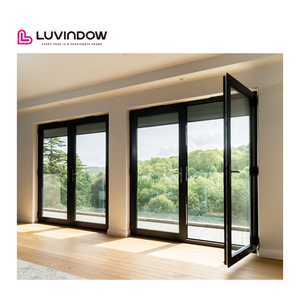
Premium Double Glass Entry Doors Coastal Home Exteriors Swing Style Aluminum Alloy Hurricane-Resistant & Premium Quality
Get Catalog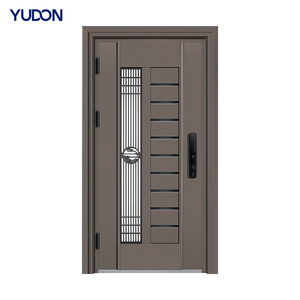
YUDON DOOR Automatic Sliding Stainless Steel Exterior And Front Doors For Villas Homes With Secure Locking System Door Entrance
Get Catalog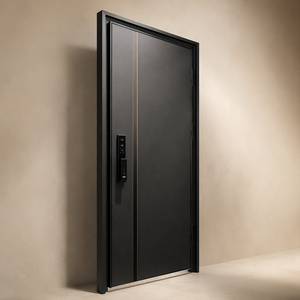
Anti Theft Smart Entry Door Digital Keypad Modern Black Exterior Front Door Stainless Steel for Safe Home Apartment Entrance
Get Catalog
FCV4905 AI Smart Lock For Multi-Apartment Linux RFID Face Recognition System Reset Feature Door Access Control Products
Get Catalog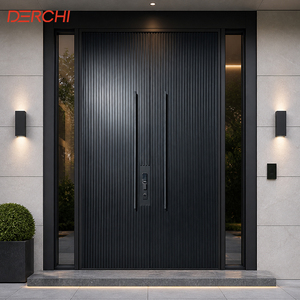
Double Front Entry Door Aluminum Exterior Security Door Heavy Duty for Residential and Commercial Buildings
Get Catalog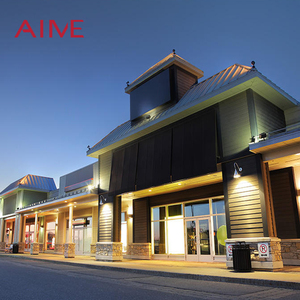
Glass Door Commercial Fire-Rated Impact-Resistant Door for High-Security Areas
Get Catalog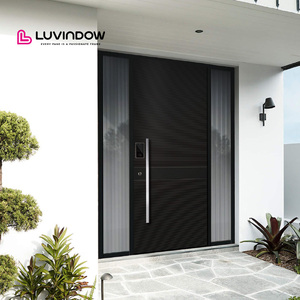
Best Selling Securely Sophisticated Aluminum Alloy Exterior Doors Nice Quality Anti-theft Security Entry Doors For Villa
Get Catalog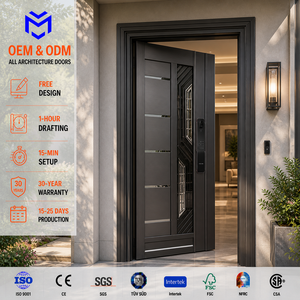
Custom French High Quality Exterior Interior Front Entry Gold Security 304 Stainless Steel Door For Houses With Smart Lock
Get CatalogThe Thermodynamics of Low-E Glass Front Door Manufacturing
In modern architectural fenestration, the entry door is no longer merely a passive security barrier; it operates as a critical, high-performance building envelope interface. As commercial developers and luxury residential project managers strive to meet strict Passivhaus and zero-energy building (ZEB) standards, foreign trade procurement teams must look past surface aesthetic treatments and thoroughly analyze the structural science of low-emissivity (Low-E) glazing combined with thermal break metals.
Low-Emissivity glass coatings function by utilizing microscopically thin, transparent layers of metallic oxides (principally silver, $\text{Ag}$) deposited directly onto float glass. These atomic coatings selectively reflect long-wave infrared thermal radiation while maintaining exceptionally high visible light transmittance (VLT). When integrated into double or triple-pane Insulated Glass Units (IGUs), Low-E coatings reduce radiative heat transfer across the glass cavity by up to 78% compared to standard clear annealed glass.
Soft-Coat (Sputtered) vs. Hard-Coat (Pyrolytic) Low-E
Selection criteria for international sourcing managers:
- Off-Line Soft Coat (MSVD Process): Multi-layer silver stacks (Double or Triple Silver $\text{Ag}$) applied in vacuum chambers. Delivers optimal U-factors ($\le 0.14$) and Solar Heat Gain Coefficients (SHGC $\approx 0.22 - 0.30$), ideal for extreme climates.
- On-Line Hard Coat (Pyrolytic): Tin oxide layer fused to red-hot glass ribbon during production. Highly durable and scratch-resistant, preferred for single glazing applications or high-exposure industrial entrances.
PA66 GF25 Polyamide Bars
Standard aluminum extrusions exhibit high thermal conductivity. Premier OEM factories split interior and exterior aluminum profiles using 25% glass-fiber reinforced polyamide (PA66 GF25) mechanical locks, reducing frame heat transfer by over 60%.
IGU Inert Gas Infusion
Inter-pane IGU cavities are evacuated and filled with 90%+ pure Argon ($\text{Ar}$) or Krypton ($\text{Kr}$) gas. Combined with warm-edge stainless steel or composite spacers, conductive convection currents within the air gap are virtually eliminated.
Structural Security & Impact Glazing
Laminated Low-E glass combines SentryGlas® (SGP) or PVB interlayers between tempered glass panes. Doors pass ASTM E1886/E1996 large missile impact tests, protecting coastal properties against hurricane force winds and forced entry.
Performance Specification Matrix for OEM Glazing Configurations
Comparative physical properties of front entry door glass units for architectural specification sheets.
| Glazing Specification Type | U-Factor (US) | SHGC Range | VLT % | Acoustic Rating (STC) | Compliance Standards |
|---|---|---|---|---|---|
| Single Pane Hard-Coat Low-E | 0.48 - 0.55 | 0.62 - 0.70 | 76% | 28 - 30 dB | Standard Code |
| Double IGU (6mm Tempered + 12Ar + 6mm Low-E) | 0.24 - 0.28 | 0.35 - 0.45 | 68% | 35 - 38 dB | NFRC / CE Certified |
| Double Low-E + SGP Laminated Hurricane Impact | 0.22 - 0.25 | 0.28 - 0.38 | 62% | 40 - 42 dB | Florida HVHZ Approved |
| Triple IGU (Double Silver Low-E + Krypton Gas) | 0.12 - 0.16 | 0.20 - 0.28 | 55% | 42 - 45 dB | Passivhaus Verified |
| Vacuum Insulated Glass (VIG) Hybrid Unit | 0.08 - 0.11 | 0.18 - 0.25 | 65% | 44 - 48 dB | Next-Gen ZEB Standard |
Future Procurement Trends in Low-E Front Door Manufacturing
As international construction workflows shift toward digital-first procurement and sustainable supply chains, commercial buyers, door importers, and general contractors are recalibrating their vendor assessment frameworks. Over the 2026-2030 horizon, four transformative trends are dictating OEM entry door sourcing strategies:
1. AI-Driven Smart Lock Integration
Mechanical keyways are rapidly yielding to concealed biometric hardware. Modern OEM factories embed embedded Linux-based AI face recognition sensors, 13.56MHz RFID cards, and AES-128 encrypted keypad modules directly into thermal break door stiles during aluminum profile extrusion.
2. Dynamic & Electrochromic Smart Glass
Low-E glass is morphing into active fenestration. Sourcing managers are increasingly requesting custom OEM front doors integrated with electrochromic film layers, allowing occupants to switch from crystal-clear transparency to opaque privacy via mobile apps or home automation systems.
3. Environmental Product Declarations (EPD) & Carbon Footprint Audit
Leading European and North American importers now demand verified EPD documentation detailing the embodied carbon of 6063-T6 aluminum alloys and recycled glass content. Premier OEM exporters utilize hydro-electric powered aluminum smelting to guarantee low environmental impact.
4. Direct BIM/Revit CAD Customization Workflows
The modern supply chain eliminates off-the-shelf sizing friction. Builders submit architectural Revit BIM models directly to factory engineering departments. Precision CNC 5-axis machining ensures rough opening tolerances within $\pm 0.5\text{mm}$ prior to ocean export transport.
Enterprise Manufacturing Strength & OEM Advantage
Direct factory infrastructure tailored for high-volume B2B importers, architects, and estate developers.
100% Made-to-Order Customization
Zero inventory locks. Every door profile, sash width, glass stack, powder coat shade (RAL spectrum), and handle hardware is engineered directly from your structural drawings.
U.S. Showroom Network Support
Bridging global export logistics with localized service. Inspect full-scale physical profile samples and mockups at showrooms in Los Angeles, Bay Area, Houston, Dallas, and Phoenix.
Export-Grade Protective Packaging
Heavy-duty fully enclosed fumigated plywood crates, corner protector caps, and moisture-barrier vacuum wrapping guarantee safe ocean container shipping to worldwide ports.
Six-Step Project Delivery & Production Workflow
How our factory partners execute complex foreign trade door packages from initial draft to site installation.
Drawing Audit
Submission of CAD/BIM architectural window schedules. Structural engineers audit rough openings and wind load criteria.
Thermal Simulation
Computerized LBNL THERM analysis verifying U-factor, SHGC, and dew point condensation risks for target climate zones.
Shop Approval
Issuance of detailed 1:1 scale shop drawings detailing glass build-up, threshold drain channels, and wiring diagrams for smart locks.
Precision Production
Automated German Elumatec CNC profile cutting, corner crimping, Low-E glass washing, argon gas charging, and dual-seal corner assembly.
QA & Air/Water Test
In-factory chamber testing for air infiltration (ASTM E283) and water resistance (ASTM E331) prior to surface coating quality inspection.
Crating & Logistics
Barcoded crate packing matched to elevation tags, container loading coordination, and provision of full customs clearance paperwork.
Frequently Asked Questions (FAQ)
In-depth technical guidance for architectural specifiers, door importers, and project engineers.
What technical parameters define high-performance Low-E glass in front entry doors?
How does a thermal break frame prevent condensation on glass entry doors?
Can OEM front doors be customized to hurricane-impact and forced-entry standards?
What surface finish options are available for exterior aluminum and stainless steel doors?
- Fluorocarbon PVDF Coating: 3-coat/2-bake PPG/AkzoNobel paint system offering maximum chalking and fade resistance (AAMA 2605 compliant, 20+ year warranty).
- Architectural Powder Coating: Extensive RAL color palette available in satin, matte, textured, and metallic luster finishes.
- Thermal Vacuum Wood Grain Transfer: Replicates natural timber aesthetics (Walnut, Oak, Teak) on lightweight, non-warping aluminum substrate.
- 304/316 Stainless Steel PVD Anodizing: Physical Vapor Deposition creating luxurious Brushed Gold, Rose Gold, and Black Titanium metallic sheens with superior surface hardness.
What is the factory lead time and minimum order quantity (MOQ) for custom B2B projects?
How are smart locks, access control, and electronic wiring integrated into OEM door production?
Do you provide structural shop drawings and BIM support prior to production?
Partner with a Leading OEM Low-E Glass Door Factory
Request a comprehensive product catalog, schedule a virtual factory tour, or submit your architectural window schedule for an immediate engineering quote.