
Executive Whitepaper: Strategic Sourcing & Engineering Standards for Custom OEM Aluminum Doors
In modern architectural design and real estate development, exterior fenestration systems are no longer treated as passive building envelope components. Today, selecting a Custom OEM Custom Aluminum Door Manufacturer & Factories partner represents a critical strategic decision impacting thermal performance, structural resilience, structural load dynamics, occupant security, and long-term carbon footprint compliance. As global energy performance codes—such as ASHRAE 90.1, IECC 2024, and Europe's EPBD directives—tighten operational carbon targets, the architectural market is undergoing a rapid transition toward high-precision thermal break aluminum extrusions, multi-tier security access controls, and bespoke OEM manufacturing workflows.
This technical whitepaper provides developers, architectural firms, general contractors, and overseas importers with an authoritative evaluation of custom aluminum door manufacturing protocols. By analyzing metallurgical material standards, thermal insulation physics, hardware load engineering, and supply chain risk mitigation, this report establishes a standardized procurement baseline for enterprise B2B buyers.
1. Metallurgical Excellence & Structural Extrusion Standards
The foundational integrity of any custom aluminum door begins in the extrusion die matrix. Modern high-rise residential complexes, luxury single-family estates, and heavy-duty commercial facilities demand structural frames capable of withstanding lateral wind loads exceeding 5,000 Pascals (Pa) while resisting dynamic deflection under continuous daily cycles.
Aluminum Alloy Chemistry: 6063-T5 vs. 6063-T6 Analysis
Primary OEM manufacturing facilities utilize high-purity aluminum-magnesium-silicon alloys under ASTM B221 specifications. The two most prominent temper designations deployed in custom door fabrication are 6063-T5 and 6063-T6:
- 6063-T5 Temper: Artificially aged post-extrusion. Provides superior surface smoothness, ideal for complex anodized and Qualicoat Class 2 powder-coated finishes. Yield strength typically averages 145 MPa, making it suitable for standard interior and residential patio sliding frames.
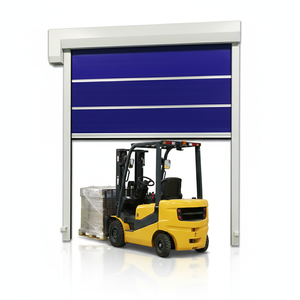
- 6063-T6 Temper: Solution heat-treated and artificially aged. Delivers elevated tensile strength (yield strength ≥ 170 MPa, ultimate tensile strength ≥ 205 MPa). T6 tempered profiles are mandatory for extra-large structural pivot doors, heavy curtain wall entry doors, and wind-resistant industrial high-speed openings where structural flexure must be minimized.
Structural Yield Strength
Reinforcing structural mullions with 6063-T6 aluminum alloys prevents dynamic frame racking, preserving tight weather-seal contact even under extreme positive and negative wind pressures.
Thermal Barrier Physics
Utilizing 24mm to 34mm PA66-GF25 polyamide thermal break strips interrupts conductive heat transfer through the aluminum frame, yielding U-factors down to 0.18 BTU/h·ft²·°F.
Biometric & AI Integration
Seamless embedding of Linux-based facial recognition access controllers, RFID keycards, and fail-safe electromagnetic locks directly into door stiles during factory pre-assembly.
2. Thermal Break Mechanics & Energy Efficiency Ratings
Aluminum is inherently a highly conductive material, with a thermal conductivity rating of approximately 200 W/m·K. To meet stringent green building codes (such as LEED v4.1, Passive House performance, and NFRC certifications), custom aluminum doors must incorporate an advanced thermal break strip design.
Our custom manufacturing process mechanically crimps structural PA66-GF25 (Polyamide 66 reinforced with 25% glass fiber) between the interior and exterior aluminum extrusions. Polyamide 66 exhibits a thermal conductivity of merely 0.30 W/m·K—representing a 600-fold reduction in thermal bridging compared to solid aluminum profiles. Combined with double or triple-pane Insulated Glass Units (IGUs) incorporating warm-edge spacers, Low-E pyrolytic coatings, and 90% Argon gas fill, the complete door assembly achieves superior thermal insulation performance:
- U-Factor Performance: Achieves frame-and-glass overall U-factors ranging from 0.85 W/m²·K to 1.2 W/m²·K (0.15 to 0.21 BTU/h·ft²·°F), sharply curbing heating and cooling loads.
- Solar Heat Gain Coefficient (SHGC): Customizable glass tints and Low-E solar control layers tune SHGC ratings between 0.22 and 0.40, optimizing natural daylighting while mitigating internal solar heat build-up in tropical or sun-heavy regions.
- Condensation Resistance Index (CR): Thermal break profiles eliminate interior frame sweat and humidity precipitation, preventing mold formation and structural perimeter seal degradation over decades of service.
3. Future Procurement & Technological Trends in Custom Aluminum Doors
As the international construction market accelerates into the late 2020s, procurement directors and project specifiers are prioritizing three major technological developments within custom OEM aluminum door manufacturing:
Trend A: AI-Powered Smart Access Control & Embedded Linux Ecosystems
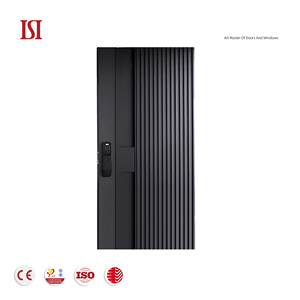
Traditional physical keys are being systematically replaced by multi-factor biometric verification platforms in multi-family luxury apartments, commercial office towers, and high-security residences. The integration of Linux-based AI facial recognition, encrypted RFID keycards, and remote smartphone control (as exemplified by modern smart door lock products like the FCV4905 series) requires factories to offer precision CNC cutout channels, concealed wiring raceways, and reset features pre-tested on the factory floor before export shipment.
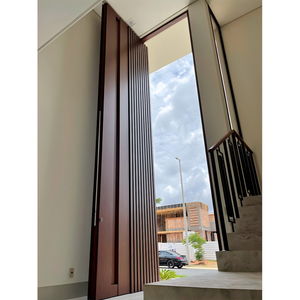
Trend B: Extra-Large Architectural Openings & Heavy-Duty Pivot Systems
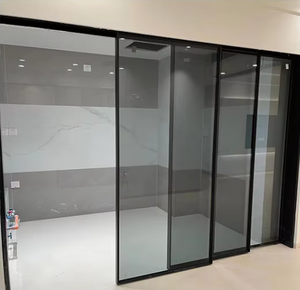
Contemporary luxury residential architecture demands expansive sightlines and uninterrupted indoor-outdoor transitions. This trend has driven massive demand for extra-large aluminum pivot doors and multi-track motorized sliding systems exceeding heights of 4 meters (13 feet) and widths of 2.5 meters per panel. Achieving flawless operation at this scale demands custom steel-reinforced structural aluminum extrusions, heavy-duty floor-mounted hydraulic pivot hinges capable of supporting up to 500 kg (1,100 lbs), and precision German-engineered multi-point hardware.
Trend C: Resilient Hurricane Impact & UL Fire-Rated Hybrids
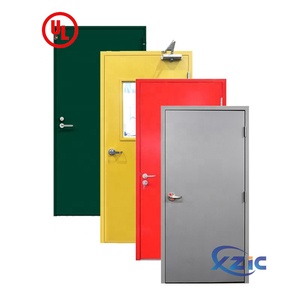
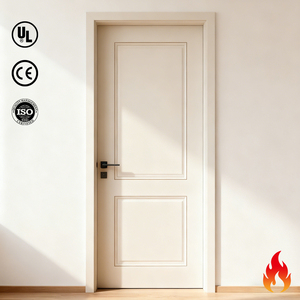
With extreme weather events increasing globally, procurement schedules now frequently specify dual-certified fenestration packages. Custom aluminum doors are engineered to comply with Florida Building Code (FBC) High-Velocity Hurricane Zone (HVHZ) impact testing—utilizing laminated SentryGlas® interlayers—while combining internal UL 10C fire-rated steel or wood composite cores for hotel and apartment corridor entry doors.
4. Enterprise Strengths & Factory Capabilities: Primor Metal Door Co., Ltd.
When choosing a manufacturing partner, architectural firms and international trade distributors require verified manufacturing authority, quality control compliance, and localized customer support. Primor Metal Door Co., Ltd. stands as an industry leader in custom aluminum door and window manufacturing, bridging overseas production precision with localized market responsiveness.