High-Performance Exterior Pivot Entry Systems
Engineered for luxury residential villas, high-end commercial entries, and architectural hardware distributors worldwide.
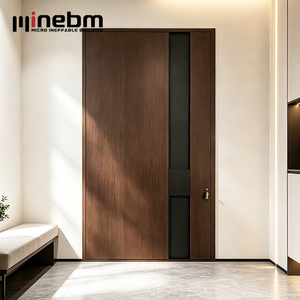
Italian Luxury Exterior Security Front Pivot Door Modern Entry System
Send an Inquiry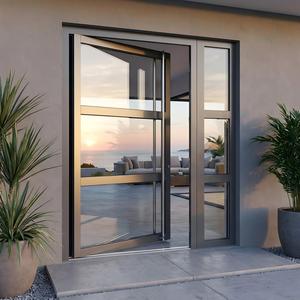
Modern Black Aluminum Pivot Door With Sidelights & Grid Glass
Send an Inquiry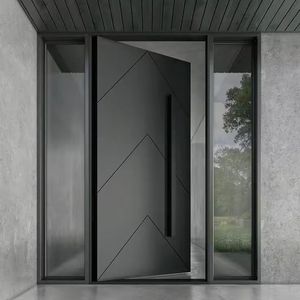
Minimalist Aluminum Anti-Theft Front Pivot Entry Door System
Send an Inquiry
Exterior Anti-Theft Reinforced Steel & Aluminum Composite Pivot Door
Send an Inquiry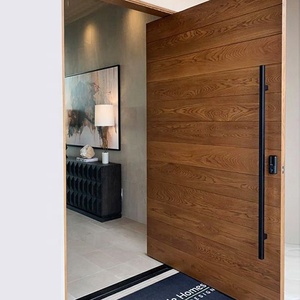
Architectural Teak Solid Wood & Aluminum Hybrid Exterior Pivot Door
Send an Inquiry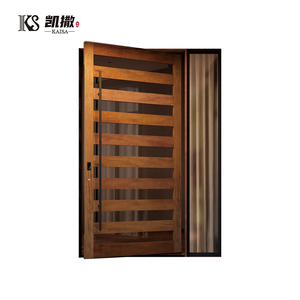
Soundproof Cast Aluminum Luxury Armor Exterior Security Pivot Door
Send an Inquiry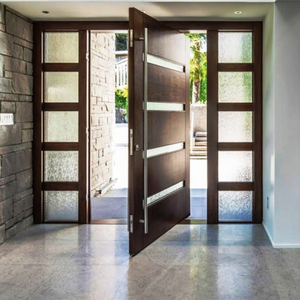
High Gloss Metallic Finish Modern Pivot Entrance System with Sidelites
Send an Inquiry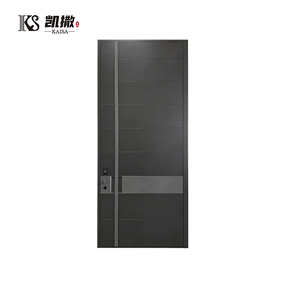
Modern Thermal Aluminum Villa Pivot Entry Door with Biometric Smart Lock
Send an InquiryThe Paradigm Shift in B2B Pivot Door Procurement
Why international architects, commercial developers, and door importers are shifting wholesale manufacturing to specialized Chinese industrial clusters.
Architectural Scale & Oversized Aesthetics
Modern luxury architectural designs demand grand entrance doors exceeding 3.5 meters in height and 2.0 meters in width. Traditional butt-hinge side doors suffer from severe sag, hardware fatigue, and frame deflection under these loads. Pivot door systems solve this structural limitation by transferring 90% of the door leaf weight directly to the subfloor through vertical axial floor springs. Chinese wholesale manufacturers have led this structural evolution by developing ultra-thick 6063-T6 aluminum extrusions capable of supporting up to 800 kg door leaves without structural degradation over long service cycles.
Cost-to-Value & Manufacturing Precision
Sourcing custom architectural pivot doors from European fabricators often incurs prohibitive costs and extended 20-24 week lead times. By leveraging advanced 5-axis CNC machining centers, automated powder-coating lines, and integrated supply chains for hardware like Dormakaba, Geze, or heavy-duty OEM hydraulic springs, top-tier manufacturers in China deliver enterprise-grade pivot entry systems at a fraction of Western production costs. Buyers receive fully shop-drawn, factory-tested assemblies ready for direct job-site installation within 4-6 weeks from drawing sign-off.
Information Gain Key Takeaway for Wholesale Buyers
A true commercial-grade pivot door is not simply an oversized standard door with shifted hinges. It requires a dedicated internal steel skeleton, specialized dual-chamber thermal break profiles (such as Polyamide PA66GF25), perimeter drop-down automatic acoustic seals, and counter-balanced floor hydraulics to ensure smooth operating forces under 15 N even on panels weighing over 400 kg.
Structural Engineering & Material Technology
Examining the hardware assemblies, thermal breaks, and security locking systems that define high-end exterior pivot doors.
Hydraulic Floor Springs & Axis Hardware
The core of any exterior pivot door is its bottom pivot mechanism. Modern Chinese export systems utilize heavy-duty hydraulic floor springs featuring adjustable 2-speed closing controls, 90° hold-open indexing, and backcheck dampening. The pivot spindle is offset by 150mm to 300mm from the jamb, distributing torsional stress evenly across the floor slab rather than warping the vertical door frame.
Anti-Warp Core & Thermal Isolation
Large exterior doors exposed to direct sun on the outside and air conditioning on the inside experience high thermal gradient expansion, leading to severe bowing or latch binding. Advanced Chinese pivot doors utilize multi-layer composite cores—combining high-density polyurethane insulation, structural steel anti-warping tubes, and dual PA66GF25 thermal breaks that eliminate cold bridges and prevent thermal deflection.
Motorized Multi-Point Locking & Smart Access
Traditional single-point deadbolts are insufficient for large pivot slabs. Leading manufacturers integrate automatic motorized multi-point locks (3-point or 5-point stainless steel hooks) that deploy upon door closure. Electrical power and signal lines pass seamlessly through a internal rotatable wire conduit inside the top pivot pin, connecting to 3D facial recognition, fingerprint readers, or home automation control systems.
| Performance Metric | International Standard | China Wholesale Engineering Benchmark | Architectural Application Impact |
|---|---|---|---|
| Air Permeability | EN 12207 / ASTM E283 | Class 4 (≤ 0.5 m³/h·m at 600 Pa) | Prevents draft, wind noise, and dust ingress in coastal/high-rise environments. |
| Water Tightness | EN 12208 / ASTM E331 | Class E900 (900 Pa pressure resistance) | Utilizes automatic drop-down bottom weather seals and hidden gutter drainage. |
| Wind Load Resistance | EN 12210 / ASTM E330 | Class C5 (Up to 5000 Pa deflection limit) | Guarantees structural safety for oversized doors in hurricane/cyclone regions. |
| Thermal Insulation (U-Factor) | ISO 10077-2 / NFRC 100 | U-Value: 0.18 – 0.24 BTU/h·ft²·°F | Meets strict U.S. Title 24, IECC 2024, and EU Passive House energy requirements. |
| Acoustic Attenuation | ISO 140-3 / ASTM E90 | STC 38 dB – 45 dB (Multi-chamber glass) | Blocks urban traffic, airport noise, and ambient exterior disturbances effectively. |
2026–2030 Global Procurement & Design Trends
Strategic market shifts shaping the next decade of wholesale front entry door manufacturing.
1. Sintered Stone (Rock Slab) & Armor Cast Aluminum Facades
While traditional timber doors remain popular, B2B buyers are increasingly specifying non-weathering composite claddings. Sintered stone slabs (3mm to 6mm thickness fused to aluminum honeycomb backings) offer scratch-resistant, UV-proof, zero-maintenance exterior finishes. Cast aluminum armor plates with deep 3D sculptural reliefs provide high-security bullet-resistant entryways demanded by luxury estate projects in North America, the Middle East, and South America.
2. Zero-Threshold Flush Floor Transitions
Universal accessibility and seamless indoor-outdoor architectural flows are driving demand for sub-floor flush threshold systems. Manufacturers are integrating concealed drainage channels with magnet-activated bottom weatherstripping. When the door closes, magnetic strips draw the bottom seal down tight against the subfloor channel; when opened, the seal retracts fully, leaving a 100% barrier-free floor plane without tripping hazards.
3. Ultra-Slim Interlocks & Integrated Full-Height Sidelites
Rather than treating the front door as an isolated unit, modern architectural schedules specify unified entry envelopes. Pivot doors are now manufactured with matching ultra-slim frame profiles that connect seamlessly to full-height structural glass sidelites and transoms. Double Low-E argon-filled laminated tempered glass panels match the frame finish exactly, enhancing natural daylight while maintaining strict thermal insulation values.
4. BIM/CAD Direct-to-Factory OEM Workflows
Wholesale procurement is shifting away from standardized product catalogs toward digital parametric manufacturing. Importers and general contractors submit direct Building Information Modeling (BIM) files or DWG CAD window schedules. Chinese engineering teams issue fully detailed shop drawings—including anchorage details, floor spring box recess depth specs, wiring diagrams, and structural calculations—within 48 hours, eliminating job-site installation mismatches.
Manufacturing Edge: Primor Metal Door Co., Ltd.
Empowering global B2B clients with project-tailored engineering, factory-direct pricing, and local support networks.
100% Made-to-Measure Production
We build strictly to your architectural drawings or opening schedule. No restrictive standard sizes. Our engineers calculate structural deflection, hinge point placement, wind resistance, and seal clearance for every unique opening.
Direct U.S. Showroom Network
Bridge the overseas sourcing gap with our local U.S. physical presence. Clients can inspect full-size working pivot doors, test hardware, verify profile cross-sections, and request finish swatches in Los Angeles, the Bay Area, Houston, Dallas, and Phoenix.
Export Crating & Job-Site Labeling
Every pivot door leaf is fully pre-assembled, operational-tested, and factory-adjusted before packing. Units are wrapped in protective film, secured inside custom plywood ocean crates, and clearly labeled by floor and elevation opening number for immediate installation upon arrival.
Verified B2B Supply Chain Support
Whether you require NFRC thermal certification for U.S. residential projects, CE marking for European developments, or Florida HVHZ impact resistance ratings for coastal hurricane zones, Primor Metal Door Co., Ltd. provides certified profile engineering, shop drawing approvals, and turnkey international freight logistics.
Frequently Asked B2B Procurement Questions
Detailed technical answers for architects, structural engineers, sourcing agents, and door importers.
How do Chinese export pivot doors handle severe weather, driving rain, and air infiltration?
Exterior pivot doors face unique weather-sealing challenges because the pivot axis rotates both inward and outward near the hinge pin. Premium Chinese manufacturers solve this using a multi-layer sealing architecture:
- Automatic Drop-Down Bottom Seals: Spring-loaded mechanical bottom weatherstripping that drops down tight against the threshold when the door reaches the closed position, retracting automatically upon opening.
- Continuous Perimeter EPDM & Magnetic Gaskets: Dual-durometer EPDM rubber gaskets paired with concealed magnetic strips ensure 360-degree compression along top and side jambs.
- Concealed Threshold Water Drainage: Sub-floor threshold extrusions feature sloped internal weeping channels and one-way check valves that expel wind-driven water outward under high storm pressures (tested up to 900 Pa water tightness).
What floor substrate requirements and sub-floor depth are needed for hydraulic pivot springs?
Because heavy pivot doors transfer their full weight to the bottom axis, proper concrete slab preparation is critical. Standard hydraulic floor spring boxes require a recessed sub-floor pocket depth of 70mm to 105mm. The floor slab must be reinforced concrete with a minimum compression strength of 25 MPa. For wood-frame or light-gauge steel construction, steel structural beams must be integrated into the sub-floor framing to receive the bottom anchor plate. Alternatively, top-hung or surface-mounted heavy-duty pivot bearings are available for retrofits where slab cutting is not permitted.
Can thermal break aluminum pivot doors be customized with natural solid wood cladding?
Yes. Hybrid material pivot doors are among our most popular export configurations. The inner structural core consists of heavy-duty, thermally-broken aluminum extrusions and structural steel tubing, which handles the structural loads, wind pressures, and locking hardware. The exterior and interior faces are then clad with premium natural solid timbers (such as Teak, Black Walnut, Oak, or Iroko) or high-density composite wood-grain panels. This hybrid construction prevents the timber from warping, twisting, or checking under harsh weather exposure while preserving the warm, tactile aesthetic of genuine solid wood.
What is the standard OEM/ODM production lead time and shop drawing approval workflow?
Our standard wholesale production process follows a rigorous 4-step quality assurance workflow:
- Initial Drawing Submission (Days 1–2): The client submits architectural elevation drawings, window schedules, or rough opening dimensions.
- Factory Shop Drawing Issuance (Days 3–5): Primor engineers issue detailed CAD/BIM shop drawings including section cuts, glass specs, hardware routing, floor recess details, and color swatches for client approval.
- Precision CNC Fabrication (Days 6–25): Upon drawing sign-off, aluminum profiles undergo 5-axis CNC milling, thermal break insertion, surface finishing (PVDF or powder coating), glass lamination, and final door leaf assembly.
- Pre-Shipment Quality Testing (Days 26–30): The door is mounted in a factory testing rig to verify operating force, latch engagement, seal compression, and smart lock functionality prior to export crating.
How are smart locks and biometric access systems wired through a rotatable pivot axis?
Biometric locks, keypads, 3D facial scanners, and motorized multi-point locks require continuous 12V/24V power and data communication lines. To avoid visible wires or flexing cables that wear out over time, our engineering team installs a hollow top pivot pin with an integrated heavy-duty rotary electric slip ring or flexible conduit sleeve inside the door panel. Power lines travel inside the concealed aluminum frame from the lock body, up through the hollow top pivot shaft, and into the header frame directly to the building's electrical power supply or smart home control board.
What export packaging and ocean freight protection measures are utilized for oversized doors?
Oversized pivot doors contain heavy glass panels and precise mechanical tolerances that must be protected during international shipping. Our standard export packing includes:
- Full shrink-wrap sealing with corner foam guards and edge buffers.
- Heavy-duty vacuum-sealed desiccant packs inside moisture barrier foil to prevent oxidation during sea transit.
- Fully enclosed ISPM-15 compliant fumigated plywood crates built with internal structural bracing timber.
- Vertical upright crating for large glass units to absorb container transit vibration and prevent glass breakage.
Partner with China's Premier Wholesale Pivot Door Manufacturer
Request factory-direct B2B pricing, comprehensive 2026 product catalogs, or submit your architectural drawings for a 48-hour engineering review and shop drawing quote.