Featured Architectural Thermal Break Entry Doors
Engineered specifically for luxury residential villas, passive houses, Scandinavian cold regions, high-traffic commercial storefronts, and hurricane-rated coastal developments.
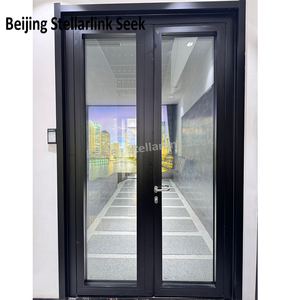
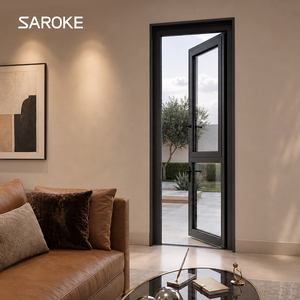
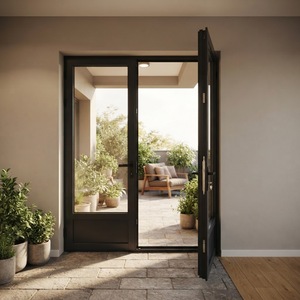
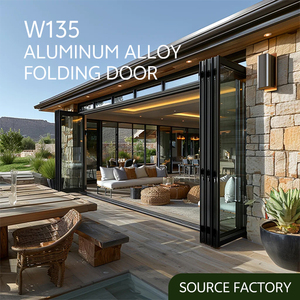
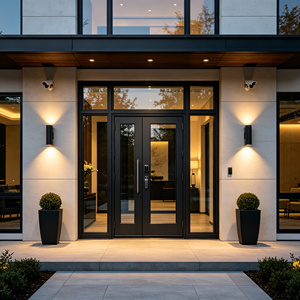
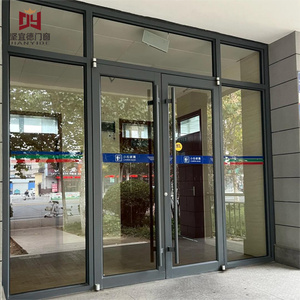
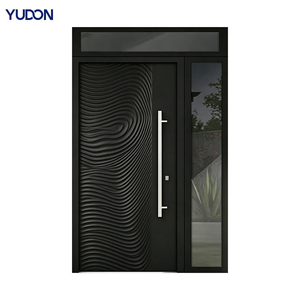
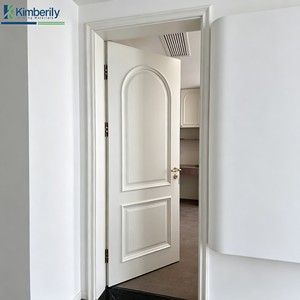
Engineering Anatomy of Thermal Break Aluminum Entry Doors
Standard aluminum is an exceptional structural material, but its high thermal conductivity (approx. 200 W/m·K) historically posed energy efficiency challenges. High-end Chinese manufacturers have revolutionized facade technology through structural thermal isolation.
1. Profile Metallurgy & Tensile Strength
Top-tier Chinese suppliers utilize 6063-T6 or 6060-T66 primary aluminum extrusions with profile wall thicknesses ranging from 2.0mm to 3.0mm (exceeding standard 1.4mm window grades). T6 heat treatment provides ultimate tensile strength ≥ 205 MPa and yield strength ≥ 170 MPa, ensuring structural resistance against extreme wind loads (up to 5000 Pa) and preventing frame distortion over decades of heavy usage.
2. PA66-GF25 Polyamide Isolation
Thermal breaking involves mechanically crimping a non-metallic insulating strip between the inner and outer aluminum profiles. Leading manufacturers employ Polyamide 66 reinforced with 25% glass fiber (PA66-GF25). With a thermal conductivity of just 0.3 W/m·K (over 500 times lower than raw aluminum), these multi-chambered struts interrupt heat transfer, eliminate cold bridges, and match the linear thermal expansion coefficient of aluminum to prevent joint shear.
3. Bi-Metal Effect Mitigation
When dark exterior front doors face direct solar radiation, exterior skin temperatures can reach 80°C while interior room temperature remains at 20°C. This differential causes differential expansion (the "bi-metal effect"), potentially binding door locks. Advanced Chinese manufacturers incorporate sliding mechanical anti-bi-metal polyamide strips that absorb differential shearing stresses without compromising door operation or air tightness.
Surface Engineering & Advanced Glazing Thermodynamics
An entry door is subject to aggressive environmental stressors including UV degradation, airborne salts, industrial pollutants, and impact forces. Top suppliers implement multi-layer protective surface treatments alongside high-tech insulated glass units (IGU).
Architectural Surface Finishing Protocols
Chinese OEM export factories adhere to international surface treatment standards, ensuring color fastness and corrosion defense:
- AAMA 2605 Fluoropolymer (PVDF): 70% Kynar 500 / Hylar 5000 resin coating undergoing 5,000-hour salt spray testing. Essential for coastal projects subject to high salinity.
- Qualicoat Class 2 & 3 Powder Coating: Super-durable architectural polyester powder delivering extreme scratch resistance, zero VOC emissions, and smooth matte RAL finishes.
- 3D Wood-Grain Vacuum Sublimation: Heat-transfer timber texturing that replicates solid teak, oak, or walnut aesthetics without organic timber rot, splitting, or insect vulnerability.
- Class I Anodizing (18-25 Microns): Electrochemical conversion creating an integral oxide layer with exceptional hardness and metallic luster.
Insulated Glass Units (IGU) & Acoustic Shielding
Glass inserts on entry doors are engineered for maximum thermal retention and forced-entry deterrence:
- Triple & Quadruple Glazing: IGU overall thicknesses up to 48mm-54mm featuring dual Low-E soft coatings, achieving Solar Heat Gain Coefficients (SHGC) down to 0.22.
- Warm-Edge Spacer Technology: Transitioning from aluminum glass spacers to composite stainless steel/polypropylene warm-edge spacers (Technoform / TGI), reducing edge U-value by 15%.
- Inert Gas Infill: 90%+ Argon or Krypton gas chamber filling to minimize internal convective heat exchange.
- Acoustic & Security Lamination: Multi-layer SGP (SentryGlas®) or PVB laminated tempered safety glass providing STC sound reduction up to 45 dB and impact protection.
Enterprise Advantage: Primor Metal Door Co., Ltd.
Positioned as a premiere Chinese manufacturer for high-end international architectural projects, Primor Metal Door Co., Ltd. bridges factory-direct pricing with rigorous Western engineering compliance.
Drawing-to-Site Customization
We do not operate on rigid stock sizes. Every thermal break entry door is manufactured strictly according to your architectural CAD schedules, elevation plans, or BIM models. Our engineering department verifies structural wind load, drainage calculations, and hinge weight capacities, issuing comprehensive 3D shop drawings for sign-off before raw material cutting begins.
U.S. Showroom Infrastructure
Overcoming the trust gap in overseas procurement, Primor maintains fully equipped physical showrooms across major U.S. metropolitan hubs—including Los Angeles, the Bay Area, Houston, Dallas, and Phoenix. Architects, developers, and general contractors can inspect physical profile corner cuts, evaluate hardware operation, and verify finish swatches locally.
Global Certification Rigor
Our thermal break door and window products are built to pass rigorous third-party testing standards globally, including NFRC (National Fenestration Rating Council) thermal ratings, AAMA structural wind/water standards, European CE (EN 14351-1) compliance, and PAS 24 / RC3 burglar resistance standards.
Future Procurement Trends in Thermal Break Door Systems (2026–2030)
Strategic sourcing directors and project estimators must align their product specifications with incoming building regulations, decarbonization mandates, and smart infrastructure demands.
1. Decarbonization & Low Embodied Carbon
Global commercial developers are enforcing strict EPD (Environmental Product Declaration) disclosures. Procurement is shifting rapidly toward thermal break doors manufactured with hydro-powered low-carbon primary aluminum billet and high ratios of Post-Consumer Recycled (PCR) aluminum, reducing embodied carbon footprints by up to 60% compared to coal-smelted alternatives.
2. Ultra-Passive House (PHI) Standard Adoption
With stringency increases in IECC (International Energy Conservation Code) and European EPBD directives, thermal break entry doors must hit overall thermal transmittance rates of Uw ≤ 0.75 W/m²K. This necessitates deeper thermal breaks (34mm-54mm), aerogel profile chamber infills, and quadruple glazing configurations as baseline requirements for cold-climate B2B bids.
3. Smart Mechatronic Hardware Integration
Traditional manual multi-point locks are yielding to fully concealed motorized lock drives. Modern entry doors now integrate biometric 3D facial recognition, optical fingerprint sensors, motorized multi-point latching systems, and building automation network connectivity (Zigbee 3.0, KNX, Matter), allowing automated access logging and remote smartphone control.
4. Oversized Architectural Form Factors
Architects are demanding grand entrances with single door leafs exceeding 1.5 meters in width and 3.5 meters in height (weighing over 400kg). Meeting these dimensions requires heavy-duty continuous concealed hinges, floor spring pivot mechanisms, and internal steel reinforcement tubes within the aluminum profile core.
5. Direct Factory Sourcing & BIM Integration
Middleman import distributors are increasingly bypassed. Commercial project buyers now interface directly with Chinese OEM engineering hubs via shared Revit BIM models, allowing real-time collision detection, precise quantity takeoff, direct engineering changes, and a 30-40% reduction in total capital expenditure.
6. Hybrid Armored Material Composites
Security doors are evolving past simple metal sheets. Sourcing trends highlight hybrid material construction combining solid heavy-gauge cast aluminum outer plates, ballistic ceramic cores, fire-rated insulation panels, and interior real-wood veneer cladding for ultimate armor defense paired with luxury residential warmth.
Engineering Performance Matrix: System Comparison
Technical evaluation parameters across Primor's core thermal break door series for specification engineers and architectural specifiers:
| Door System Series | Profile Depth | Thermal Strip (PA66) | Overall U-Value (Uw) | Acoustic Rating (STC) | Water Tightness | Security Level |
|---|---|---|---|---|---|---|
| Nordic Passive 105 Series | 105 mm | 34 mm Multi-Chamber | 0.75 - 0.90 W/m²K | 42 - 45 dB | 900 Pa (Class 9A) | RC3 / PAS 24 |
| Villa Armored Cast 90 Series | 90 mm | 24 mm Standard | 1.10 - 1.30 W/m²K | 38 - 40 dB | 750 Pa (Class 8A) | RC4 / Bulletproof FB4 |
| French Swing Patio 88 Series | 88 mm | 24 mm Strip | 1.20 - 1.40 W/m²K | 36 - 38 dB | 600 Pa (Class 7A) | RC2 Standard |
| Commercial Heavy Storefront | 75 mm | 18 mm Strip | 1.50 - 1.80 W/m²K | 32 - 35 dB | 450 Pa (Class 5A) | Heavy Impact Commercial |
| Architectural Bi-Fold 77 Series | 77 mm | 20 mm Strip | 1.30 - 1.60 W/m²K | 35 - 37 dB | 600 Pa (Class 7A) | RC2 Standard |
Frequently Asked Questions for Sourcing Managers
Direct, detailed engineering answers to the most common questions raised during the technical evaluation and commercial negotiation phases.
Solid wood doors suffer from moisture absorption, causing warping, swelling, sticking, and rot under seasonal humidity shifts. Solid steel doors, while strong, lack thermal breaks and act as rapid heat conductors, freezing or sweating heavily during cold winters.
Thermal break aluminum doors combine the structural strength and weather resistance of metal with superior energy insulation. By isolating the interior and exterior aluminum profiles with PA66-GF25 polyamide struts, thermal break doors eliminate condensation, resist weathering and UV breakdown, maintain strict dimensional stability (no swelling or bowing), and offer a operational lifespan exceeding 50 years.
PA66-GF25 consists of Polyamide 66 reinforced with 25% glass fiber. Its primary advantage is that its coefficient of thermal expansion ($\approx 2.3 \times 10^{-5} K^{-1}$) closely matches aluminum ($\approx 2.4 \times 10^{-5} K^{-1}$). This ensures that when the door profile experiences temperature swings from -30°C to +80°C, the polyamide strut and aluminum profile expand and contract at the exact same rate, maintaining structural joint integrity.
Poured-and-debridged polyurethane (PNA) resins have a significantly higher expansion coefficient and lower structural shear strength. Under the heavy sash loads of architectural entry doors (200kg+), poured polyurethane can shear or degrade over time, making mechanical polyamide crimping the strict standard for structural entry doors.
Compliance is engineered into the profile geometry using finite element thermal simulation software (such as LBNL THERM and WINDOW). Profiles are designed with optimized multi-chamber thermal breaks, EPDM center gaskets, and warm-edge double/triple glazing packages.
Physical test samples are evaluated by accredited third-party laboratories (such as Intertek or TÜV) to certify U-factor, Solar Heat Gain Coefficient (SHGC), Air Infiltration (ASTM E283), Water Resistance (ASTM E331), and Structural Performance (ASTM E330), providing official simulation and physical test reports for municipal building permit approvals.
Our standard export timeline spans 35 to 45 calendar days from shop drawing sign-off to container loading. The workflow comprises:
- Stage 1 (Days 1-5): Architectural blueprint review, structural calculation verification, and 3D CAD shop drawing issue.
- Stage 2 (Days 6-10): Client sign-off and exact color/glass sample confirmation.
- Stage 3 (Days 11-35): Precision CNC extrusion cutting, thermal strip crimping, corner welding/crimping, surface coating, glazing, and factory water/air testing.
- Stage 4 (Days 36-40): Opening-matched labeling, vacuum plastic film wrapping, heavy-duty corner foam protection, and full enclosure in fumigated solid plywood crates designed for overhead crane and forklift handling.
Yes. While solid cast aluminum panel plates (typically 8mm-12mm thick) are dense and conductive, modern premium designs employ a sandwich composite architecture. The heavy cast aluminum decorative face is mounted onto a thermal break structural aluminum frame containing a high-density polyisocyanurate (PIR) or vacuum insulation panel (VIP) core.
Combined with triple-pane Low-E glass inserts and triple perimeter EPDM compression seals, cast aluminum armored doors easily achieve overall thermal transmittance values of Uw ≤ 0.9 W/m²K while maintaining anti-burglary ratings up to European RC4 and bullet resistance up to EN 1522 FB4 specifications.
Direct exposure to intense sunlight on dark finishes (such as matte black, charcoal, or dark bronze) creates a strong thermal gradient between the outside skin (up to 80°C) and the air-conditioned inside skin (20°C). This forces the outer aluminum profile to expand significantly more than the inner profile, causing outward bowing that can jam multi-point locking bolts.
Primor overcomes this through two engineering solutions: 1) Anti-Bi-Metal Polyamide Strips featuring segmented sliding mechanical connections that allow the outer profile skin to expand independently without bending the overall door leaf; and 2) Multi-Point Hook Latching Locks with adjustable roller keepers that draw the door leaf tightly flush against the frame even under thermal tension.
Ready to Engineer Your Architectural Entry Door Package?
Whether you are an architect specifying a high-performance passive villa, a developer procuring a multi-family commercial project, or an importer establishing direct OEM supply chains, Primor Metal Door Co., Ltd. provides end-to-end technical support, shop drawings, and direct factory pricing.