Featured Architectural Pivot Door Exports
Explore engineered heavy-duty pivot entry systems, thermal break aluminum profiles, and custom luxury entrance solutions manufactured for North American, European, and Australian project specifications.
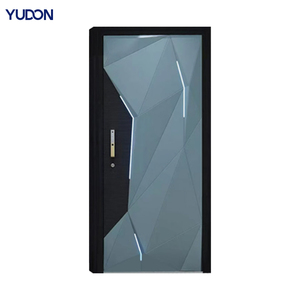
YUDON DOOR Pivot Entrance Door Aluminium Entrance Doors Large Format Modern Design Matte Blue Puertas De Entrada Principal
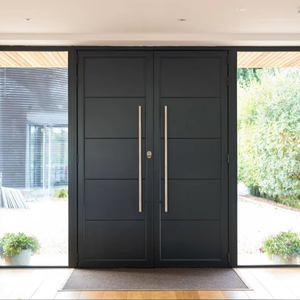
Popular Hot Sale Main Entrance Double Door Design Aluminum Sound Insulated Windproof Security Front Entry Doors
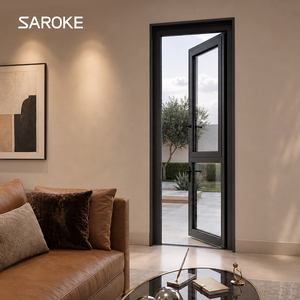
American Standard House Black Metal Patio Exterior Thermal Break Aluminum Doors And Windows
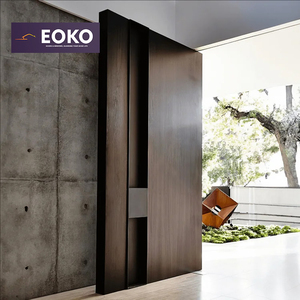
EOKO Custom Wooden Grain Front Entry Main Security Aluminum Decorous Exterior Pivot Door for America House Entrance Doors
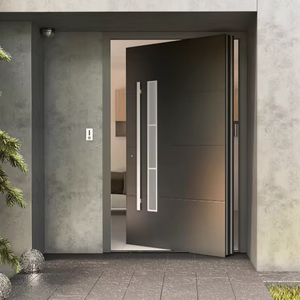
CBMmart Miami-Dade Certificate NFRC North American Style Panel Tempered Glass Aluminium/Metal Modern Entrance Front Pivot Doors
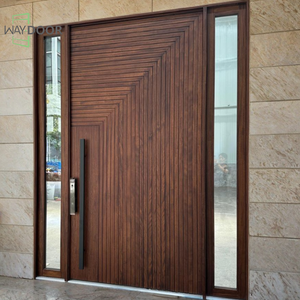
Premium Finished Oversize Heavy-Duty Single Front Entry Door With 2 Sidelights Oak Mahogany Solid Wood Exterior Pivot Door
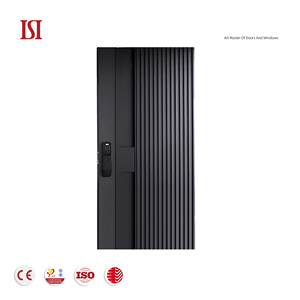
European Luxury Entrance Doors with Anti-Theft Security Modern Residential Exterior for Luxury Villas Manual Opening
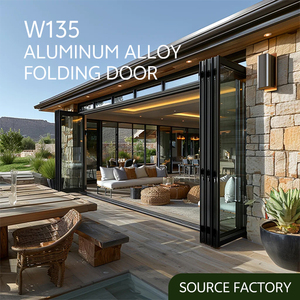
NFRC Aluminium Balcony Accordion Door Thermal Break Double Tempered Glass Exterior Bi Folding Sliding Bi-fold Patio Doors
Executive Summary: The Architectural Evolution toward Large-Format Pivot Entry Systems
In luxury residential architecture, high-end commercial headquarters, and hospitality developments, the entrance door has evolved from a simple security barrier into a defining architectural statement. Traditional side-hinged doors face severe physical limitations: as panel dimensions exceed 1.2 meters in width or 2.8 meters in height, traditional butt hinges suffer from cantilevered stress, frame sag, hinge distortion, and seal degradation over time.
Modern architectural pivot entrance doors solve these structural physics challenges by redistributing panel mass. Instead of relying on side jamb hinges, pivot doors transfer load vertically onto top pin assemblies and heavy-duty hydraulic floor springs (such as Dormakaba RTS88 or Geze TS 550 series). This structural shift allows architects and developers to specify monumental entry panels exceeding 2.5 meters in width and 6.0 meters in height, weighing upwards of 800 to 1,000 kilograms, while maintaining effortless, finger-tip manual operation.
Information Gain Insight: China's top aluminum pivot door manufacturers have consolidated profile extrusion, thermal break assembly, CNC machining, surface finishing, and hardware integration into unified industrial ecosystems. Factories like Primor Metal Door Co., Ltd. leverage 4-axis and 5-axis German CNC machining centers to hold tolerances within ±0.2mm across 6-meter extruded profiles—delivering structural stability and airtightness unattainable through manual fabrication methods.
This technical white paper outlines the engineering principles, material science, thermal break technologies, weatherization strategies, and international code compliance protocols required by developers, architects, general contractors, and door importers when sourcing high-performance pivot entrance doors from premier Chinese exporters.
Anatomy of Heavy-Duty Exterior Aluminum Pivot Doors
Understanding the critical engineering parameters that separate commercial-grade, export-quality pivot doors from standard residential joinery.
Aviation-Grade 6063-T6 Extrusions
Top Chinese factories utilize 6063-T6 or 6061-T6 aluminum alloys with minimum wall thicknesses of 2.5mm to 4.0mm on load-bearing stiles. Multi-chamber profile designs provide high moment of inertia ($I_x$ and $I_y$), preventing structural deflection under positive and negative wind loads up to DP-70 (Design Pressure 70 PSF / ~3350 Pa).
PA66 GF25 Polyamide Thermal Breaks
To prevent heat transfer through the highly conductive aluminum profiles, frames and panel stiles integrate multi-cavity PA66 GF25 (25% glass fiber reinforced polyamide) insulation strips. Combined with polyurethane foam infill, thermal transmission is reduced, achieving U-factors as low as 0.22 BTU/hr·ft²·°F (1.25 W/m²K).
Perimeter Weatherization & Sealing
Weatherproofing a pivot door requires specialized sealing dynamics at the offset pivot axis. Leading exporters employ continuous EPDM triple-gasket systems combined with automatic drop-down mechanical bottom seals (drop seals) and magnetic weatherstripping that seal completely when the door engages the closed position.
Smart Access & Multi-Point Locks
Heavy pivot doors require perimeter locking to secure top and bottom corners against forced entry and thermal warping. Chinese manufacturers integrate German motorized multi-point locks (KFV/FUHR) compatible with biometric fingerprint scanning, facial recognition, keypad access, and smart home automation systems (Crestron, Control4).
Pivot Door Technical Specification Comparison Matrix
Selecting the correct pivot system requires matching structural parameters to project architectural intent. Below is a comparative technical matrix analyzing different modern door configurations manufactured by leading exporters:
| Engineering Specification | Standard Aluminum Hinge Door | Thermal Break Heavy Pivot Door | Ultra-Slim Glass Pivot Door | HVHZ Impact-Rated Pivot Door |
|---|---|---|---|---|
| Max Width / Height | 1.1m x 2.4m | 2.5m x 6.0m | 2.0m x 4.0m | 1.8m x 3.5m |
| Max Panel Weight | 120 kg | 600 kg - 1,000 kg | 350 kg | 500 kg |
| Profile Alloy & Temper | 6063-T5 (1.8mm) | 6063-T6 / 6061-T6 (3.0-4.0mm) | Structural Steel / 6063-T6 | Heavy-Duty T6 (3.5mm+) |
| Thermal Insulation (U-Factor) | 0.45 - 0.60 | 0.20 - 0.28 (Low-E Double/Triple) | 0.30 - 0.38 | 0.24 - 0.32 |
| Wind Load Rating (DP) | DP-35 (1680 Pa) | DP-65 (3110 Pa) | DP-50 (2390 Pa) | DP-70 to DP-100 (HVHZ) |
| Hardware / Floor Spring | Standard Surface Hinges | Hydraulic Floor Spring (Dormakaba/Geze) | Concealed Top/Bottom Axis Pins | Heavy Duty Structural Pivot Box |
| Acoustic Rating (STC) | 28 - 32 dB | 38 - 45 dB | 32 - 36 dB | 40 - 46 dB (Laminated Glass) |
Enterprise Strengths: Why Global Importers Partner with Primor Metal Door Co., Ltd.
When international architects, developers, and door distributors import high-value architectural entrance doors from China, risk mitigation and engineering accuracy are paramount. Primor Metal Door Co., Ltd. (operating as Primor Entry Door) has structured its entire manufacturing and export operation around direct technical support and strict Quality Assurance (QA) standards.
100% Drawing-Driven Fabrication
Orders do not rely on fixed catalog sizes. Every pivot door is built to exact rough opening dimensions based on CAD/BIM shop drawings issued by Primor engineers and approved by the buyer prior to profile cutting.
Direct U.S. Showroom Network
North American clients can inspect physical full-size pivot displays, finish swatches, and hardware operational samples at five regional showrooms: Los Angeles, Bay Area, Houston, Dallas, and Phoenix.
NFRC & Hurricane Certification
Profile systems undergo third-party laboratory testing to satisfy NFRC energy performance, CE compliance, and Miami-Dade NOA hurricane impact protocols utilizing SGP laminated safety glass.
Export Crate Protection & Tracking
Units are fully assembled, factory-tested, dis-assembled as required, protected with blue protective film, and packed in heavy-duty steel-reinforced plywood crates labeled by door tag/opening number.
2026 Future Trends in Architectural Pivot Door Sourcing & Manufacturing
As architectural preferences shift toward seamless indoor-outdoor transitions and monolithic minimalist facades, pivot door engineering is advancing along four primary innovation vectors:
1. Hybrid Architectural Panel Infills (Porcelain, Sintered Stone & Real Timber)
While glass pivot doors remain popular, luxury residential trends in North America and Europe increasingly demand solid modern infill panels. Chinese exporters lead in bonding thin sintered stone slabs (Neolith/Laminam style 6mm tiles), real wood veneers, and anodized aluminum honeycomb panels onto structural thermal break cores. This creates fire-resistant, warp-free, high-impact front entrance panels with unmatched visual tactile richness.
2. Fully Concealed Automatic Power Assist & Motorized Floor Actuators
For panels weighing over 400 kilograms, physical operation by children or elderly residents requires assistance. 2026 manufacturing standards feature fully integrated electric servo drives concealed inside the top transom or sub-floor box. When triggered via touch-sensor handles, mobile apps, or biometric scanners, the motorized pivot door smoothly opens to 90 degrees and softly self-closes with automated obstacle-detection safety sensors.
3. Passive House (PHI) Standard Thermal Isolation
Energy codes in cold climates (such as Canada, Northern US, and Scandinavia) are mandating overall door U-factors below 0.16 BTU/hr·ft²·°F (0.9 W/m²K). Advanced Chinese export factories are introducing triple-seal perimeter gaskets, vacuum insulated glass (VIG) options, and aerogel-infused thermal break chambers to ensure massive pivot doors comply with strict net-zero and Passive House insulation standards.
4. Seamless Flush Floor Track Thresholds
Architects consistently reject tall bottom thresholds that create tripping hazards. Modern pivot exports utilize hidden subterranean drainage channels with magnetic pop-up weather seals that lie completely flush with interior hardwood and exterior stone paving, rising only when the door closes to block wind-driven rainwater.
Frequently Asked Questions (FAQ) for B2B Importers
Direct technical and commercial answers for architects, contractors, and door importers sourcing pivot door systems from China.
Can Primor manufacture aluminum pivot doors in custom oversized dimensions? +
Yes. Every pivot door is custom engineered and manufactured to measure based on your architectural floor plans or door schedule. Our engineering office reviews your rough opening dimensions, wind load criteria, and hardware preferences to generate detailed shop drawings for sign-off prior to extrusion cutting and fabrication.
How do Chinese pivot door factories ensure water tightness and air infiltration seal integrity? +
Water infiltration is prevented through three combined systems: dual continuous EPDM weatherstripping gaskets around the jambs, concealed magnetic perimeter seals, and heavy-duty automatic mechanical drop-down bottom seals. Additionally, integrated perimeter sub-sill drain tracks collect and redirect any wind-driven water away from the interior building envelope.
What floor spring hardware options are supplied with heavy-duty export pivot doors? +
We supply commercial-grade concealed floor springs and top pivot hardware from world-renowned brands including Dormakaba (BTS80 / RTS88), Geze (TS 550), and FritsJurgens concealed axis systems. For lightweight or mid-size panels, concealed in-door hydraulic self-closing pivot hinges can also be specified.
What glass configurations are available for exterior security and thermal efficiency? +
Glazing choices include double or triple insulated glass units (IGU) featuring Low-E coatings, argon gas fill, warm-edge spacers, fully tempered safety glass, and laminated SGP impact glass for hurricane-prone zones. Decorative options include frosted, ceramic frit, fluted/reeded, and tint-reflected privacy glass.
What is the standard lead time and container packing method for overseas shipment? +
Standard fabrication lead time is 25 to 35 days following shop drawing approval. Product units are fully factory-assembled to verify tolerance fit, then cleaned, wrapped in protective film, corners padded, and packed into ISPM-15 compliant fumigated plywood crates reinforced with internal steel framing for containerized sea freight shipping.
Can clients view physical door samples in the United States before committing to volume orders? +
Yes. Primor maintains full-size display product showrooms and technical sample centers across five US metropolitan hubs: Los Angeles, the Bay Area, Houston, Dallas, and Phoenix. Overseas buyers in other regions can request aluminum profile cross-section samples, hardware kits, and finish swatches mailed directly to their project office.
Start Your Project Consultation with Primor Engineers
Send us your architectural drawings, window/door schedules, or rough opening dimensions. Our engineering department will issue a comprehensive technical proposal, U-factor performance calculations, and factory-direct pricing within 24 hours.