Engineered Architectural Entrance & Exterior Door Systems
Precision-crafted factory-direct doors compliant with North American and European structural, thermal, and wind-load standards.
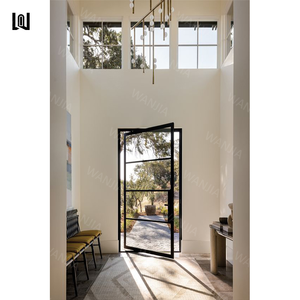
Modern Design Smart Electric Glass Front Entry Aluminum Pivot Door
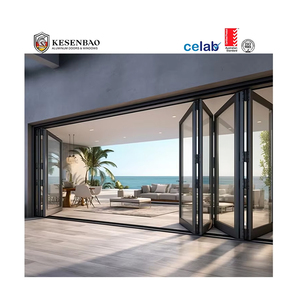
Exterior Large Partition Double Glazed Aluminium Folding Glass Door
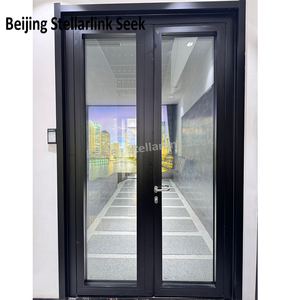
Extreme Cold Weatherproof Triple Glazed Thermal Break Passive Door
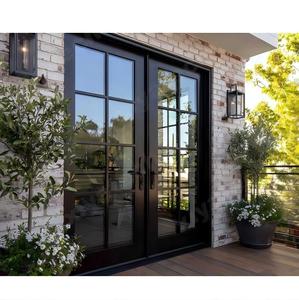
Hurricane Impact Thermal Break Front Double Glass French Door
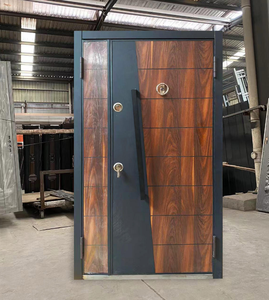
Premium Surface Steel-Reinforced Luxury Security Entrance Door
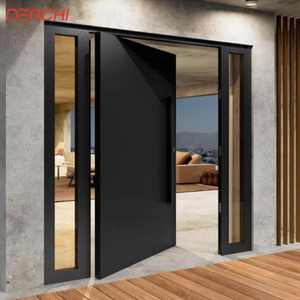
Exterior Heavy-Duty Cast Aluminium Main Entrance Pivot Door
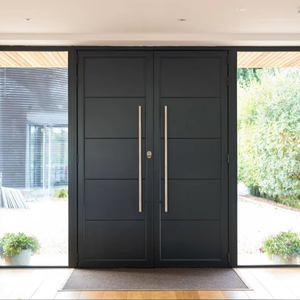
Double Door Design Sound-Insulated Windproof Security Entry Door
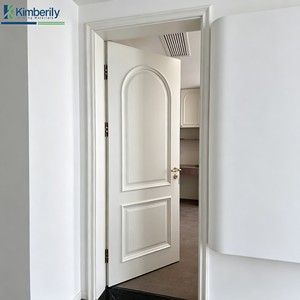
European Standard Thermal Break Aluminium Alloy Casement Door
Why Top Global Architects & Developers Partner with China's Premier Aluminium Entrance Door Suppliers
In the contemporary architectural landscape, the front entrance door is no longer merely a point of egress; it is the fundamental thermal barrier, security threshold, and primary visual anchor of modern residential and commercial properties. As global building energy codes tighten—driven by directives such as the EU's Nearly Zero-Energy Buildings (NZEB) and North America's IECC updates—procurement managers and architectural specifiers are turning to high-capacity Chinese manufacturing hubs capable of delivering ultra-high-performance aluminum door systems at scale.
Primor Metal Door Co., Ltd. stands at the apex of this industrial evolution. Operating advanced extrusion lines, automated CNC machining complexes, and specialized thermal barrier assembly plants, Primor bridges the gap between complex custom architectural drawings and export-ready structural delivery. By controlling every phase of manufacturing—from 6063-T6 aluminum extrusion forging to final glass double-glazing unit (DGU) encapsulation—Chinese suppliers provide unprecedented information gain, engineering transparency, and cost efficiency.
Furthermore, to solve the historical pain point of overseas after-sales support and tactile product verification, established suppliers maintain physical showroom infrastructure in major commercial hubs. For instance, Primor supports its North American B2B client base via local showrooms in Los Angeles (City of Industry), the San Francisco Bay Area (Union City), Houston (Sugar Land), Dallas (Plano), and Phoenix (Mesa). This dual capability—combining robust Chinese OEM manufacturing throughput with localized client consultations—guarantees that structural calculations, wind-load ratings (ASTM E330), and thermal transmittance targets (NFRC certified U-factors) are strictly achieved.
Polyamide Thermal Barriers
Utilizing high-grade PA66GF25 structural polyamide insulating strips to break thermal bridges, preventing condensation and drastically lowering interior heating/cooling demands.
Multi-Point Security Locks
Integrated European-standard multi-point gearboxes with anti-lift hooks and motorized smart biometric access (fingerprint, keypad, facial recognition) for maximum perimeter defense.
Coastal PVDF Finishes
Advanced Fluorocarbon (PVDF) powder coatings providing salt-spray corrosion resistance up to 3,000 hours, essential for coastal luxury homes and high-salinity marine zones.
Key Product Development & Technological Trends (2026–2030)
The global demand for high-end aluminium entrance door systems is shifting rapidly due to advancements in material science, home automation, and sustainable architectural design. When evaluating top Chinese aluminum entrance door suppliers, procurement officers must align their sourcing strategies with four dominant technological trajectories:
1. Oversized Floor-to-Ceiling Pivot Door Engineering
Standard hinged entry doors are increasingly replaced in luxury residential developments by grand-format pivot doors reaching heights of up to 4.5 meters and widths exceeding 2.0 meters. Sourcing these giant systems requires specialized engineering: heavy-duty floor pivots capable of carrying leaf weights over 500 kg without sagging, combined with hydraulic adjustable self-closing dampeners. Chinese factories are now embedding concealed perimeter magnetic seals to solve the historical wind-sealing deficiencies of early pivot door designs.
2. Switchable Smart Glass Integration (PDLC Technology)
Modern entrance doors frequently incorporate large glazed lites to enhance natural daylighting. The integration of Polymer Dispersed Liquid Crystal (PDLC) switchable smart glass allows entry door panels to instantly transition from transparent glass to opaque privacy shields via wall switches, smartphone apps, or smart home automation hubs. Forward-thinking suppliers integrate low-voltage wiring pathways directly through the door profile and pivot pins.
3. Extreme Thermal & Passive House Certification
As climate volatility increases, demand for extreme-cold and tropical-storm-rated entry systems has surged. Next-generation aluminum doors utilize multi-cavity thermal break profiles filled with polyurethane foam or aerogel insulation. Paired with triple or quadruple-pane Low-E insulated glass units (argon filled, warm-edge composite spacers), these systems attain overall U-factors as low as 0.75 W/m²K, satisfying Passive House requirements in Northern Europe and North America.
| Door System Typology | Primary Profile Series | Max Panel Height / Load | Thermal & Acoustic Target | Optimal Architectural Application |
|---|---|---|---|---|
| Smart Glass Pivot Door | Series 150+ Heavy Pivot | 4,500 mm / 600 kg | U-Factor ≤ 1.2 | Sound: 42 dB | Modern Luxury Villa Front Entrances |
| Thermal Break Bi-Fold Door | Series 77 / 80 Folding | 3,200 mm / 150 kg per panel | U-Factor ≤ 1.1 | Sound: 38 dB | Patio Partitions, Resort Restaurants |
| Passive House Thermal Door | Series 119 Triple Glazed | 2,800 mm / 220 kg | U-Factor ≤ 0.78 | Sound: 45 dB | Cold Climate / Nordic Residential |
| Hurricane Impact French Door | Series 88 Heavy Casement | 3,000 mm / 250 kg | DP Rating: ±70 PSF | Impact Glass | Coastal Zones, Florida/Caribbean Codes |
| Cast Aluminum Security Entry | Solid Armor Cast Core | 2,600 mm / 350 kg | RC3 / RC4 Burglary Class | High-Security Mansions & Estates |
Future Procurement Trends for Global B2B Aluminium Door Buyers
Procuring custom aluminum doors from China has evolved from transactional purchase orders to deep technical co-engineering between global project teams and Chinese factory engineers. Importers, general contractors, and developers must adapt to three core procurement shifts:
1. CAD/BIM Shop Drawing Approvals
Leading buyers no longer order from static product catalogs. Instead, they submit REVIT/CAD architectural schedules. The supplier’s engineering team generates 2D cross-section shop drawings and 3D joinery renders, verifying anchor points, threshold flashing, and wall interface details before cutting aluminum profiles.
2. Containerization & Unitized Tagging
To eliminate labor bottlenecks on destination construction sites, premier suppliers now label each crated door by floor number, elevation grid, and opening ID (e.g., Door ID: D-102). Export packaging incorporates moisture-barrier plastic wrap and reinforced steel-strapped wooden crates tailored for side-loading forklift clearance.
3. Strict Code & Hardware Verification
B2B buyers require complete hardware interchangeability. Leading Chinese door manufacturers offer factory prep (CNC mortising) for top European and American hardware lines (e.g., HOPPE, GU, SIEGENIA, Yale, dormakaba), ensuring local field technicians can repair or adjust hardware over decades of operational life.
Frequently Asked Questions for B2B Aluminium Entrance Door Procurement
Detailed technical answers to common queries raised by architects, contractors, and international importers.
Why choose thermal break aluminum entrance doors over solid wood or standard steel doors?
Thermal break aluminum entrance doors offer superior dimensional stability, longevity, and structural strength compared to wood, which is prone to warping, rotting, and swelling under humidity changes. Compared to standard steel doors, aluminum entry systems provide vastly superior resistance to rust and surface corrosion, especially when finished with PVDF powder coating. Furthermore, the inclusion of polyamide (PA66GF25) thermal breaks interrupts conductive heat loss, achieving energy ratings equivalent to insulated wood while supporting far larger glass panel sizes and slimmer architectural sightlines.
What technical parameters are required to generate an accurate factory quotation?
To receive a binding technical proposal and price quotation, project buyers should provide: (1) Rough opening dimensions or architectural window/door schedules; (2) Preferred operation typology (e.g., Pivot, Bi-Fold, Heavy-Duty Inswing/Outswing Casement); (3) Glass specifications (e.g., Double Low-E, Triple Glazed, Laminated Hurricane Impact, or Smart Glass); (4) Surface finish requirements (RAL powder color, wood grain finish, or PVDF); and (5) Local engineering mandates such as wind-load pressures (PSF) or specific U-factor targets.
How do top Chinese suppliers handle shipping protection and custom door sizing?
Every single door is manufactured 100% made-to-measure according to approved CAD shop drawings. Prior to dispatch, doors are fully assembled at the factory to test lock alignment, hinge smoothness, and weatherseal compression. Once approved by QC inspectors, products are wrapped in protective foam, sealed against moisture, and packed in heavy-duty fumigated wooden crates with integrated corner guards, designed for secure ocean freight and easy forklift unloading on site.
Are Smart Biometric Access Systems pre-installed into aluminum entrance doors?
Yes. Chinese entrance door suppliers offer factory integration of smart lock hardware, including fingerprint scanners, digital keypads, RFID card readers, facial recognition sensors, and smart home connectivity (Tuya, Zigbee, or Bluetooth). Wiring channels are pre-routed within the aluminum extrusion profiles during CNC fabrication, ensuring clean aesthetics without visible cables.
What warranty coverage and after-sales service structure are provided?
Top-tier suppliers like Primor Metal Door Co., Ltd. offer up to a 10-year structural warranty on extruded aluminum profiles, a 5-year warranty on insulated glass seals, and 2-to-5-year warranties on operating hardware. Furthermore, with showroom and warehouse presence in key regions (such as Los Angeles, Houston, and Dallas in the US), buyers receive direct access to replacement parts, glass swap outs, and technical installation guidance.
What is the standard production lead time for custom aluminum entrance doors?
Following final sign-off on CAD shop drawings and color swatches, standard production lead time ranges from 25 to 35 days depending on project volume and glass complexity (e.g., custom laminated or smart glass requires additional curing time). Ocean freight to major North American, European, or Australian ports typically adds 20 to 30 days. Air express options are available for urgent hardware or small sample orders.
Transform Your Architectural Facade with China's Premier Door Manufacturer
Submit your project drawings, window schedules, or custom entrance door ideas today. Our senior facade engineers will provide detailed shop drawings, thermal calculations, and competitive factory-direct pricing within 24 hours.