Featured CE Certified Entrance & Exterior Door Systems
Factory-direct architectural entry solutions built to custom drawings, meeting rigorous European Union CE marking directives, Miami-Dade hurricane standards, and high-security multi-point locking requirements.
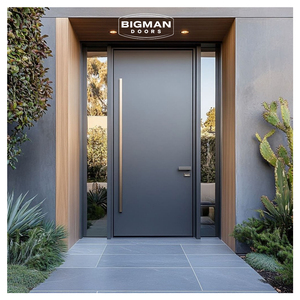
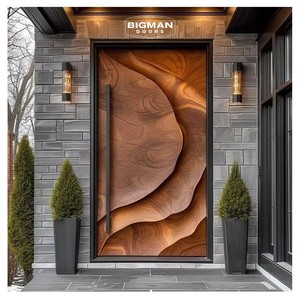
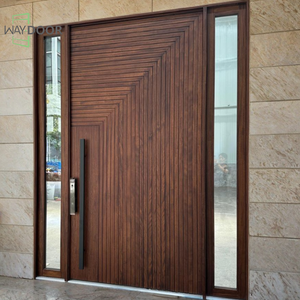
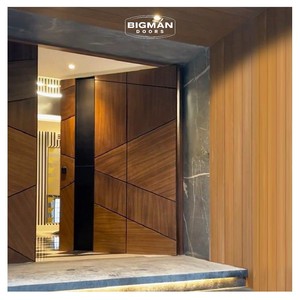
Engineering CE Certified Entrance Doors: Structural Integrity, Thermal Efficiency, and Global Compliance Frameworks
In contemporary architectural design and international procurement, the exterior entrance door serves as both a central aesthetic feature and a critical barrier against environmental stressors, forced entry, and heat exchange. As a premier CE certified entrance door manufacturer and exporter, Primor Metal Door Co., Ltd. integrates advanced structural metallurgy, precision-engineered polyamide thermal break technology, and strict compliance protocols to fulfill the rigorous mandates of European Harmonized Standard EN 14351-1 (External Pedestrian Doorsets).
Obtaining valid CE marking requires exhaustive third-party laboratory verification across multiple performance indices: Air Permeability (EN 12207) reaching Class 4 tightness, Watertightness (EN 12208) up to Class E1050 (resisting wind-driven water ingress under continuous 1050 Pa pressure), and Resistance to Wind Load (EN 12210) rated at Class C5/B5 for high-rise or exposed coastal installations. For developers, general contractors, and importing distributors, working with a manufacturer that engineers directly to these standards ensures streamlined customs clearance, compliance with building codes, and reduced liability across international markets.
| Performance Index | European Test Standard | Primor Engineering Benchmark | Architectural Impact |
|---|---|---|---|
| Thermal Transmittance ($U_d$) | EN ISO 10077-1 / EN ISO 10077-2 | 0.85 - 1.2 W/m²K (Thermal Break + Argon Triple Glaze) | Exceeds Passive House targets; reduces HVAC energy loads. |
| Air Permeability | EN 12207 | Class 4 (Highest Seal Efficiency) | Prevents draft leakage and micro-dust infiltration. |
| Watertightness | EN 12208 | Class E900 - E1050 (High Pressure Spray) | Eliminates rain intrusion during extreme storm conditions. |
| Resistance to Wind Load | EN 12210 | Class C5 (Deflection < 1/300 at 2000 Pa) | Prevents structural frame warping on oversized pivot openings. |
| Anti-Burglar Security | EN 1627 / EN 1630 | Resistance Class RC2, RC3 & RC4 | Resists mechanical tools, heavy crowbars, and drill attacks. |
| Fire Resistance | EN 1634-1 / BS 476 | EI30, EI60, EI120 Intumescent Fire Protection | Provides critical life-safety containment in mid-to-high rise buildings. |
Polyamide PA66GF25 Thermal Break Architecture: Standard aluminum profiles act as natural thermal conductors, leading to indoor energy loss and unsightly surface condensation in cold regions. Primor utilizes structural polyamide thermal insulation strips reinforced with 25% fiberglass (PA66GF25). These strips mechanically isolate the exterior aluminum extrusion from the interior envelope. Combined with multi-chamber profile geometry and warm-edge spacer bars, our entrance doors achieve thermal transmittance ($U_d$) values down to 0.85 W/m²K, supporting zero-carbon building initiatives across Northern Europe and North America.
Custom Typologies: From Grand Pivot Systems to Smart Biometric Entrances
Different commercial and residential projects present distinct structural and functional requirements. Below is a comprehensive breakdown of specialized entrance door typologies manufactured by Primor, designed to assist architects, specifiers, and procurement officers in selecting the optimal configuration for their building schedule:
Heavy-Duty Architectural Pivot Doors
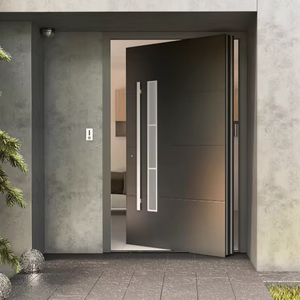
Engineered for grand entrances up to 6000 mm in height and panel weights exceeding 1000 kg. Features floor-recessed hydraulic pivot hinges with 3D adjustability, soft-closing dampers, and multi-point perimeter compression seals.
EN 1627 Anti-Theft & Security Doors
Constructed with reinforced steel internal sub-frames, hardened anti-drill manganese plates, hook-lock hardware systems, and anti-pry hinge bolts. Fully certified to RC2, RC3, and RC4 resistance classes.
Thermal Break Wood-Aluminium Hybrids
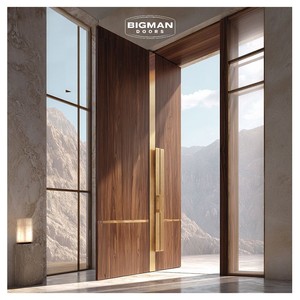
Combines the warmth of interior solid natural wood (Black Walnut, American Oak, Mahogany) with an exterior protective skin of weather-resistant, powder-coated extruded aluminum for harsh climate exposure.
Biometric Smart Lock Integration
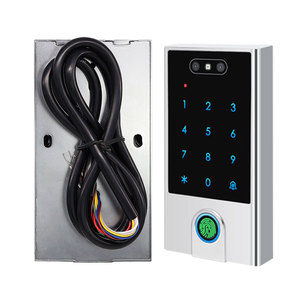
Native compatibility with TTLock, Tuya, 3D Structured Light Facial Recognition, semiconductor fingerprint sensors, encrypted RFID cards, and remote IoT gateway access control systems.
EN 1634 Fire-Rated Assembly
Integrates core mineral wool insulation, fire-resistant ceramic silicate board, and intumescent graphite seals that expand up to 25 times their volume under intense heat to block smoke and flame for 60 to 120 minutes.
Hurricane Impact & Miami-Dade NOA
Equipped with SentryGlas (SGP) laminated safety glass and reinforced aluminum profiles engineered to withstand missile impacts and extreme air pressure cycles in High-Velocity Hurricane Zones (HVHZ).
Future B2B Procurement Trends in Exterior Entrance Systems (2025–2030)
As global building directives shift toward decarbonization, climate resilience, and automated smart living, the criteria for selecting commercial and residential entrance systems are evolving rapidly. B2B importers, architects, and development corporations must adapt to five primary technological shifts:
1. Ultra-Low U-Value Mandates & Carbon Neutral Sourcing: The European Union’s Energy Performance of Buildings Directive (EPBD) and North American green building codes (LEED v4.1) require building envelopes to dramatically reduce operational carbon. Future procurement prioritizes entry systems constructed from low-carbon, recycled primary aluminum billets (processed using renewable hydro-electric energy) and thermal break geometries achieving $U_d \le 0.75 \text{ W/m}^2\text{K}$.
2. Industrial Automation & Smart Building Protocol Integration: Standard mechanical keyways are being systematically replaced by integrated electronic hardware. Modern entrance doors must come pre-wired from the factory with concealed conduit paths, magnetic sensor switches, electronic strike plates, and direct RS485/KNX bus system connectivity for centralized building management systems (BMS).
3. Architectural Demand for Oversized Seamless Openings: Residential designs favor floor-to-ceiling clear openings. This trend requires custom entrance manufacturers to push structural engineering limits, offering heavy-duty pivot hinges capable of carrying 6-meter vertical panels with minimal deflection while maintaining airtight weather seals along perimeter joints.
4. Advanced Surface Coatings (AAMA 2605 & PVDF Fluoropolymer): Coastal urban developments face aggressive salt spray, intense UV exposure, and environmental pollution. Procurement specifications are shifting toward 70% PVDF fluoropolymer resins and super-durable AAMA 2605 powder coatings that guarantee color retention, chalk resistance, and corrosion protection for up to 30 years without degradation.
5. Modular OEM Prefabrication & On-Site Assembly Efficiency: To mitigate soaring job site labor costs, developers favor factory-pre-assembled entry door units. Primor addresses this requirement by delivering fully calibrated door frames complete with pre-hung hinges, integrated locking tracks, pre-drilled anchoring points, and protective transit casing for plug-and-play field installation.
Primor Metal Door Co., Ltd.: Manufacturing Capabilities & U.S. Showroom Infrastructure
Founded on principles of engineering excellence and rigorous Quality Assurance (QA), Primor Metal Door Co., Ltd. operates a state-of-the-art manufacturing facility equipped with automated 5-axis CNC extrusion machining centers, double-head precision miter saws, pneumatic corner-crimping machinery, and an automated electrostatic powder coating line.
Unlike trading intermediaries, Primor operates as a direct OEM/ODM manufacturer. Every order begins with formal engineering review. Our technical department generates detailed CAD shop drawings and BIM Revit models for architect review and client sign-off prior to production. This zero-defect policy ensures structural dimensions, glass clearances, lock backsets, and rough opening tolerances align with jobsite specifications.
U.S. Showroom Network
Importers and architects can evaluate full-scale operative doors, material swatches, and hardware mechanisms at our strategic U.S. direct showrooms: Los Angeles, Bay Area, Houston, Dallas, and Phoenix.
Custom CAD Shop Drawings
In-house structural engineers evaluate wind load requirements, wall jamb conditions, and floor recess levels, delivering fully annotated shop drawings prior to cutting aluminum profiles.
Export Crate Packaging
Units are labeled per architectural schedule, wrapped in protective PE film, vacuum moisture bags, and packed into steel-reinforced wooden crates for safe ocean transport.
Frequently Asked Questions by Importers, Architects & Contractors
Clear technical answers to common questions regarding CE certification compliance, custom engineering, MOQ, international shipping, and warranty policies:
What specific testing reports back up Primor's CE Certification under EN 14351-1?
Primor entrance doors undergo formal type testing (ITT) by notified European testing bodies. Our CE documentation includes certified test reports covering EN 12207 Class 4 Air Permeability, EN 12208 Class E1050 Watertightness, EN 12210 Class C5 Wind Load Resistance, and thermal performance calculations performed in accordance with EN ISO 10077-1/2. Full Declaration of Performance (DoP) certificates are provided with every export shipment.
How do you verify thermal transmittance (U-value) on oversized custom pivot doors?
We utilize finite element thermal modeling software (THERM / WINDOW) validated under EN ISO 10077 standards. By combining profile cross-section simulation, polyamide thermal barrier geometry (PA66GF25), warm-edge spacer specs, and triple Low-E insulated glass units (argon filled), we calculate the total assembly $U_d$ value for your custom opening size prior to fabrication.
Can Primor entrance doors meet Miami-Dade High-Velocity Hurricane Zone (HVHZ) codes?
Yes. We manufacture specialized impact-rated aluminum entrance doors engineered with SentryGlas (SGP) laminated safety glass and heavy-gauge 6063-T6 aluminum extrusions. These doors are tested to withstand cyclic wind pressure and large missile impact testing according to TAS 201, 202, and 203 standards required for Florida and coastal Caribbean regions.
What anti-burglary security ratings (EN 1627) do your entry doors achieve?
Our security doors are engineered to meet RC2, RC3, and RC4 resistance classes under European standard EN 1627. Security features include multi-point motorized or manual hook locks, anti-drill manganese core plates, heavy-duty anti-pry hinge pin bolts, and laminated burglar-resistant safety glass (EN 356 P4A/P5A ratings).
How are biometric smart lock systems integrated into metal and aluminum doors?
Smart access control systems (such as TTLock, Tuya, 3D Face Recognition, or fingerprint readers) are factory-embedded directly into the aluminum door profile sash. Internal wiring channels are concealed during CNC profile milling. Mortise lock bodies are pre-installed and tested for signal transmission, remote app gateway connectivity, and battery back-up functionality before crating.
What is the maximum weight and dimension supported by your pivot hinge hardware?
Our heavy-duty floor pivot systems support single door leaves up to 3000 mm in width and 6000 mm in height, with a total load capacity of up to 1000 kg (2200 lbs). Pivot mechanisms feature 3D spatial adjustment (height, depth, lateral balance), built-in hydraulic damping, and 90-degree hold-open options.
What wood species are available for solid wood and hybrid exterior entry doors?
We source kiln-dried, grade-A natural hardwoods including American Black Walnut, White Oak, Mahogany, Teak, and Cherry. For exterior applications, wood components undergo multi-stage vacuum drying, anti-rot treatment, and UV-resistant polyolefin sealing to prevent warping, cracking, or moisture absorption.
What is your typical OEM production lead time and export packaging method?
Standard manufacturing lead time is 25 to 35 business days following CAD shop drawing approval and deposit receipt. Products are individually wrapped in scratch-resistant protective film, corner-shielded, encased in sealed moisture-proof barrier foil, and secured inside steel-framed fumigated plywood crates suitable for FCL and LCL ocean freight.
How can overseas buyers inspect samples before placing container-load orders?
Clients are invited to visit any of our 5 U.S. showrooms (Los Angeles, Bay Area, Houston, Dallas, Phoenix) to inspect full-size working pivot doors, sliding systems, and finish samples. For international clients without local showroom access, we send cut profile corner samples, glass swatches, and hardware kits via express air courier.
What is the warranty coverage on Primor CE certified entry door systems?
Primor provides a 10-year structural warranty on aluminum extrusions and frame welding, a 10-year warranty on insulated glass units against seal failure/fogging, a 5-year warranty on surface powder coatings (AAMA 2604/2605), and a 3-year warranty on mechanical multi-point locks and electronic smart access hardware.
Download the 2026 CE Certified Architectural Door Specification Catalog
Architects, contractors, structural engineers, and global importers: Gain immediate access to full structural CAD drawings, thermal calculation charts, test reports, and B2B wholesale pricing schedules.