Finding reliable Aluminium Entrance Door suppliers is not simply a matter of comparing online prices. Global buyers must examine product engineering, factory experience, documentation, and service after delivery. A strong supplier should explain frame alloys, thermal-break systems, glass options, drainage design, and hardware performance in clear terms. Product samples matter too. A 2.4-metre door may look impressive, yet its hinges, seals, and reinforcement must support daily use.
This guide reviews leading suppliers for international projects, including residential developments, hotels, offices, and commercial buildings. It considers manufacturing capacity, customization, surface finishes, packaging, lead times, warranty coverage, and communication quality. Useful evidence may include factory photographs, test reports, project references, and inspection records. Certifications should be checked against the buyer’s destination requirements, not accepted blindly.
Details reveal competence. Look for corner joints that align cleanly, powder coating that appears even, and protective film that survives ocean transport. Ask how suppliers handle damaged cartons or replacement hardware. Small answers often expose large weaknesses. No supplier is perfect. Even experienced manufacturers may provide incomplete technical files or unclear delivery estimates. That deserves careful attention.
Buyers should also confirm local building codes, import rules, wind-load needs, energy targets, and fire-safety requirements before ordering. These factors vary by region. A supplier suitable for a coastal villa may not suit a high-rise entrance. The following overview offers practical comparisons while acknowledging that independent verification remains essential. Reliable sourcing is not about choosing the loudest brand. It is about matching proven capability with the project’s real conditions.
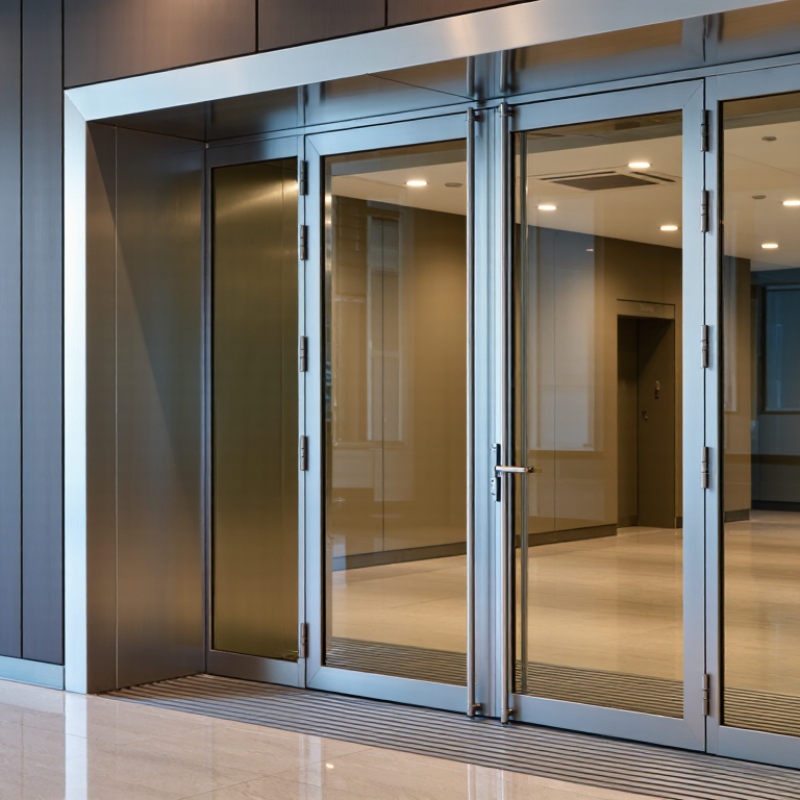
Aluminium entrance doors now serve apartments, offices, hotels, and coastal homes. Common types include hinged, pivot, sliding, and thermally broken systems. Hinged doors suit compact entrances, while pivot doors create wider, more dramatic openings. Sliding designs save circulation space, but their rollers need careful maintenance. Thermally broken frames reduce heat transfer through an insulated barrier inside the profile.
Features should match climate and building use.
Low-E double glazing, multi-point locks, weather seals, and powder-coated finishes improve comfort and durability. The International Aluminium Institute reports that buildings and construction consume about one-quarter of global aluminium demand. The material also offers strong corrosion resistance and design flexibility. Recycled aluminium can require about 95% less energy than primary aluminium, according to industry lifecycle assessments. Yet, energy performance depends on the complete door assembly, not the frame alone. A beautiful frame cannot correct poor installation.
Tips:
Check U-value, air leakage, water resistance, and thermal-break depth. Ask suppliers for tested performance data, not general promises. For coastal projects, confirm coating standards and drainage details. The IEA reports that buildings use roughly 30% of global final energy. Better entrance doors can help, but expectations should remain realistic. Glass area, orientation, shading, and local workmanship may matter more than a catalog specification. In global purchasing, drawings and samples should be reviewed before production. Small measurement errors can become expensive site problems.
Top Aluminium Entrance Door Suppliers for Global Buyers
Choosing an international aluminium entrance door supplier requires more than comparing prices. Production experience matters, but verified processes matter more. Ask for alloy specifications, coating records, and independent test reports. These should cover water resistance, air leakage, wind pressure, and thermal performance. Request a physical sample. Check its frame joints, gasket fit, surface finish, and hardware movement. Small defects often become expensive after installation.
A reliable supplier should provide clear drawings, tolerances, packing details, and realistic production schedules. Confirm whether the factory can manage custom sizes, unusual openings, and regional climate demands. Traceable materials and documented quality inspections show professional control. References from comparable projects are useful, but they are not perfect evidence. Contact them directly when possible. I have seen attractive quotations change after revisions, so written confirmation is essential. The supplier should also explain warranty limits, replacement procedures, and communication responsibilities without vague promises.
Tips: Compare samples, not brochures. Ask for a staged inspection. Review packaging photographs before shipment. Keep every approved drawing. Leave room for mistakes; even experienced teams can miss a hinge position or drainage detail. A short video call with the production manager may reveal more than a polished sales presentation. Pay attention to how quickly and precisely questions are answered.
Top Aluminium Entrance Door Suppliers for Global Buyers
The aluminium door market is concentrated in several capable manufacturing regions. China offers broad production capacity, competitive pricing, and flexible customization for large projects. Turkey serves nearby European, Middle Eastern, and African markets with practical lead times. Italy and Germany are known for precise engineering, refined finishes, and strong thermal performance. Southeast Asian suppliers are also expanding, especially for residential developments and tropical climates.
Supplier profiles vary more than country labels suggest. A reliable factory should show extrusion capabilities, powder-coating controls, and documented hardware testing. Buyers should request section drawings, U-value data, air-tightness results, and corrosion test records. A thermal-break profile matters in cold regions, while drainage design becomes critical in heavy rain. Coastal projects need durable coatings and stainless-steel components.
Details reveal experience. Ask how the supplier protects door corners during container loading. Check whether replacement gaskets remain available after installation. Confirm tolerances on a real sample, not only a digital rendering. Some suppliers provide excellent samples but struggle with batch consistency. That weakness deserves attention. No region is perfect. Even experienced buyers can underestimate packaging damage, local code differences, or installation skills. Clear inspection points, approved mock-ups, and staged payments can reduce avoidable disputes without slowing a well-managed project.
Asia represents the largest aluminium supply base, supported by extensive extrusion, fabrication and export infrastructure. Europe and North America are important for high-performance systems, energy efficiency and engineered entrance-door solutions, while the Middle East is a major source of primary aluminium and large-scale architectural products. Regional shares are rounded estimates based on 2023 primary aluminium production data reported by the U.S. Geological Survey and are used as a supply-chain indicator rather than a direct measure of door exports.
Customization should solve site conditions, not merely change appearance. Experienced manufacturers can adjust frame depth, thermal breaks, glazing thickness, threshold design, opening direction, and access hardware. Powder-coated finishes need consistent colour control and suitable pretreatment. Ask for physical samples before approving large production.
A sample can still hide weak corner joints. Review cut sections, gasket compression, drainage paths, and lock alignment. Small details affect installation time and long-term performance.
Quality assurance should continue from raw materials to final packing. Useful controls include incoming alloy checks, dimensional inspections, coating thickness tests, glass verification, and repeated door operation. Factory staff should record results against each order. Photographs help, but independent inspection adds stronger evidence. I have found that packaging is often underestimated; protected corners and separated hardware prevent costly site damage. No supplier is flawless. Honest reporting of rejected units, corrective actions, and production limits is more credible than perfect promises. Global buyers should also confirm lead times, replacement procedures, installation guidance, and communication responsibilities before signing technical documents.
Top Aluminium Entrance Door Suppliers for Global Buyers
Global buyers should treat an aluminium entrance door as a managed project, not a catalog item. Before ordering, share opening sizes, wall build-up, swing direction, thermal targets, glazing, hardware, finish, and site photos. A clear purchase schedule prevents silent substitutions. It should specify alloy, profile thickness, gasket type, packing method, and inspection points. Request a signed shop drawing before production. One overlooked threshold detail can stop installation. The World Bank’s 2023 Logistics Performance Index covered 139 economies, highlighting customs, tracking, and delivery reliability as major trade factors.
Shipping needs equal attention. UNCTAD reports that over 80% of global merchandise trade by volume moves by sea. Confirm the Incoterm, loading port, container plan, moisture barriers, corner protection, and spare-part packing. Ask for carton dimensions and gross weight before booking freight. For compliance, request material declarations, test reports, batch traceability, and installation instructions. European projects may require applicable harmonized standards and declarations, depending on the door type. Documents must match the exact configuration, not a similar model.
After-sales support should include a named contact, response targets, adjustment guidance, and replacement hardware availability. A warranty without spare-hardware planning is weak. Remote video checks can resolve misalignment, but they cannot replace proper installation. No supplier is flawless. Buyers should test communication before placing a large order, perhaps with one sample unit. This small step often reveals slower weaknesses. Keep serial labels, inspection photos, and signed delivery records for future claims.
| Supplier Profile | Typical Supply Region | Main Product Capability | Typical MOQ | Indicative Production Lead Time | Common Trade Terms | Export and Compliance Documents | Packaging and Shipping Practice | Warranty Practice | Recommended Buyer Verification |
|---|---|---|---|---|---|---|---|---|---|
| Certified OEM manufacturer | East Asia | Thermally broken aluminium entrance doors, insulated panels, multi-point locks, powder-coated and anodized finishes. | Usually 10–30 door units, depending on customization. | 25–45 calendar days after approved drawings and deposit. | EXW FOB CIF | Commercial invoice, packing list, bill of lading, certificate of origin, product drawings, finish specification, and test reports where applicable. | Individual protective film, corner guards, foam, export carton or wooden crate; container loading should be photographically documented. | Commonly 5–10 years for frame finish or structure; hardware coverage may be shorter and should be stated separately. | Confirm factory audit records, sample approval, water and air performance data, and replacement-part availability. |
| Architectural project fabricator | Southern Europe | Bespoke entrance systems, oversized pivot doors, narrow sightlines, concealed closers, and project-specific colour matching. | Often 1–10 units for projects; engineering fees may apply to small orders. | 6–12 weeks after final shop drawings and technical approval. | FCA DAP DDP by quotation | CE-related technical documentation where applicable, declaration of performance for regulated products, installation instructions, maintenance guide, and material declarations. | Custom timber cases or reinforced pallets; transport is normally arranged around project delivery dates and site access conditions. | Project warranties commonly range from 2–5 years, subject to approved installation and documented maintenance. | Request structural calculations, hardware load ratings, thermal data, and a written responsibility matrix for installation. |
| High-volume export manufacturer | South and Southeast Asia | Standardized single and double entrance doors, modular glazing options, common RAL colour ranges, and container-scale production. | Usually 30–100 units per design or finish. | 20–40 calendar days for standard models; longer for custom glazing. | FOB CFR CIF | Invoice, packing list, shipping document, certificate of origin, fumigation or ISPM 15 documentation for solid-wood packaging, and inspection records. | Space-efficient carton packing, steel or plywood pallets, moisture protection, and container loading plans suitable for long-distance sea freight. | Frequently 2–5 years for manufacturing defects; finish, glass, seal, and hardware terms should be itemized. | Check production capacity, batch consistency, salt-spray or coating data, glass standards, and pre-shipment inspection procedures. |
| Regional distributor and project stockist | North America | Ready-to-install or semi-custom doors, replacement units, compatible hardware, local code support, and shorter delivery for stocked sizes. | Often 1–5 units for stock products; custom items may require a project minimum. | In-stock products may ship in 3–10 business days; custom products commonly require 6–14 weeks. | FCA DAP Local delivery | Test reports for applicable building codes, installation instructions, energy-performance information, invoice, packing list, and customs data for imported items. | Local pallet or crate delivery with scheduled unloading; confirm lift-gate, curbside, inside-delivery, and site-storage options. | Commonly 1–5 years, with separate terms for finish, insulated glass, locks, closers, and installation workmanship. | Verify local code compatibility, rough-opening dimensions, replacement hardware stock, and installer network coverage. |
| Low-carbon and sustainable-material specialist | Western and Northern Europe | Recycled-content aluminium, low-emission finishes, thermally improved frames, environmental declarations, and energy-efficient glazing systems. | Usually 5–20 units, with design and colour restrictions on smaller orders. | 8–16 weeks, depending on recycled billet availability, glazing, and project engineering. | FCA DAP CPT | Environmental product declaration where available, recycled-content statement, technical data sheet, declaration of performance where applicable, invoice, and origin documentation. | Recyclable protective materials where practical, reusable stillages for repeat projects, and moisture-controlled packaging for combined road and sea transport. | Generally 2–10 years depending on component; maintenance requirements and finish limitations should be documented. | Validate recycled-content percentages, EPD scope, coating durability, thermal transmittance, and chain-of-custody evidence. |
| Custom design and premium entrance specialist | Middle East and Oceania | Large-format pivot doors, decorative aluminium panels, security glazing, integrated access control preparation, and climate-specific finishes. | Commonly 1–5 units for high-value projects. | 8–18 weeks, including engineering, sample approval, fabrication, and export preparation. | EXW CIF DAP | Shop drawings, material and finish schedules, glazing specifications, installation manuals, certificate of origin, packing list, and destination-specific conformity documents. | Heavy-duty timber crates, desiccant or moisture barriers, shock indicators where requested, and delivery coordination with cranes or specialist handling. | Project warranties are commonly 2–5 years; access-control components may carry separate manufacturer warranties. | Confirm wind-load design, solar exposure suitability, corrosion category, hardware service access, and local installation capability. |
Buyer note: The figures above are indicative market ranges rather than quotations. Final pricing, lead time, compliance obligations, shipping cost, duties, and warranty coverage depend on door dimensions, glazing, finish, hardware, destination regulations, order volume, and approved technical drawings.
China offers large capacity, competitive pricing, and flexible customization. Turkey supports nearby markets with practical delivery times. European manufacturers often emphasize precise engineering and refined finishes. Southeast Asian suppliers increasingly serve residential projects and tropical climates. No region is perfect.
Request extrusion details, powder-coating controls, hardware test records, and inspection documents. Ask for real section drawings and physical samples. Confirm replacement gasket availability after installation. A polished website proves very little.
Ask for alloy certificates, profile tolerances, coating specifications, and inspection records. Useful tests include air leakage, water tightness, wind resistance, and thermal performance. Also request U-value data and corrosion test results. Vague claims need careful questioning.
Cold regions usually need thermal-break profiles and suitable glazing. Heavy-rain areas require effective drainage paths and carefully designed thresholds. Coastal projects need durable coatings and corrosion-resistant components. Tropical projects may require ventilation and strong rain protection.
Check corner joints, gasket compression, drainage routes, lock alignment, and frame dimensions. Operate the door repeatedly. Review the cut section, not only the finished surface. Digital drawings can hide practical weaknesses.
Quality checks should cover incoming alloys, dimensions, coating thickness, glass, and repeated door operation. Factory records should connect results to each order. Independent inspection provides stronger evidence than photographs alone. Perfect promises are not proof.
Ask how corners are protected during container loading. Separate hardware from fragile glass and frame edges. Approve a full mock-up before mass production. Installation guidance and clear responsibility reduce confusion, though problems can still occur.
Confirm lead times, inspection stages, payment milestones, replacement procedures, and communication duties. Check local building requirements before signing technical documents. Batch consistency deserves attention. A strong sample may not represent every delivered unit.
This guide explores how an Aluminium Entrance Door can combine durability, security, energy efficiency, and modern design for residential, commercial, and institutional projects worldwide. It introduces common door types, opening configurations, finishes, glazing options, thermal performance, and weather resistance, helping buyers match product features with different climates, building styles, and application requirements.
For international sourcing, the article explains how to evaluate suppliers through manufacturing capacity, material quality, customization ability, certifications, testing procedures, and quality-control systems. It also reviews major production regions and typical supplier strengths without focusing on individual brands. In addition, global buyers will learn what to consider when discussing technical drawings, packaging, lead times, shipping arrangements, import documentation, installation guidance, warranties, spare parts, and after-sales communication. By comparing these factors carefully, purchasers can select reliable partners and obtain aluminium entrance doors that meet project specifications, performance expectations, and local compliance requirements.