0%

Choosing a reliable Modern Aluminum Entry Door supplier requires more than comparing attractive product photos. Real performance appears in everyday details, including frame alignment, hinge strength, weather seals, and finish durability. A well-made door should open smoothly, close firmly, and remain stable through changing temperatures. Details matter.

This guide reviews ten recognized suppliers serving international markets. The comparison considers aluminum alloy quality, thermal-break design, glass options, hardware performance, surface treatments, customization, production capacity, and after-sales support. Installation guidance also matters, because even an excellent door can fail when measurements or drainage are handled poorly. Performance varies.

Our evaluation approach reflects practical buying experience and manufacturer-focused research. We examine product documentation, technical specifications, warranty terms, factory capabilities, and customer feedback where reliable information is available. Suppliers with clear testing data and transparent communication receive greater attention. Claims without supporting evidence deserve caution.

No ranking is flawless. Regional availability, shipping conditions, installer skill, and project requirements can change the final choice. A supplier suitable for a luxury residence may not fit a commercial development or renovation budget. Readers should verify current certifications, lead times, minimum orders, and service coverage before signing a contract. This shortlist is designed as a dependable starting point, not a substitute for professional inspection. It helps architects, builders, developers, and homeowners compare suppliers with clearer expectations and fewer costly surprises. Good doors are not judged only by appearance. They should protect interiors, support daily comfort, and perform consistently for many years.
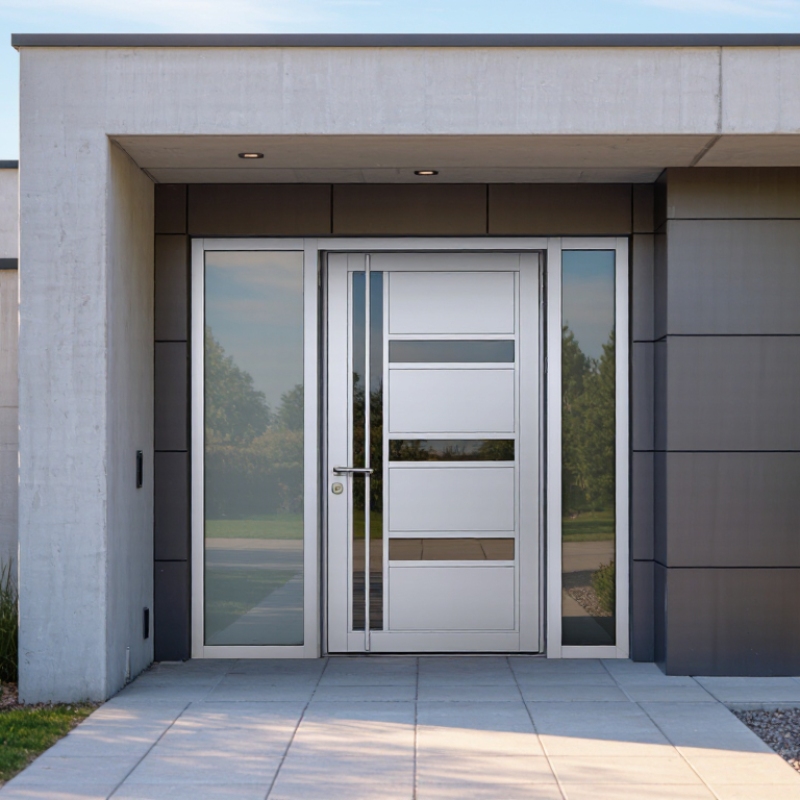
Top 10 Modern Aluminum Entry Door Suppliers Worldwide?

Global Scope and Criteria for Ranking Modern Aluminum Door Suppliers

Ranking the top 10 modern aluminum entry door suppliers worldwide requires more than comparing attractive catalogs. Global scope changes the test. Suppliers should demonstrate stable production, documented quality control, and experience across different climates. A coastal project needs corrosion resistance, while a cold region demands reliable thermal performance.

The evaluation should combine factory audits, installer interviews, project records, and independent test reports. Key criteria include frame strength, air and water resistance, thermal breaks, hardware durability, finish consistency, and customization control.

Compliance with recognized testing standards and local building requirements also matters. Delivery planning deserves attention, especially when doors cross borders. Clear warranties and responsive technical support reveal how a supplier performs after installation.

A practical ranking can assign scores for engineering, manufacturing capacity, service, sustainability, and verified project experience. However, public information is often incomplete. Some suppliers present polished images but provide few measurable results. Others have strong technical teams but weak documentation. That difference can distort the list. Reviewers should record evidence, not rely on reputation alone. Site visits may expose details that brochures miss, such as uneven anodizing, loose corner joints, or poor packaging. Feedback from architects and installers adds useful reality. Still, opinions can be regional and biased. The ranking should remain transparent, updateable, and open to correction when newer evidence appears.

Top 10 Suppliers Compared by U-Value, Air Leakage, and Wind Ratings

Comparing the top ten modern aluminum entry door suppliers requires more than checking frame appearance. U-value shows heat transfer, while lower values generally indicate better insulation. The U.S. Department of Energy reports that windows can cause 25% to 30% of household heating and cooling energy use. Entry doors deserve similar attention, especially in exposed entrances.

NFRC testing uses U-factor and air-leakage measurements under controlled conditions. A strong candidate should publish certified results, not only marketing claims. Air leakage is measured in cubic feet per minute per square foot. Lower numbers usually mean fewer drafts around seals and thresholds. Small gaps matter. Installation can weaken excellent factory performance.

Wind ratings also need careful comparison. Structural pressure testing, commonly linked with ASTM E330 and AAMA/WDMA/CSA 101 standards, indicates how a door handles pressure and deflection. Higher design-pressure values suit coastal zones, tall buildings, and open terrain. However, ratings are not perfectly interchangeable across laboratories. Product size, glass area, hardware, and mounting conditions can change results. This comparison remains imperfect.

A practical shortlist should record each supplier’s tested U-value, air-leakage rate, and design pressure in one table. Independent certification adds credibility. Ask for the complete test report. Not just a brochure. A low U-value may still disappoint if the threshold leaks during heavy rain. Experienced installers also check wall alignment, flashing, and gasket compression before accepting the stated performance.

Top 10 Modern Aluminum Entry Door Suppliers Worldwide

Anonymous product-performance comparison by thermal transmittance, air leakage, and wind-load resistance.

Lower U-value and air-leakage results indicate better thermal and airtightness performance, while a higher wind-load rating indicates greater structural resistance. Values represent realistic benchmark specifications commonly reported for high-performance aluminum entry door systems; final performance depends on the complete door assembly, glazing, hardware, installation, and applicable testing standard.

Regional Supplier Profiles, Certifications, Lead Times, and Warranty Terms

A reliable worldwide supplier should be judged by regional performance, not catalog size. In North America, established fabricators often provide tested thermal breaks, impact-rated glass options, and documentation aligned with local building requirements. European suppliers commonly emphasize CE-marked components, EN testing, and low-U-value assemblies. In the Gulf region, powder-coating durability and resistance to heat, dust, and salt deserve closer attention. Asia-Pacific manufacturers may offer competitive pricing, but buyers should verify export experience, packaging quality, and installation support.

Certifications are useful only when they match the project. Look for ISO 9001 quality systems, documented air, water, and structural testing, and recognized finishes such as AAMA-rated powder coating where applicable. Ask for test reports, not only certificates. Lead times should separate design approval, production, glazing, and shipping. A realistic custom order may take eight to sixteen weeks, while unusual finishes or oversized panels can extend this period. Confirm whether delays begin again after drawing revisions.

Warranty terms reveal a supplier’s practical reliability. Strong agreements specify coverage for frames, hardware, glass seals, coating failure, and installation defects. They also state exclusions clearly, including coastal exposure, poor maintenance, or unauthorized modifications. I have found that vague “limited lifetime” language creates trouble later. A written maintenance schedule is more useful than polished sales claims. Still, no supplier is perfect; even careful teams can misjudge freight timing or color consistency. Request a sample corner, finish panel, and signed production schedule before committing.

Top 10 Modern Aluminum Entry Door Suppliers Worldwide? - Regional Supplier Profiles, Certifications, Lead Times, and Warranty Terms
Profile Primary Region Typical Product Focus Relevant Certifications and Standards Indicative Production Lead Time Typical Warranty Structure Procurement Notes
01 Western Europe
Germany, Austria, Switzerland
Thermally broken aluminum entrance doors, large pivot doors, high-insulation systems, concealed hardware. EN 14351-1 CE/CPR where applicable EN 12207 EN 12208 EN 12210 EN 16034 where applicable Approximately 8–14 weeks after approved drawings, finish selection, and deposit. Commonly 5–10 years for frame integrity; 2–5 years for hardware, seals, coatings, and powered components, subject to contract. Strong documentation and engineering support; confirm U-value, air-tightness, water-tightness, and wind-load calculations for the project location.
02 Italy and Southern Europe
Italy, Spain, Portugal
Minimalist aluminum doors, flush panels, oversized glazed leaves, custom colors, and architectural residential systems. EN 14351-1 CE/CPR where applicable EN 12207 EN 12208 EN 12210 Qualicoat commonly specified Approximately 6–12 weeks; oversized glazing, special finishes, and imported hardware may extend the schedule. Typically 5 years for the door assembly and 2–5 years for moving parts, finishes, seals, and electronic access accessories. Request written confirmation of maximum leaf dimensions, hinge capacity, glass specification, threshold drainage, and maintenance requirements.
03 United Kingdom and Ireland Entrance doors for new-build and renovation projects, low-threshold configurations, glazed aluminum doors, and security-focused assemblies. BS EN 14351-1 UKCA/CE route as applicable PAS 24 where specified EN 12207 EN 12208 Approximately 6–10 weeks for standard configurations; 10–16 weeks for bespoke sizes or imported components. Often 5–10 years for frames and sealed units; hardware and electronic locks commonly carry shorter, separate warranty periods. Check compliance with project-specific security requirements, threshold accessibility, Document L thermal targets, and coastal corrosion exposure.
04 North America
United States and Canada
Heavy-duty residential and commercial entry doors, thermally improved frames, impact-rated options, and tested multi-point locking systems. AAMA/WDMA/CSA 101/I.S.2/A440 NFRC rating where applicable ASTM E283 ASTM E331 ASTM E330 AAMA 2603/2604/2605 Approximately 8–16 weeks; impact certification, custom glazing, and remote-site delivery can add time. Commonly 5–10 years for the door system; finish, insulated glass, hardware, and smart-lock warranties may differ. Verify the applicable performance class, design pressure, forced-entry or impact requirements, NFRC values, and local building-code approvals.
05 East Asia
Japan and South Korea
Precision-fabricated aluminum doors, compact urban systems, high-performance seals, narrow sightlines, and factory-assembled units. JIS or KS requirements where applicable EN 14351-1 for export markets ISO 9001 commonly requested ASTM tests for North American projects Approximately 8–14 weeks, excluding sea freight and customs; prototypes may require additional engineering time. Typically 3–5 years for the complete assembly and 1–3 years for hardware, seals, coatings, and electronic components. Confirm export packaging, installation tolerances, replacement-part availability, labeling language, and compatibility with local wall construction.
06 Mainland China OEM and project-based aluminum entry doors, thermally broken profiles, custom panel designs, large-volume production, and private-label manufacturing. ISO 9001 commonly available EN 14351-1 for EU projects ASTM E283/E331/E330 on request AAMA 2604/2605 finishes where specified Approximately 5–10 weeks for production after approval; total delivered time commonly 8–16 weeks depending on shipping and customs. Often 5 years for frames and 1–3 years for hardware, seals, finishes, and electronic accessories; terms vary substantially by purchase contract. Use pre-production samples, third-party inspection, approved shop drawings, coating certificates, packing specifications, and clearly defined Incoterms.
07 Southeast Asia
Vietnam, Thailand, Malaysia, Indonesia
Residential and hospitality aluminum doors, powder-coated systems, tropical-climate configurations, and project-specific fabricated assemblies. ISO 9001 commonly requested EN 14351-1 for European projects ASTM testing for export projects AAMA 2603/2604/2605 Approximately 6–12 weeks for production; international delivery may bring the total procurement period to 10–18 weeks. Commonly 3–5 years for frames and 1–3 years for hardware and finishes, with coastal or high-humidity exclusions often stated. Prioritize drainage design, corrosion-resistant hardware, coating thickness, salt-spray evidence, installation details, and local service capability.
08 Australia and New Zealand Cyclone-region and high-wind doors, thermally improved aluminum systems, bushfire-related project options, and coastal residential products. AS 2047 AS/NZS 2208 glazing AS 1288 glazing installation AS/NZS 1170.2 wind actions BAL requirements where applicable Approximately 8–14 weeks; cyclone-rated, bushfire-related, or non-standard glazing configurations may require longer. Typically 5–10 years for the door system; powder coating, insulated glass, hardware, and seals may have separate terms. Confirm region-specific wind pressure, water penetration, bushfire exposure level, glass safety classification, and installation certification.
09 Middle East
United Arab Emirates, Saudi Arabia, Qatar
High-temperature and solar-exposure entry doors, oversized pivot systems, villa and hospitality doors, and corrosion-resistant exterior assemblies. ASTM E283 ASTM E331 ASTM E330 AAMA 2604/2605 EN 14351-1 for European-specified projects Approximately 6–12 weeks for regional fabrication; imported systems may require 10–18 weeks including shipping. Commonly 5 years for frames and 1–3 years for hardware, seals, coatings, and access-control equipment. Specify solar-control glazing, thermal movement allowances, UV-resistant seals, finish performance, dust protection, and service response times.
10 Latin America
Mexico, Brazil, Chile, Colombia
Custom residential and commercial aluminum doors, powder-coated systems, tropical or coastal configurations, and locally adapted entrance assemblies. Local building-code requirements ABNT standards in Brazil where applicable EN 14351-1 for specified imports ASTM performance testing on request Approximately 6–14 weeks; imported hardware, glass, and profiles can extend the schedule to 12–20 weeks. Usually 3–5 years for the assembly and 1–3 years for hardware, seals, and finishes; warranty registration and professional installation may be required. Check local wind and water-performance requirements, tax and customs treatment, spare-parts availability, installation responsibility, and finish suitability for coastal areas.
Data note: Lead times and warranty periods are indicative market ranges for comparable aluminum entry-door supply contracts, not guarantees for any individual supplier. Final terms depend on approved drawings, dimensions, glazing, finish, hardware, testing requirements, shipping, installation, maintenance, and the written purchase agreement.

Aluminum Sustainability Metrics: 75% Recyclability and Recycled Content

When comparing modern aluminum entry door suppliers worldwide, sustainability claims deserve the same scrutiny as design details. Aluminum can often be recycled repeatedly without losing its core performance. Yet “75% recyclable” needs context: does it describe the frame, the complete door, or recoverable material after installation? A credible supplier should define the calculation, boundary, and test method clearly. Small detail, big difference.

Ask for recycled-content records, not a polished percentage alone. Pre-consumer scrap may come from factory offcuts, while post-consumer aluminum comes from recovered windows, doors, or construction waste. The second category usually shows stronger circular value, but both should be reported separately. Request an environmental product declaration, batch documentation, and evidence of controlled sourcing. I have found that clear paperwork often reveals more than a glossy sustainability page. Still, documents can age quickly.

A well-designed door can also reduce long-term energy demand. Look for thermal breaks, insulated cores, tight gaskets, and independently verified U-values. These features matter in a cold entry hall or a sunlit apartment lobby. Recyclability alone does not excuse poor durability. A coating that fails early can create replacement waste. Suppliers should explain repair options, hardware replacement, and end-of-life separation. The 75% figure is useful, but incomplete. Local recycling capacity may change the real outcome.

Buyer Due Diligence Under EN 14351-1, NFRC, and AAMA Standards

Top 10 Modern Aluminum Entry Door Suppliers Worldwide?

Buyer Due Diligence Under EN 14351-1, NFRC, and AAMA Standards

A serious supplier should provide traceable test evidence, not only attractive product photos. Under EN 14351-1, request the Declaration of Performance, declared thermal transmittance, air permeability, watertightness, and resistance to wind load. Check whether the tested door matches the offered size, glass, threshold, and hardware. Small differences matter.

For North American projects, verify NFRC ratings for U-factor, solar heat gain coefficient, and visible transmittance. NFRC certification also requires product-specific labeling and controlled simulation or testing procedures. The U.S. Department of Energy reports that windows can represent 25–30% of residential heating and cooling energy use. Entry doors deserve similar scrutiny, especially when large glazed panels are specified.

AAMA requirements should be reviewed with the exact test method and performance class. Ask for air infiltration, water penetration, structural performance, and finish testing, including AAMA 2605 where applicable. Confirm that laboratory reports are current and issued by an appropriately accredited facility.

Then inspect a production sample: corner joints, drainage paths, gaskets, and thermal breaks should match the drawings. A polished report can still hide weak installation details.

I would also question unusually low U-factors without spacer, frame, and glass data. That doubt is useful. Supplier comparisons should record evidence, not promises.

FAQS

What does a lower U-value mean for an aluminum entry door?

A lower U-value usually means less heat passes through the door. It can improve comfort in cold halls or sunny lobbies.

Why is air leakage important?

Lower air-leakage values usually mean fewer drafts around seals and thresholds. Small gaps can still cause noticeable discomfort.

Can excellent factory testing guarantee good performance after installation?

No. Wall alignment, flashing, gasket compression, and threshold fitting can weaken factory results. Installation is easy to underestimate.

How should wind ratings be compared?

Compare design-pressure values with the tested door size, glass area, hardware, and mounting conditions. Higher ratings may suit coastal areas or open terrain.

Are wind ratings from different laboratories always interchangeable?

Not perfectly. Laboratories may use different conditions, sizes, or mounting details. The comparison remains imperfect.

What test documents should buyers request?

Request complete test reports, certification records, and product labels. Confirm they match the offered glass, threshold, hardware, and dimensions.

What sustainability information should a supplier provide?

Ask whether the recycled percentage covers the frame or complete door. Request recycled-content records, environmental declarations, and batch documents.

Is recyclability enough to prove a door is sustainable?

No. Thermal breaks, insulated cores, durable coatings, repair options, and local recycling capacity also matter. The percentage is incomplete.

Which details deserve inspection on a production sample?

Check corner joints, drainage paths, gaskets, thermal breaks, and finish quality. A polished report can still hide weak details.

What should buyers question about unusually low U-factors?

Ask for frame, spacer, and glass data behind the number. I would double-check it, because figures can lack useful context.

Conclusion

This guide evaluates the top 10 Modern Aluminum Entry Door suppliers worldwide using consistent criteria, including U-values, air leakage, wind-load performance, product engineering, regional availability, and manufacturing reliability. It explains how these factors influence energy efficiency, comfort, weather resistance, and long-term value. Supplier profiles are organized by region and cover relevant certifications, estimated lead times, customization options, installation support, and warranty terms, helping buyers compare products beyond appearance and price.

The article also examines aluminum sustainability, highlighting its durability, recyclability, and the potential use of recycled content, including systems designed around a 75% recyclability target. A practical buyer due-diligence section introduces key considerations under EN 14351-1, NFRC, and AAMA standards, such as verified testing, documentation, thermal performance, air infiltration, and structural ratings. Together, these guidelines provide a clear framework for selecting a compliant, efficient, and responsibly manufactured entry door for residential or commercial projects.

Amelia

Amelia

Amelia is a professional marketing specialist with a deep understanding of the company’s products, services, and the needs of the people who use them. She regularly contributes expert articles to the company website, turning product knowledge and industry insights into clear, useful guidance. Her......