0%

An Aluminum Entry Door can sharpen a home’s entrance, but appearance alone cannot tell you how it will perform. Check the frame, thermal break, weather seals, threshold, finish, and lockset. Touch the sample: a smooth coating feels reassuring, yet tells you little about the quality of its installation. Small details matter.

The U.S. Department of Energy’s Energy Saver guidance estimates that windows account for 25–30% of residential heating and cooling energy use. That figure applies to windows, not entry doors, so it should not be used as a door-performance claim. Still, it highlights why careful air-sealing deserves attention. Compare available NFRC ratings, including U-factor where provided, and ask the seller how the complete door system is tested. Ratings can vary by size, glazing, and configuration.

Architect Carl Elefante, former president of the American Institute of Architects, is widely associated with the line, “The greenest building is the one that is already built.” It is a useful reminder to consider repair and long service life before replacing an existing door. No door is perfect. For your shortlist, ask for written specifications, warranty terms, finish-care instructions, and installation details. A low price can look tempting, but a poorly fitted door may leave drafts around the jamb or water marks near the sill. These seven tips will help you compare options with evidence, not showroom shine.
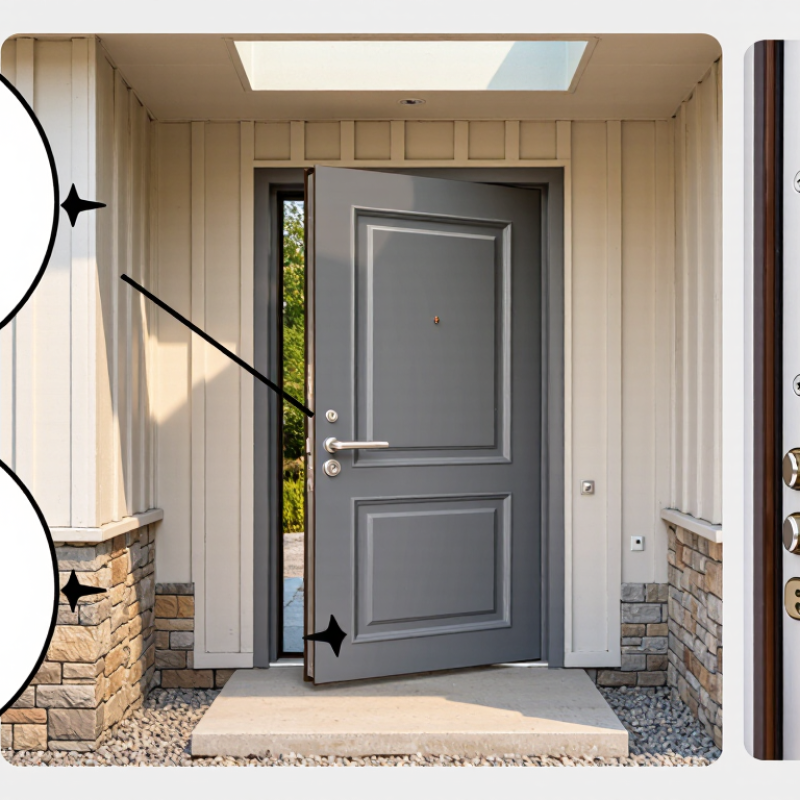
7 Tips for Buying an Aluminum Entry Door?

Define Your Entryway’s Size, Style, and Performance Needs

Before choosing a finish, measure the rough opening, door slab, jamb depth, and threshold height. Measure twice. Record whether the door swings inward or outward, and note nearby steps, trim, or a sloped floor. These details affect clearance and installation. A replacement slab may fit an existing frame, but a warped frame can make that shortcut costly. Check the entryway’s proportions, too: a narrow hall may feel crowded by a wide swing, while glass panels can bring daylight into a dim foyer. Small details matter.

Then define the conditions the door must handle. Aluminum is light and resists corrosion, but its frame should include a thermal break to limit heat transfer. Compare NFRC-rated U-factors; lower values indicate less heat flow. The U.S. Energy Information Administration’s 2020 Residential Energy Consumption Survey found that space heating accounted for 42% of household site energy use, and air conditioning for 9%. Those figures cover the whole home, not one door, but they show why drafts and poor seals deserve attention. Ask for tested air-leakage, water-penetration, and structural ratings under the applicable NAFS standard. A sleek glass design may look perfect in a showroom. It may feel less perfect beside a cold, windy entrance. Check the rating for your exposure, not just the appearance.

7 Tips for Buying an Aluminum Entry Door: Start with the Right Size

Common U.S. single-entry door slab widths include 30, 32, and 36 inches. Measure your existing door and rough opening, then confirm the required dimensions with the door supplier before choosing a style or performance features.

Compare Aluminum Construction, Insulation, and Thermal Breaks

Tip 1: Ask whether the door uses solid aluminum profiles or a framed system with separate panels. The construction affects stiffness, weight, and where heat can pass through. Tip 2: Compare the insulation inside the door, not just its exterior appearance. A well-insulated panel can reduce heat flow, but performance varies by core material and thickness. Tip 3: Request the complete door’s thermal rating, if available. A panel rating alone may not reflect the frame, glass, or edge details.

Tip 4: Check for a thermal break: a low-conductivity strip separating the inner and outer aluminum sections. Without this barrier, the metal can carry outdoor temperatures indoors. Tip 5: Look closely at the threshold and frame corners. Small gaps or poorly fitted seals can cause drafts, even when the panel is insulated. Tip 6: Compare weatherstripping and glass options alongside the thermal break. They all affect comfort. Still, one number cannot tell the whole story.

Tip 7: Match the door to your climate and entry conditions. In a cold region, pay close attention to frame insulation and condensation guidance; in a hot, sunny spot, consider heat gain through glass. Ask how the rating was measured and whether it applies to the full assembly. Details matter. I might overvalue a sleek, narrow frame at first glance; it is worth checking its insulation before deciding.

Assess Security Features, Weather Seals, and Glazing Options

7 Tips for Buying an Aluminum Entry Door?

Check how the door, frame, hinges, and lock work together. A strong panel cannot compensate for a weak frame. Look for reinforced lock areas and sturdy, adjustable hinges. Multi-point locks can secure several points along the frame, but the installation must align correctly. Ask for documented performance ratings, not just reassuring sales language. A thicker door is not automatically a safer one. It is easy to focus on the lock and overlook the frame.

Weather seals should compress evenly when the door closes. Check the corners and threshold for gaps, and ask how worn seals can be replaced. A simple paper-strip test can help: close the door on a strip, then see whether it pulls out with little resistance. Check that the threshold sheds water away from the interior. Small details matter. For glazing near the lock, compare laminated and tempered glass options; they behave differently when damaged. Ask about the complete glazing assembly, including its frame and attachment, rather than judging by glass thickness alone. More glass can brighten an entry, but it may reduce privacy or expose the interior. Balance light, security, and upkeep for your home.

Review Finish Durability, Maintenance Needs, and Warranty Terms

An aluminum entry door’s finish should suit the conditions around your home. Strong afternoon sun can fade some colors, while coastal air and frequent rain may increase care needs. Ask whether the surface is anodized or coated, and request written guidance on expected appearance over time. No finish is effortless. A small sample viewed outdoors can reveal more than a showroom display.

Check seams, corners, and hardware cutouts, where damage may expose the underlying metal. Clean the door with mild soap, water, and a soft cloth; rinse away residue and dry it to limit spotting. Avoid abrasive pads and harsh cleaners unless the care instructions specifically allow them. Dust gathers quickly near busy entrances, so choose a finish you can realistically maintain.

Read the warranty exclusions. Confirm how long finish coverage lasts and whether it addresses peeling, chalking, or unusual fading. Check whether labor is included, whether coverage changes near saltwater, and whether routine cleaning is required. A long warranty may still exclude common wear or installation problems. Keep the care sheet and purchase records; they make future claims easier to assess.

Compare Installation Quality, Total Cost, and Long-Term Value

Buying an aluminum entry door requires more than comparing showroom prices. I learned this after inspecting a door that looked perfect but scraped the threshold every morning.

Tip one: measure the opening twice, including the sill and wall depth.

Tip two: ask how installers prevent water intrusion. Proper flashing, shims, and a level frame matter more than polished hardware.

Tip three: confirm the door includes a thermal break, weather seals, and suitable drainage.

Installation quality often decides long-term value. Tip four: request a written installation scope, not a vague labor estimate. It should explain removal, structural repairs, trim, disposal, and final adjustment.

Tip five: compare the total cost, including delivery, finishing, locks, taxes, and future maintenance. A cheaper quote may exclude important work.

Inspect the frame after installation. The latch should close smoothly, and daylight should not appear around the seals. Small gaps become expensive problems.

Tip six: read the warranty carefully. Check who handles labor, finish damage, glass failure, and hardware replacement.

Tip seven: consider daily comfort, not just appearance. A well-sealed aluminum door can reduce drafts and outside noise. Ask about finish durability in your climate.

I once trusted a low bid without checking these details. That was shortsighted. Also, verify local building requirements and use a qualified installer. Long-term value comes from balanced costs, reliable workmanship, and fewer repairs.

FAQS

Why should I compare solid aluminum profiles with framed door systems?

Construction affects stiffness, weight, and heat transfer. Solid profiles may feel stronger, while framed systems use separate panels. Ask how the door is assembled.

What should I check inside an insulated aluminum door?

Examine the core material and its thickness. Exterior appearance can hide weak insulation. A thicker, suitable core may slow heat flow.

What does a thermal break do?

A thermal break separates inner and outer aluminum sections. It uses a low-conductivity strip. Without it, outdoor temperatures can travel through the metal.

Should I trust the panel’s thermal rating?

Not completely. Request the rating for the complete door assembly. The frame, glass, edges, seals, and threshold can change real performance.

How can I find installation problems after fitting?

Check whether the latch closes smoothly. Look for daylight around the seals. The door should not scrape the threshold. Small gaps become costly later.

What installation details should the written scope include?

It should cover removal, shims, flashing, structural repairs, trim, disposal, and final adjustment. Ask how installers will prevent water intrusion. Details matter.

How should I compare the total cost?

Include delivery, finishing, locks, taxes, installation, and future maintenance. A low quote may exclude important work. Cheap is not always cheaper.

Which door features suit different climates?

Cold regions need good frame insulation and condensation guidance. Sunny areas may need better control of glass heat gain. Ask how testing was measured.

What warranty details deserve attention?

Check coverage for labor, finish damage, glass failure, and hardware replacement. Also ask who manages repairs. I once trusted a low bid. That was shortsighted.

How do I judge long-term value?

Consider comfort, noise reduction, finish durability, maintenance, and workmanship. A sleek frame can attract attention. I might still overvalue appearance at first.

Conclusion

Choosing an Aluminum Entry Door requires more than comparing appearances. Start by measuring your entryway carefully and identifying the style, traffic, climate, and energy-performance needs of your home. Compare aluminum construction quality, insulation levels, and thermal-break designs, as these factors can affect comfort, condensation control, and long-term efficiency. Examine security features such as durable locking systems, reinforced frames, strong hinges, and suitable glazing options. Consider whether clear, decorative, or privacy glass best fits your needs while maintaining safety and natural light.

You should also evaluate finish durability, cleaning requirements, corrosion resistance, and warranty coverage before making a decision. Ask how the door will perform in local weather and whether replacement parts or service are readily available. Finally, compare installation quality and the complete project cost, including preparation, hardware, sealing, and future maintenance. A professionally installed door with reliable weather seals may offer better long-term value than a cheaper option with hidden performance limitations.

Amelia

Amelia

Amelia is a professional marketing specialist with a deep understanding of the company’s products, services, and the needs of the people who use them. She regularly contributes expert articles to the company website, turning product knowledge and industry insights into clear, useful guidance. Her......