Choosing an Aluminum Front Door in 2026 means balancing performance, appearance, and everyday usability. A door may look striking in a showroom, yet feel wrong when its frame clashes with the brickwork or its finish shows every fingerprint. Start with the opening itself. Measure carefully, note the wall depth, and check how the door will meet existing flooring and trim. Small details matter.
Aluminum is valued for its strength, slim sightlines, and resistance to rust. But no material makes every door a good choice. Thermal breaks, glazing specifications, seals, hardware, and installation all affect comfort and performance. Ask for clear product details, not just a color sample and a confident sales pitch. “The right door is the one that fits the building, not just the brochure.” This is an editorial principle, not a verified quotation from a named industry expert.
A practical comparison should consider climate, exposure, security needs, maintenance, and budget. Look closely at corner joints and weather seals; imagine rain tapping the threshold and cold air pressing around the frame. Then compare warranties and ask who handles installation. Even careful buyers can overlook one thing: the handle should feel natural in your hand every day. This guide explores the choices that matter, the questions worth asking, and the trade-offs that deserve a second look before you select an Aluminum Front Door.
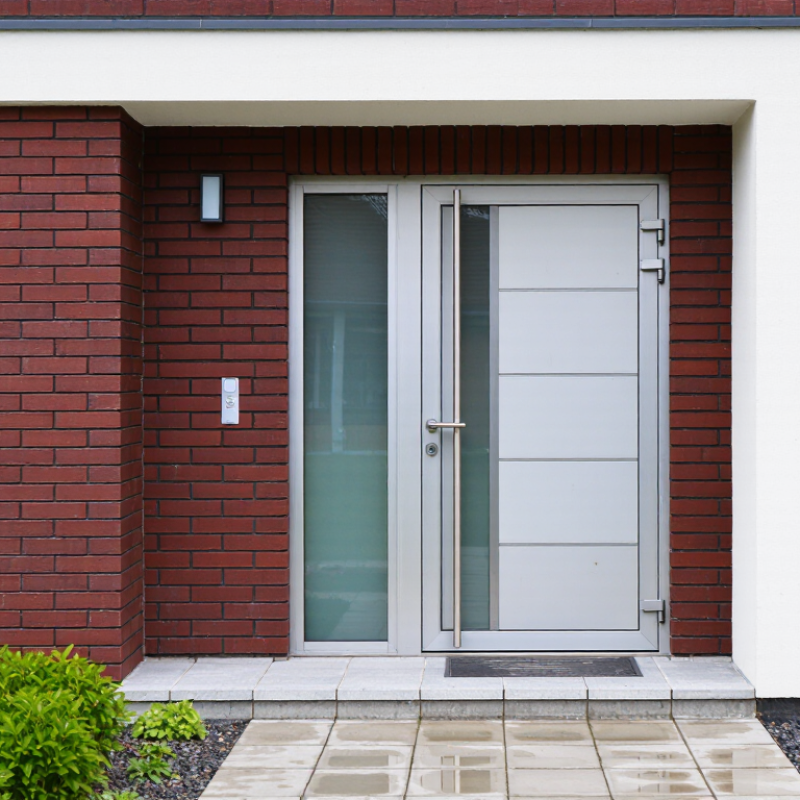
Define Requirements: Climate, Size, Budget, and EN 1627 Security Class
Choosing an aluminum front door in 2026 starts with four questions: climate, size, budget, and security. In cold regions, request a thermally broken frame, insulated core, and low air-leakage rating. The U.S. Department of Energy notes that doors and windows can represent about 25%–30% of residential heating and cooling energy use. Your entryway matters more than it appears.
Measure the opening after removing interior trim, not only from the hallway. Record width, height, wall depth, sill level, and the door’s swing direction. A large glazed panel may improve daylight, but it can increase heat gain and reduce privacy. In coastal areas, ask for corrosion-resistant finishes and stainless hardware. For security, EN 1627 classifies doors from RC1 to RC6. RC2 resists basic forced-entry tools, while RC3 addresses stronger manual attacks and longer resistance time. Select the class according to risk, not appearance. Installation remains critical; a certified door can perform poorly in a weak wall.
Tips: Compare the complete installed price, including threshold drainage, locks, glazing, delivery, and adjustment. Ask for the test report, not only the class number. Check U-value, air permeability, and water-tightness data. I often prefer a practical RC2 door with careful installation over an expensive RC3 model fitted carelessly. That choice is not always comfortable. Budget at least 10% for site surprises, especially with older masonry openings. Test the latch with the door closed, and inspect daylight around the seals on a windy day.
Compare Thermal Breaks: Aluminum Conductivity Can Reach 205 W/m·K
When choosing an aluminum front door in 2026, examine its thermal break carefully. Aluminum can conduct heat at approximately 205 W/m·K. That figure describes highly conductive metal, not the complete door assembly. It does not predict indoor comfort alone. Look closer. A non-thermally broken frame can transfer winter cold directly inside. Warm indoor air may then create condensation on the interior surface.
A thermal break inserts a low-conductivity barrier between the exterior and interior aluminum sections. The barrier interrupts the heat path through the frame. In practical inspections, I check the break’s width, continuity, and connection around corners. Ask for tested whole-door U-values, not only material conductivity data. Numbers matter. Check glass edges, seals, thresholds, and drainage details too. Poor assembly can weaken an excellent thermal design.
For 2026 homes, choose a door with continuous thermal separation and verified performance data. Low-emissivity glazing can improve the result, especially on large glazed panels. Specify durable gaskets and a properly insulated threshold. I would not judge quality from a thick frame alone. This is where many buyers hesitate, reasonably. More aluminum does not always mean better insulation. Small compromises matter. Have the installer explain how the frame meets the wall insulation, because that junction often decides whether the claimed performance appears in daily use.
Verify Efficiency: Read NFRC U-Factor and SHGC Ratings Before Buying
Before choosing an aluminum front door, compare its NFRC-rated U-factor and solar heat gain coefficient (SHGC). The U-factor measures heat flow through the complete door assembly; lower values indicate better insulation. SHGC measures how much solar heat passes through glazed areas. Lower SHGC can help limit unwanted heat, especially on sunny, west-facing entrances.
Read both. NFRC ratings use standardized methods, making it easier to compare products on the same basis. The U.S. Department of Energy estimates that windows account for 25–30% of residential heating and cooling energy use; that figure is for windows, not doors, but it shows why glazed areas deserve attention. Check whether the listed rating covers the full door, including its frame and glass. A thermally broken aluminum frame can reduce heat transfer, but the rating—not the material label—shows the tested performance.
Match the numbers to your climate and entry exposure. In a cold region, a lower U-factor may matter more; in a hot, sunny location, SHGC deserves closer attention. A shaded porch changes the equation. Small detail, big difference. Compare ratings with the same units and product configuration, then confirm local energy guidance. One number can still mislead: comfort also depends on installation, weather-stripping, and how often the door is opened. I would not choose by appearance alone. A sleek frame cannot tell you how warm the hallway will feel on a windy evening.
How to Choose an Aluminum Front Door in 2026: Check NFRC Ratings
SHGC is a decimal from 0 to 1. The chart converts example SHGC values to percentages to show the share of incident solar heat gain admitted indoors. These are rating-scale examples, not ratings for specific doors.
When comparing actual doors, check the NFRC label: a lower U-factor generally means less heat transfer through the door. Choose an SHGC suited to your climate, orientation, and daylight needs, and compare certified product ratings rather than relying on material alone.
Check Access and Sustainability: ADA ½-Inch Threshold; IAI: 95% Energy Savings
How to Choose an Aluminum Front Door in 2026?
Accessibility should be checked before appearance. The 2010 ADA Standards limit door thresholds to ½ inch on accessible routes. Changes above ¼ inch need a beveled edge. A low, visible threshold helps wheelchairs, walkers, and tired feet. Measure the finished floor, not the unfinished slab. That small detail is often missed.
Sustainability needs clearer evidence. The International Aluminium Institute reports that recycling aluminum can use up to 95% less energy than producing primary aluminum. This benefit depends on recycled content and responsible collection. Ask for recycled-content records and an Environmental Product Declaration. Numbers without documents are weak. They look convincing, though.
Energy performance also depends on design and installation. The U.S. Department of Energy estimates that windows account for about 25–30% of residential heating and cooling energy use. A glazed aluminum door should include a thermal break, efficient low-emissivity glass, and tested air-leakage performance. Check the sill, corners, and weather seals during inspection. I once saw a well-insulated door lose comfort through a poorly sealed threshold. The frame was not the real problem. Even good specifications need careful installation.
How to Choose an Aluminum Front Door in 2026? – Check Access and Sustainability: ADA ½-Inch Threshold; IAI: 95% Energy Savings
| What to Check |
Relevant Fact or Benchmark |
How to Apply It When Choosing a Door |
| Threshold height and profile |
The ADA Standards generally limit thresholds in accessible routes to ½ inch. Changes in level up to ¼ inch may be vertical; changes between ¼ and ½ inch must be beveled no steeper than 1:2. |
Ask for the installed threshold dimensions and profile, and verify applicable accessibility requirements for the project. A low threshold alone does not establish full ADA compliance. |
| Clear opening width |
Under the ADA Standards, a door opening generally needs at least 32 inches of clear width when the door is open 90 degrees; measurement is taken between the face of the door and the opposite stop. |
Check the clear opening of the selected door configuration—not just the nominal door-leaf width. Hardware and frame details can affect usable clearance. |
| Recycled aluminum |
The International Aluminium Institute reports that recycling aluminum can require about 5% of the energy used to produce primary aluminum—an energy saving of about 95% for the metal-production stage. |
Request the product’s recycled-content information and clarify whether the figure refers to post-consumer or pre-consumer material. The 95% figure is not a claim of 95% lower whole-door or building energy use. |
| Thermal performance |
Aluminum is highly conductive. A thermally broken frame separates interior and exterior metal sections with a less-conductive material to reduce heat transfer through the frame. |
Compare documented whole-door U-factor and, where relevant, solar heat gain coefficient. Lower U-factor indicates less heat transfer; performance depends on the complete door assembly and glazing. |
| Weather sealing |
Air leakage and water resistance depend on the door assembly, seals, installation, exposure, and maintenance—not on frame material alone. |
Look for test documentation relevant to the intended exposure, continuous weatherstripping, a suitable sill, and installation details that manage water at the opening. |
| Durability and finish |
Aluminum does not rust like iron or ordinary steel, but finishes and hardware can still be affected by weather, coastal conditions, wear, and incompatible metals. |
Choose a finish suitable for the local environment, confirm care requirements, and check warranty coverage for the finish, hardware, and moving components. |
| Sources for verification |
U.S. Access Board, 2010 ADA Standards §§ 303, 404.2.3 and 404.2.5; International Aluminium Institute, aluminum recycling information. |
Confirm current local building and accessibility codes, project-specific requirements, and the exact product test data before purchase. |
Conclusion
Choosing an Aluminum Front Door in 2026 starts with clearly defining your needs. Consider your local climate, opening size, budget, and the EN 1627 security class required for your property. Because aluminum can conduct heat at up to 205 W/m·K, select a frame with an effective thermal break to reduce heat transfer and improve indoor comfort. Before purchasing, review the NFRC U-Factor and SHGC ratings to compare insulation performance and solar heat control rather than relying only on appearance or price.
Durability and usability are equally important. Look for finishes tested to AAMA 2605 standards and confirm that the door system has suitable ASCE 7-22 wind-load data for its installation location. For easier access, choose an ADA-compliant threshold no higher than ½ inch when applicable. Finally, consider the product’s life cycle and recyclability: aluminum recycling can require up to 95% less energy than producing new aluminum, supporting a more sustainable choice without sacrificing strength, security, or long-term performance.