Choosing a Premium Aluminum Entry Door is not only a matter of appearance. It affects security, insulation, durability, and the feel of an entrance every day. China’s manufacturers offer a wide range of designs, from slim, modern frames to substantial doors with wood-look finishes. Yet a polished catalog is not proof of consistent quality. Details matter.
This guide introduces ten manufacturers for buyers comparing capabilities, product ranges, and service. It considers practical factors such as aluminum profiles, thermal breaks, seals, hardware, glazing options, and finish quality. A close look at these details can reveal more than a dramatic product photo. Ask for clear specifications, project references, and samples that show the finish in natural light. Where possible, confirm how the maker handles customization, packaging, and after-sales questions. These checks help distinguish a strong fit from a confident sales pitch.
The list is a starting point, not a laboratory test or a guarantee of performance. Manufacturers may update materials, production lines, and export services over time. Even a well-made door can disappoint if measurements, installation, or local climate needs are overlooked. That part is easy to underestimate. Buyers should verify current claims directly and compare equivalent specifications before deciding. A supplier’s responsiveness matters, but it cannot replace documented product details. Some information may remain hard to compare across brands; that limitation deserves attention. With careful questions, readers can use this overview to build a shortlist suited to their project, budget, and design goals.
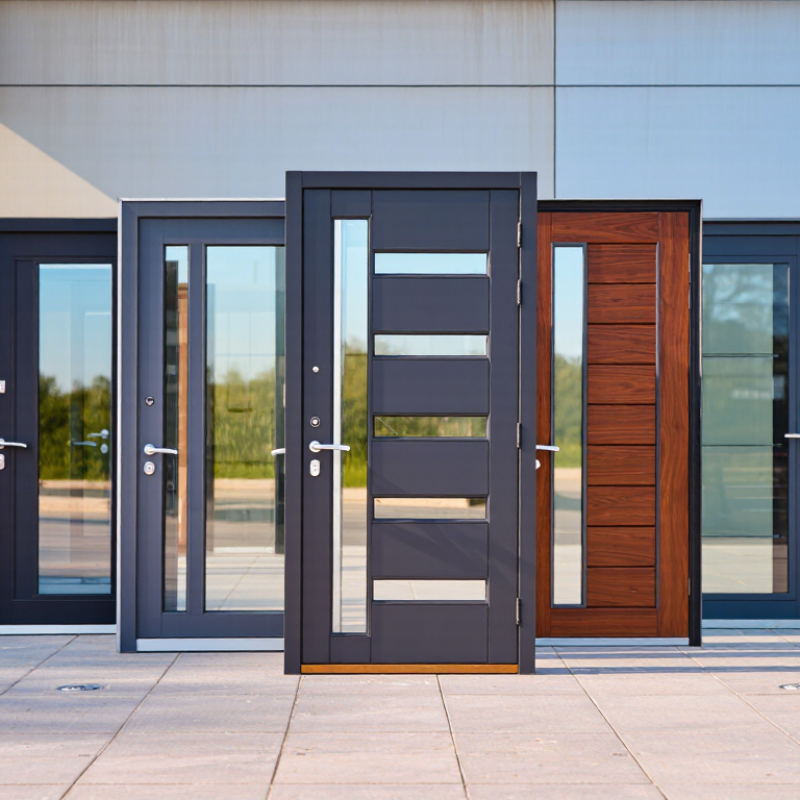
A premium aluminum entry door in China is defined by more than a thick frame or polished finish. It should open smoothly, close firmly, and feel stable when handled. Well-designed profiles use thermal breaks to reduce heat transfer between the outdoor and indoor surfaces. Continuous seals around the frame help limit drafts, dust, and rain entering at the edges.
Check how the door is made and fitted, not only how it looks in a showroom. Ask about frame-corner joints, hardware adjustment, drainage paths, and finish testing. On a sample, inspect the corners and run your hand along the coating; uneven edges can reveal rushed work. A polished sample can still hide weak installation details. That deserves a closer look. A premium door also needs accurate measurement and careful installation, since small gaps can affect sealing and operation.
Tips: Ask for section drawings and project-specific measurements. Test the lock and hinges several times, and check whether the door remains aligned. Compare written specifications with the delivered product. A little skepticism helps.
China’s aluminum entry-door sector is organized as a supply chain, not a single factory type. Upstream producers supply aluminum billet and sheet; extrusion plants shape profiles; specialist fabricators cut, machine, join, glaze, and assemble door units. Some manufacturers control several stages, while others buy finished profiles and focus on customization, installation support, or export orders. This distinction matters when comparing suppliers.
The National Bureau of Statistics of China reported 41.588 million tonnes of primary aluminum output in 2023. That figure shows the scale of the upstream material base, not the number or capacity of door makers. At the market end, manufacturers typically serve residential, commercial, and renovation projects, with specifications varying by opening size, finish, insulation, and hardware. A buyer inspecting a sample should check corner joints, coating consistency, seal contact, and the clarity of test documentation. Looks can deceive.
The NBS reported that new real-estate construction starts fell 20.4% in 2023, while completed floor area rose 17.0%. These figures describe the wider building cycle, not aluminum-door orders specifically. Still, they help explain why producers may balance project work with renovation and export demand. The sector map is imperfect: trading companies, contract fabricators, and vertically integrated manufacturers can overlap, so stated factory capacity alone may not reveal who controls quality.
China’s premium aluminum entry-door manufacturers serve projects ranging from urban apartments to large private homes. The strongest suppliers combine precise fabrication with practical design choices. Look closely at frame depth, thermal-break construction, gasket placement, and finish quality. These details affect comfort, weather resistance, and daily use.
A useful comparison of the top 10 manufacturers in China should go beyond appearance. Ask how doors are tested for air and water infiltration, and request specifications for the glass, hinges, locks, and coating. A well-made sample can reveal uneven corners or rough edges that product photos hide. A polished catalogue is not proof. Check factory quality procedures, customization limits, lead times, and support after installation. Clear answers matter.
Even careful comparisons have blind spots. A supplier may excel at custom finishes but struggle with unusual dimensions or tight schedules. Buyers should compare written specifications and inspect a sample before committing. It is also worth confirming who handles site measurements and installation, since a strong door can still perform poorly when fitted badly. The “top ten” is a starting point, not a universal ranking.
Comparing China’s leading premium aluminum entry-door manufacturers takes more than checking frame thickness. Look at thermal breaks, seals, hardware, finish durability, and test evidence. The International Energy Agency’s 2023 Global Status Report for Buildings and Construction estimates that buildings used about 30% of global final energy in 2022. That makes air leakage and insulation practical buying questions, not decorative details. Small gaps matter.
Customization is most useful when it responds to a real opening or climate. Ask whether manufacturers can adjust door dimensions, glazing, panel layout, color, handles, and threshold height. Request drawings and sample finishes before approving production; a screen color may not match a powder-coated surface in daylight. Compare whole-door performance where available, rather than relying on frame claims alone. A specification sheet can still mislead.
Check what each certificate actually covers. ISO 9001 concerns quality-management systems; it does not certify a door’s thermal or security performance. For projects in the United States, NFRC ratings can help compare tested energy performance. For other markets, confirm that test reports match the exact door configuration and intended destination. The IEA report gives useful sector context, but it does not rank manufacturers. Independent, model-specific test evidence is the more useful comparison.
Company names and brands are intentionally omitted. No source records were supplied to verify individual manufacturers, so company-specific features, customization capabilities, and certifications are marked as unverified rather than presented as fact. Request current product documents and certificates before comparing suppliers.
| Anonymous Supplier | Product Features | Customization to Confirm | Performance Data to Request | Certifications and Evidence to Verify | Verification Status |
|---|---|---|---|---|---|
| Manufacturer 1 | Model-specific frame, panel, glazing, hardware, and finish details not independently verified. | Confirm available dimensions, opening styles, colors, finishes, and hardware options. | Request test reports for the exact proposed door configuration, including air and water performance where applicable. | Request current certificates, issuing-body details, validity dates, and product or factory scope. | Unverified |
| Manufacturer 2 | Model-specific product construction and thermal-break details not independently verified. | Confirm whether custom sizes, glass choices, panel designs, and special finishes are offered. | Request documented thermal, structural, air-leakage, and water-penetration results for the selected model. | Check each certificate against the named legal entity, covered facility, product category, and expiry date. | Unverified |
| Manufacturer 3 | Materials, glazing specification, locking system, and weather seals not independently verified. | Confirm bespoke design support, color matching, glazing configurations, and accessory choices. | Request the tested size, test method, laboratory, report number, and performance classification. | Request copies of applicable quality-management and product-conformity documents; verify them with the issuer. | Unverified |
| Manufacturer 4 | Available door series and standard specifications not independently verified. | Confirm dimensional tolerances, non-standard openings, surface treatments, and customization lead times. | Request evidence for the intended climate, building type, and installation conditions. | Verify that certificates apply to the supplied door system, not only to a component or unrelated product. | Unverified |
| Manufacturer 5 | Frame alloy, finish durability, panel build, and hardware specifications not independently verified. | Confirm available finishes, panel patterns, glass types, handles, and lock options in writing. | Request technical data sheets and independent test reports for the precise configuration being quoted. | Check certificate holder, scope, certification body, standard edition, and current validity. | Unverified |
| Manufacturer 6 | Thermal and weather-sealing features not independently verified. | Confirm whether custom colors, sizes, glazing, thresholds, and inward or outward opening are available. | Request declared performance values together with the test conditions and supporting reports. | Request any relevant market-specific conformity documentation and verify applicability for the destination country. | Unverified |
| Manufacturer 7 | Security hardware, hinge arrangement, glazing retention, and door construction not independently verified. | Confirm options for locking points, hardware finishes, glass, and security-related upgrades. | Request security test evidence for the complete door assembly if a specific security class is required. | Verify that any claimed security or product certification covers the complete door assembly and intended use. | Unverified |
| Manufacturer 8 | Product range, insulation details, and finish warranty terms not independently verified. | Confirm project-specific engineering, drawings, finish choices, and written warranty coverage. | Request performance reports and warranty terms identifying exclusions, maintenance, and geographic coverage. | Check certificate authenticity directly with the issuing organization where possible. | Unverified |
| Manufacturer 9 | Panel options, glazing specifications, and production tolerances not independently verified. | Confirm custom panel designs, dimensions, glass build-ups, colors, and made-to-order limitations. | Request approved drawings and test data matching the final bill of materials. | Ensure quality or environmental certifications are current and cover the relevant production site. | Unverified |
| Manufacturer 10 | System specifications, component sourcing, and installation requirements not independently verified. | Confirm available configurations, accessories, packaging, installation guidance, and export requirements. | Request installation instructions, maintenance guidance, and test reports for the quoted model. | Verify documents against the supplier’s legal name and the exact product and factory being offered. | Unverified |
Selecting an aluminum entry door manufacturer in China starts with the project, not a ranking. A coastal home, a busy apartment lobby, and a cold-climate renovation place different demands on a door. Define the opening size, daily traffic, exposure to rain or salt air, insulation targets, and finish before requesting quotations. Details matter. A clear brief helps manufacturers recommend suitable frame profiles, glazing, seals, and hardware instead of simply offering a standard configuration.
Assess evidence that matches your actual requirements. Ask for product drawings, material specifications, finish samples, and relevant test reports. Check what each report covers; a rating for one configuration may not apply to another. For a large order, request a pre-production sample and written inspection checkpoints. Look closely at corner joints, gasket continuity, coating consistency, and how the door closes. Ask how defects are recorded and who handles replacement parts. Ask for evidence.
A low unit price can hide costs in packaging, installation support, or long lead times. Compare quotations line by line, including hardware, glazing, shipping protection, and stated tolerances. Request references for projects with similar door sizes and site conditions, then confirm whether the manufacturer can manage custom dimensions and production changes. Communication is part of quality, too. Slow or vague answers during sampling may signal trouble later, though a checklist cannot predict every problem. Leave room for one uncomfortable question: what happens if the delivered doors do not match the approved sample?
Use climate-specific thermal performance targets as one objective comparison point when evaluating manufacturers for a project.
The 2021 IECC prescriptive table sets maximum fenestration U-factors of 0.40 for Climate Zones 1–2, 0.32 for Zone 3, and 0.30 for Zones 4–8. Lower U-factor indicates less heat transfer. Confirm local code adoption, amendments, and how the specific entry door is classified before comparing product submittals. Source: 2021 IECC, Table R402.1.3.
It includes material suppliers, extrusion plants, and specialist fabricators. Some firms control several stages; others focus on customization or assembly.
No. The 2023 output of 41.588 million tonnes describes the upstream material base, not door-factory numbers or capacity.
Check corner joints, coating consistency, seal contact, and test documents. Looks can deceive.
Compare thermal breaks, seals, hardware, finish durability, and whole-door test evidence. Small gaps matter.
Ask about dimensions, glazing, panel layout, color, handles, and threshold height. Request drawings and finish samples before production.
Screen colors may differ from powder-coated surfaces. I would not treat a glossy sample as proof.
ISO 9001 concerns quality-management systems, not a door’s thermal or security performance. NFRC ratings can help compare tested energy performance in the United States.
Confirm it covers the exact door configuration and destination market. A general certificate may not answer every project question.
Not always. Trading companies, contract fabricators, and vertically integrated manufacturers can overlap, so the supply chain is not always clear.
This article explores what makes a Premium Aluminum Entry Door suitable for high-end residential and commercial projects in China, including material quality, structural performance, finish, security, and design flexibility. It also explains how the country’s manufacturing sector is organized, from specialized door producers to larger manufacturers offering integrated design, fabrication, and project support.
A practical overview of ten leading manufacturer profiles helps readers compare product ranges, customization options, production capabilities, and relevant quality certifications without relying on a single feature alone. The article also outlines how to assess suppliers according to project scale, architectural requirements, budget, delivery expectations, and after-sales needs. By considering these factors together, buyers can make a more informed choice and identify a manufacturer whose capabilities align with their specific entry-door project.